The global conversation on the climate crisis has become increasingly loud over the past few decades. From the Earth Summit in 1992 to the recent COP29 in Azerbaijan, international conventions have become ritualistic annual affairs, attracting leaders, scientists, activists, and media from across the globe. These forums are meant to forge collective climate action, set emission reduction targets, and hold countries accountable. But even after decades of these gatherings and countless pledges, the planet continues to warm, emissions continue to
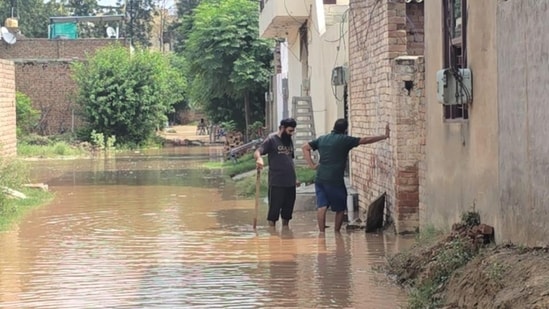
The global conversation on the climate crisis has become increasingly loud over the past few decades. From the Earth Summit in 1992 to the recent COP29 in Azerbaijan, international conventions have become ritualistic annual affairs, attracting leaders, scientists, activists, and media from across the globe. These forums are meant to forge collective climate action, set emission reduction targets, and hold countries accountable. But even after decades of these gatherings and countless pledges, the planet continues to warm, emissions continue to rise, and vulnerable communities remain on the frontlines of climate disasters. This disconnect between grand declarations and ground realities calls for a fundamental reassessment: Instead of expending billions on climate conferences and global pledges with inconsistent enforcement, should we be focusing more on alternative, practical mechanisms to combat the climate crisis?
One of the major limitations of large-scale climate conventions is that they operate in the realm of diplomacy, often held hostage by the competing interests of nation-states. The consensus-driven nature of these events means that agreements are usually watered down to the lowest common denominator. Pledges are made, but follow-up is weak and enforcement mechanisms are either non-existent or toothless. The Paris Agreement, for instance, marked a breakthrough in collective ambition, but its success depends entirely on the voluntary compliance of states. In reality, major polluters like the US and China continue to emit at massive levels, with only marginal improvements driven more by economic trends than by climate commitments. The very format of these conferences, with their jet-fueled logistics, extravagant setups, and diplomatic pageantry, often stands in contrast to the sustainable future they aim to promote.
Rather than doubling down on these inefficient spectacles, climate action must become hyper-local and innovation-driven. One potent alternative mechanism is decentralised action, where cities, municipalities, and regional governments take charge of their carbon footprints. Many cities across the world, such as Copenhagen, Amsterdam, and Portland, have already implemented successful green policies ranging from sustainable transport to urban farming, energy-efficient buildings, and zero-waste systems. These models work not because of global mandates, but because of local willpower, tailored strategies, and citizen participation. Empowering local governments with climate funds, technical knowledge, and legislative autonomy could have far more measurable impacts than the sweeping but vague pledges made on the global stage.
Private enterprise also holds untapped potential in reshaping the climate equation. Market-based mechanisms like carbon trading, green bonds, and sustainable finance offer scalable and result-oriented pathways for reducing emissions and funding adaptation strategies. Unlike international climate agreements that often get entangled in political rhetoric, businesses operate on clear metrics of performance and accountability. With Environmental, Social, and Governance (ESG) frameworks gaining traction, corporations are increasingly being evaluated based on their environmental footprint. Venture capital is beginning to flow into green tech startups, from carbon capture innovation to clean hydrogen and biodegradable materials. If governments can create the right incentive structures like tax breaks for green businesses, subsidies for renewables, and penalties for polluters, the private sector can become a dynamic force in combating the climate crisis.
Another often overlooked approach lies in strengthening community resilience and indigenous ecological knowledge. Across the Global South, indigenous communities have preserved sustainable ways of living for centuries, respecting biodiversity and minimising waste. From the rotational farming systems of the Naga tribes in Northeast India to the forest management techniques of the Amazonian tribes, there is a wealth of traditional ecological wisdom that remains undervalued. Integrating these practices into modern conservation policies can yield both environmental and cultural dividends. Moreover, community-led conservation initiatives tend to be more cost-effective and enduring than top-down interventions. Instead of spending millions on elaborate frameworks, redirecting funds towards training local communities, incentivising afforestation, and supporting grassroots environmental movements could yield far more tangible results.
Technology, too, offers a range of promising alternatives. While global pledges focus heavily on reducing emissions, technological innovation can help reverse damage. Smart agriculture using AI and IoT can reduce water consumption and chemical use while increasing yield. Precision reforestation through drones can plant thousands of trees in hours. Satellites and data analytics can help monitor land-use changes and identify climate hotspots with unprecedented accuracy. Instead of pouring resources into repeated negotiations, the international community should invest heavily in research and development for such innovations and make them accessible to developing nations through open-source platforms and funding partnerships.
For a country like India, the pathway to climate action must balance economic development with environmental sustainability. While India has been an active participant in global climate talks and has made ambitious pledges, the real breakthroughs are happening locally. Initiatives such as the International Solar Alliance, rapid electrification of public transport, and India's push for ethanol blending are examples of pragmatic action. Yet, India could go further by empowering its states and cities to drive climate innovation, invest more in agro-ecological farming, and boost job creation in the renewable energy sector. India’s vast pool of youth, engineers, and entrepreneurs can be mobilised into a green innovation workforce developing technologies and practices not only for domestic use but for export to other developing nations.
Ultimately, the climate crisis is not a problem that can be solved through diplomacy alone. The science is clear, the warnings are stark, and the solutions already exist. What is missing is the political courage to decentralise the fight, the imagination to trust in non-traditional knowledge systems, and the will to prioritise action over performance. International climate conventions have played their role in building awareness, but the next phase of the battle must shift from conference halls to farms, factories, classrooms, and city councils. Only then can we hope to make climate resilience not just a global promise, but a lived reality.
The billions spent on climate diplomacy must be critically assessed against their actual impact. While international cooperation remains essential, especially in areas like climate finance and technology transfer, the future lies in alternative mechanisms that are local, technological, community-led, and market-responsive. A new climate architecture grounded in action rather than affirmation is not just possible, but necessary. As the planet continues to heat up, our approach must cool down in rhetoric and heat up in real, scalable, and measurable solutions.
This article is authored by Gunwant Singh, scholar, international relations and security studies, Jawaharlal Nehru University.
One Subscription.
Get 360° coverage—from daily headlines
to 100 year archives.
Archives
HT App & Website