
 E-Paper



We must stay prepared for extreme heat and flooding
This article is authored by Ananya Raj Kakoti, scholar, international relations, Jawaharlal Nehru University.

 Prefer HTon Google


In March 2025, the World Meteorological Organization confirmed what climate scientists had warned: 2024 was the first year to exceed 1.5 °C above pre‑industrial levels, reaching roughly 1.55–1.6 °C nationwide. That translated into more than 150 unprecedented weather disasters worldwide: heatwaves, floods, storms which displaced over 800,000 people in 2024 and inflicted grave damage on life, livelihoods, crops and infrastructure.
Sea levels rose at 4.7 mm/year in 2024 twice the rate of the early 2000s while global ice losses, record ocean heat, and shrinking Arctic and Antarctic sea ice reached unprecedented lows (WMO). The resulting extremes of heat, drought, storms, flooding affected societies from Asia to the Americas.
According to Climate Central and other agencies, about half of humanity some 4 billion people experienced at least one extra month of extreme heat between May 2024 and May 2025 compared to historical norms. In nearly every country, extreme heat days have at least doubled due to global warming.
Meanwhile globally, heatwaves remain the deadliest weather event. Asia recorded 1,301 deaths during a June 2024 heatwave near Mecca. Japan’s 2024 heatwaves caused 123 deaths and over 37,000 heatstroke hospitalisations. In North America, the 2024 heatwaves killed over 1,000 people in the US and 155 in Mexico, with Death Valley hitting 54°C. Europe endured record heat in 2024–25 causing approximately 2,300 deaths across 12 cities including Spain, Portugal, and the UK.
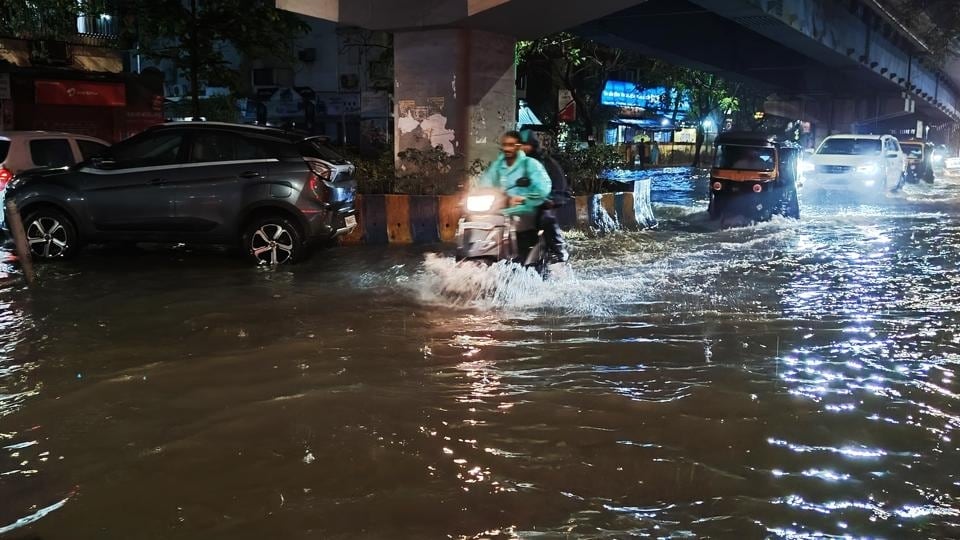
Extreme rainfall and flooding were equally widespread. Floods in Pakistan, Senegal, Italy and Brazil destroyed homes and crops. These disasters also triggered the highest level of climate-related displacement since 2008, over 824,000 people in 2024.
As part of the global maelstrom, India has become a climate flashpoint, with nearly 60% of districts representing 76% of the population fall into high or very high heat-risk categories. IIT Gandhinagar reports some 10,000 flash-flood events annually even in central and western India impacting over 90 million hectares. Between April and July 2025, an early heatwave peaked at 48 °C in Rajasthan, linked to at least 455 heat-related deaths. Extreme weather occurred on 88% of days in 2024, killing almost 3,000 people and destroying 80,000 homes (Centre for Science and Environment). These qualify as part of a larger global pattern: warming disproportionally impacting South Asia, Africa, Latin America and the island-State regions least responsible for emissions yet most vulnerable.
While mitigation remains vital, adaptation building resilience now is a matter of survival. The UN’s Adaptation Gap Report 2023 estimates that developing countries need $194–366 billion annually by 2030, yet receive less than 10% (WMO, UNEP). Every $1 spent on adaptation yields $13 in avoided damage (WMO).
As climate extremes become more frequent and severe, countries must shift from reactive relief to proactive resilience. Across the globe, innovative strategies are emerging that offer replicable models of adaptation and preparedness. These best practices, drawn from diverse geographies, highlight both the urgency and opportunity to act now.
* Cool cities: Urban heat islands amplify the deadly impact of rising temperatures. Cities like Ahmedabad in India have pioneered early interventions. Its Heat Action Plan focused on public education, early warnings, and hydration stations has significantly reduced heatstroke fatalities over the past decade. Elsewhere, Melbourne combats urban heat by planting over 3,000 shade trees annually, while Paris has designated more than 800 public cooling centres. These low-cost, high-impact urban strategies demonstrate how city design and green infrastructure can save lives and enhance liveability amid rising heat extremes.
* Flood protection via nature-based solutions: Flood management need not rely solely on grey infrastructure. The Netherlands’ Room for the River programme, which restores floodplains and allows rivers to flow more naturally, has proven effective in mitigating flood risks while enhancing ecosystems. In Southeast Asia, countries like Indonesia, Vietnam, and the Philippines are restoring mangroves to shield vulnerable coastlines. In India, the East Kolkata Wetlands naturally treat wastewater and absorb stormwater, while Chennai and Bengaluru have seen success with Miyawaki forests that not only reduce runoff but also cool microclimates. These examples reveal how nature-based solutions can build dual resilience: protecting lives while restoring biodiversity.
* Smarter warning systems and community-based responses: According to the World Meteorological Organization, only about half of the world’s countries have effective early warning systems in place. Bangladesh, however, has become a global leader in this space. Through improved cyclone forecasting, pre-emptive evacuations, community drills, and a network of shelters, it has drastically reduced cyclone-related deaths over the years. Countries like India, Nepal, and Brazil should scale up similar models that combine SMS-based alerts, local volunteer brigades, and decentralised command centres to ensure faster and more inclusive responses.
* Health system readiness: Climate events often turn into public health crises. Heatwaves exacerbate risks of heatstroke, dehydration, and respiratory illness, while floods lead to outbreaks of waterborne and vector-borne diseases. Japan has institutionalised its heat alert system into school protocols, urban planning, and public health advisories, setting a global benchmark. In India, there is an urgent need to establish district cooling hubs, hydration centres, and train primary healthcare workers to respond to heat- and flood-related illnesses. Post-disaster mental health support also deserves more systematic integration into national health strategies.
* Financing resilience: A major bottleneck in scaling preparedness is finance. However, innovative models are emerging. From 2028, Indian banks will mandate climate-risk disclosures and stress testing for businesses, a critical first step toward climate-informed financial systems. Kenya offers another powerful model through its County Climate Change Funds, which decentralise adaptation finance and align spending with local priorities. Globally, climate adaptation finance must scale through tools like green bonds, local climate funds, and weather-indexed insurance schemes that offer quicker recovery and risk-sharing mechanisms, especially for the most vulnerable.
* Empowering local communities: At the frontlines of every climate disaster are local communities often under-resourced but deeply adaptive. Grassroots organisations, such as self-help groups in India, climate response brigades in Spain, and youth volunteer corps in Latin America, are proving to be first responders, educators, and long-term resilience builders. Providing these groups with climate training, microgrants, and institutional support can dramatically expand the reach and relevance of adaptation programmes. Climate resilience must be seen not as a top-down mandate, but as a collaborative effort rooted in local knowledge and leadership.
Collectively, these strategies underscore a central truth: resilience is local, contextual, and most effective when co-created. While global climate conventions continue to guide broad policy frameworks, it is these grounded, tested, and community-centric models that offer the most hope in a rapidly warming world.
The world passed the 1.5 °C threshold in 2024. Without urgent emissions reductions, we are on track for 2 °C warming by 2030, which would multiply climate extremes. That means hotter summers, erratic monsoons, rising seas, degraded food systems, and population migrations on a scale few nations are prepared to handle.
From the Philippines to Pakistan, from Sardinia to Sahel, people have been displaced, injured, or killed by disasters already made more likely by human-caused warming.
We have solutions and examples. What is lacking is the political will, financing, and collective urgency. Whether in Delhi, Dhaka, Dakar, or Denver, adaptation is now the frontline of the climate crisis.
Adaptation is not a fallback, it is the defence. How hardened are our cities, health systems, communities and economies? That will determine how many lives are saved, and how much suffering is averted.
The question is no longer will we be hit? How hard and how ready are we?
This article is authored by Ananya Raj Kakoti, scholar, international relations, Jawaharlal Nehru University.


