
 E-Paper



When broadcasting was committed to public good
When broadcasting earns people’s trust and engagement, financial sustainability can follow from public value.

 Prefer HTon Google


A few years ago, visitors entering Bandrabhan, a village in Hoshangabad district of Madhya Pradesh, were greeted by an unusual welcome. Painted across the village water tank were the words: Kalyani Gram Bandrabhan aapka swagat karta hai (Kalyani Gram Bandrabhan welcomes you). No government notification or official scheme had conferred the title. The villagers themselves had chosen the name.
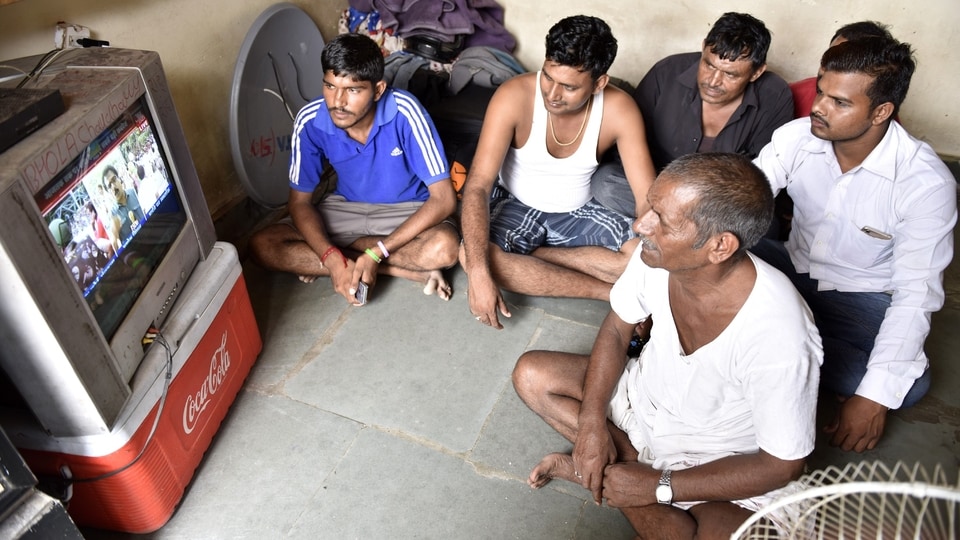
Why? For years, Bandrabhan lived under the shadow of malaria. Inspired by Kalyani — a weekly health programme series on Doordarshan — the community came together to fight the disease, under the guidance of the district malaria officer. When the village completed a malaria-free year, the villagers celebrated with a malaria awareness rally and renamed their village Kalyani Gram.
Kalyani was launched in 2002 by the ministry of health & family welfare in eight empowered action group (EAG) states to tackle communicable and non-communicable diseases, as well as other public health concerns. But how could a weekly TV programme become so much more than a broadcast? An example of such enduring public ownership of broadcasting dates to the early decades after Independence. A variety of rice, popularised by All India Radio (AIR), came to be known as Radio Rice in Thanjavur district of Tamil Nadu. That was an era of one broadcaster and captive audience.
Also Read | Ending digital addiction to safeguard children's future
Decades later, in an India transformed by satellite television, digital media and changing media consumption, how could a weekly TV programme leave an even deeper imprint? The answer lies in the evolution of an idea — which transformed broadcasting from a medium of communication into a catalyst for community participation and social change.
In 1988, AIR launched a radio serial, Jeevan Saurabh, bringing adolescent concerns into the public conversation. It broke new ground by treating young people not merely as listeners but as participants in the communication process. Listeners themselves then prompted a sequel, Jeevan Saurabh II, urging that the equally sensitive questions of marriage and marital relationships be explored as they entered the next stage of their lives.
Jeevan Saurabh also opened the way for partnerships between AIR and development agencies — first with the Population Foundation of India for Dehleez, and later with Population Communications International for Tinka Tinka Sukh. Over the next decade, it expanding from adolescent relationships to HIV/AIDS, women’s empowerment, and the environment, while growing in scale through partnerships with national and international organisations. The approach later informed the BBC World Service Trust’s landmark TV series, Jasoos Vijay.
In Lutsan, near Aligarh, discussions generated by Tinka Tinka Sukh led 184 community members to send AIR a collective letter, pledging neither to give nor accept dowry and to educate their daughters. The model also attracted international academic attention, with Everett Rogers, pioneer of the Diffusion of Innovations theory, and his colleagues documenting it as an important contribution to development communication.
This participatory methodology found its fullest expression in Kalyani. TV became the starting point for dialogue, participation, and collective action. The idea of organised community participation found expression through Kalyani Clubs. Each broadcast invited viewers to form local groups, discuss issues, undertake community initiatives and share their experiences, which then became part of subsequent programmes, encouraging other communities to do likewise.
Also Read | The coming of age of India’s industrial policy
Kalyani was extended from eight to 21 states, broadcast in 17 languages and 18 dialects, while nearly 2,500 Kalyani Clubs involving more than 83,000 volunteers emerged. The measure of success was not viewership but ownership. In some communities, anti-malarial tablets became known as Kalyani goli, newborn daughters were named Kalyani, and villages such as Bandrabhan and Amlaha adopted the name Kalyani Gram.
The programme’s impact was measured not only in broadcasts but in the response it generated on the ground. That attracted international recognition. WHO recognised Kalyani as one of the “15 top global innovations that advance the work of women’s and children’s health.” It was described as “a revolution in television for communication, the best action programme going in the world.” Its work in transforming the lives of people affected by HIV/AIDS was honoured with the UNAIDS Civil Society Award.
As broadcasting enters the age of AI and digital platforms, it faces twin challenges: harnessing unprecedented technological capabilities while achieving financial sustainability. Technology can personalise and multiply messages, but participation still depends on trust, dialogue and a sense of shared ownership.
Dehleez to Kalyani is a journey that demonstrates that public value and financial sustainability need not be opposing goals. When broadcasting earns people’s trust and engagement, financial sustainability can follow from public value.
Usha Bhasin is former additional director general, Prasar Bharati. The views expressed are personal


