Across North India, the story repeats every winter: Fields on fire, children coughing, and a grey haze that swallows entire villages. Farmers are not burning crop residues because they want to harm the environment; they burn because it is the cheapest, fastest way to clear their fields for the next sowing. An agri biomass pyrolysis unit offers them a different story, one where the same residue becomes a resource, not a problem, but making that story real needs one crucial thing at its centre: A committed, patient, and supportive CSR grant.
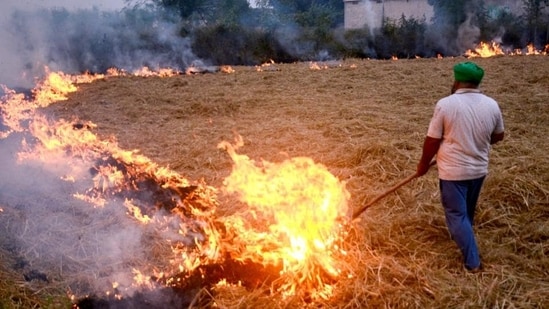
A farmer’s problem, not a farmer’s fault. For a small or marginal farmer, decisions are made between one harvest and the next, often in a window of just a few days. Paying labour or hiring machines to remove residues is expensive, and there is rarely a visible, immediate reward for managing stubble the right way. Selling residues is possible in some pockets, but markets are shallow and fragmented. Biochar can help change this equation: Instead of smoke, the farmer gets an extra income stream for residues and, in time, healthier soil that holds water and nutrients better. But here is the catch. Very few farmers can afford to pay what it actually costs to convert that residue into high quality, safe, and well tested biochar, especially in the initial years.
If the price of biochar reflects its true cost, including biomass purchase, plant operation, maintenance, research, and compliance, it immediately moves out of reach for those who need it most. And if the price is kept low so that farmers can use it freely, the plant quickly becomes financially fragile. This is not a matter of poor management; it is a structural gap. That gap is precisely where CSR must step in, not as charity, but as an investment in public goods that markets alone will not pay for.
{{/usCountry}}If the price of biochar reflects its true cost, including biomass purchase, plant operation, maintenance, research, and compliance, it immediately moves out of reach for those who need it most. And if the price is kept low so that farmers can use it freely, the plant quickly becomes financially fragile. This is not a matter of poor management; it is a structural gap. That gap is precisely where CSR must step in, not as charity, but as an investment in public goods that markets alone will not pay for.
{{/usCountry}}A modern agricultural residue biochar plant is not a drum and firewood village setup. It is a high technology facility designed to burn cleanly, control emissions, and consistently produce a material that can stay in the soil and lock away carbon for decades or centuries. That brings three major cost burdens. The plant operators must pay farmers or FPOs for every tonne of biomass collected so that residues are not burnt in the field. It must also pay for trained operators, regular maintenance, electricity or fuel, and strict environmental safeguards so that the solution does not become another pollution source. In addition, it must continually invest in innovation by testing different blends, inoculating biochar with microbes, co composting, and conducting field trials so that the material helps soil life instead of causing nutrient imbalances or slowing microbial communication.
None of these costs disappear just because the final intention is noble. Yet, to generate real environmental impact, the plant has to let biochar flow out to farmers at free or near free prices, at least until benefits are well proven, trust is built, and a more mature market or carbon revenue stream emerges. Without a safety net, the business model snaps under the weight of its own public-spirited ambition.
Too often, CSR is treated as an add on donate a few machines, support a pilot in a couple of villages, organise a campaign. In the case of agri biomass pyrolysis, CSR must be the backbone, not the garnish. The entire logic of the model depends on someone being willing to pay for long term public benefits, cleaner air, a cooler climate, healthier soils, and more resilient farmers, while allowing biochar to reach the end user at a price that does not scare them away.
A well-designed CSR grant can do three vital things. It can underwrite biomass costs, so farmers are paid fairly for residues, making do not burn it a financially sensible decision instead of a moral lecture. It can support operating and maintenance expenses during the early years, allowing the plant to focus on reliability, safety, and community engagement instead of constant survival firefighting. It can also fund innovation for soil testing, product refinement, microbial consortia, and farmer field trials so that biochar is not just dumped into the soil, but carefully adapted to local conditions, minimising risks of nutrient locking or negative impacts on soil biology.
When CSR plays this central role, biochar units can operate with a different mindset: Not how do we sell more product at a higher price, but how do we get the right material into the right soils at the right time, at a price a farmer can accept, and keep the plant alive.
Many companies now talk about net zero commitments, nature positive operations, and supporting regenerative agriculture. A supportive CSR grant to a high technology biochar pyrolysis unit is one of the most tangible ways to turn those big promises into visible change in actual villages.
Each tonne of residue that goes into the reactor instead of into an open fire is less smoke in the air and less carbon in the atmosphere. Each farmer who receives biochar enriched soil amendments at no or low cost is one step closer to fields that hold moisture longer and waste fewer nutrients. Each year of stable plant operations, backed by CSR, adds to a growing foundation of local knowledge: Which crops respond best, what application rates work, and how to combine biochar with compost or bio-fertilisers to keep microbial life thriving.
Without CSR, this learning curve is too expensive and too risky for small enterprises or farmer groups to climb alone. With CSR, the risk is shared, the journey is slower but steadier, and the benefits belong to everyone, farmers, companies, and future generations.
From cheque writing to partnership. Ultimately, the question is not whether CSR can afford to support such a model; it is whether society can afford to ignore such an opportunity. Supporting a biochar pyrolysis unit is not just about writing a cheque; it is about entering a long-term partnership with farming communities and the environment.
In that partnership, the plant commits to transparency, scientific rigour, and continuous improvement of products to protect soil health. Farmers commit to supplying residues and experimenting with new practices. The CSR partner commits to being the central financial pillar for the first, hardest stretch, until the model stands on a mix of modest sales, carbon revenues, and policy support.
Placed at the centre, not the sidelines, a supportive CSR grant can transform a technically sound but economically fragile idea into a living, breathing solution: one that keeps skies clearer, soils richer, and rural livelihoods more secure, all from the simple act of not burning what could instead become the soil’s long-term ally.
This article is authored by Suman S, director, operations and Kumar Abbhishek, senior technical lead, Dr Reddy’s Foundation.