At the recently concluded London Climate Action Week, UN Secretary General Antonio Guterres called for immediate action on global methane emissions. Closer home, India may be sitting on a domestic energy resource that is leaking quietly from the country’s coal mines.
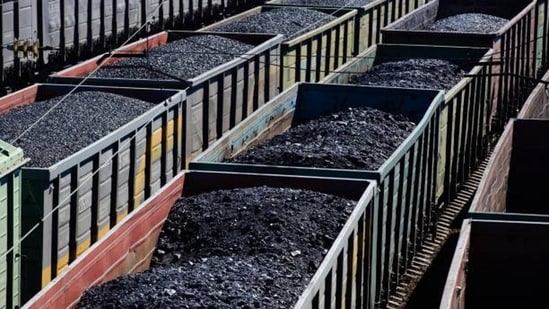
Methane emission from coal mines, often viewed mainly as a worker safety risk or marginal emission source, could be a recoverable domestic gas resource that reduces India's dependence on imported gas while simultaneously advancing India’s near-term climate goals. However, left to escape, it contributes disproportionately to global warming: Over a 20-year period, methane is over 80 times more potent than carbon dioxide.
Amid escalating geopolitical volatility and price shocks in global energy markets, the Indian government is implementing aggressive fuel supply diversification measures to bolster domestic resilience. Simultaneously, India is intensifying its crude oil purchases, expanding strategic reserves, and prioritising gas allocation for essential sectors. To buffer short-term shocks, the government is leveraging its strategic petroleum reserves and commercial stock, and scaling up storage infrastructure for LPG and LNG.
India’s coal backbone is central to maintaining grid stability and providing consistent, reliable baseload power to meet rising electricity demand. Despite an ambitious 2026 revision of India’s Nationally Determined Contributions (NDCs) for 2031–35, India’s energy strategy is governed largely by an expansion of domestic coal output to achieve national self-reliance by 2047. Additionally, the country is advancing cleaner coal technologies such as Carbon Capture, Utilisation, and Sequestration (CCUS) to lower its coal-driven carbon footprint.
{{/usCountry}}India’s coal backbone is central to maintaining grid stability and providing consistent, reliable baseload power to meet rising electricity demand. Despite an ambitious 2026 revision of India’s Nationally Determined Contributions (NDCs) for 2031–35, India’s energy strategy is governed largely by an expansion of domestic coal output to achieve national self-reliance by 2047. Additionally, the country is advancing cleaner coal technologies such as Carbon Capture, Utilisation, and Sequestration (CCUS) to lower its coal-driven carbon footprint.
{{/usCountry}}Against this backdrop, methane released from coal mines could be a strategic asset, if captured and measured, utilised and regulated.
India has already taken initial steps to commercialise its coalbed methane (CBM) resources: gas produced during coalification and stored in coal seams. Backed by $ 2.7 billion in recent investments and growing participation from players such as Reliance Industries and Essar Group. Exploration and production span approximately 7,010 km2 across 15 blocks, contributing $ 148 million in royalties to state governments and $ 7 million to the central government. Yet, production remains well below levels achieved by comparable mining economies such as Australia and the US, constrained by technical gaps, weak commercial frameworks, and insufficient expertise. These factors have led many awarded CBM contracts to be relinquished.
Similarly, coal mine methane (CMM), involving the capture and use of gas from active mines, faces myriad obstacles. Despite multiple feasibility studies and demonstrations conducted with the US Environmental Protection Agency (EPA) support across gassy coalfields, including Moonidih, Sudamdih, Sawang, and Chinakuri, progress toward commercial deployment has remained limited. A 2021 pilot involving BCCL, Prabha Energy, and Advanced Resources International marked the first CMM extraction within a designated coal block, though its current status remains unclear.
India is targeting coal production of over 1.5 billion tonnes annually by 2030 as a cornerstone of its energy security strategy, while facing rising natural gas demand reflected in LNG imports reaching 37 bcm in FY 2024–25. This begs the question: how much methane are India’s coal mining activities (including exploration and handling) releasing and how much can be feasibly recovered and utilised?
For India, CMM and CBM together offer a pathway through which energy security and climate objectives can be pursued in concert. Captured and utilised, this gas could reduce import dependence and provide baseload energy for industry.
There are significant uncertainties in the measurement of coal-related methane in India, making effective recovery and mitigation challenging. Published estimates of India’s CMM emissions range from as low as 0.05 Tg/yr (for UG mines only) to as high as 2.87 Tg/yr.
Current estimates frequently omit critical components of mining activities, including emissions from exploration, post-mining activities, and abandoned mines. Further, discrepancies exist in emissions estimates across sources. For example, India’s fourth national communication to the United Nations Framework Convention on Climate Change (UNFCCC) cited emissions of ~0.8 Tg CH₄ yr⁻¹ for 2023, while international assessments such as by the International Energy Agency (IEA) estimated 2.8 Tg CH₄ yr⁻¹, owing to the different methodologies used to quantify emissions. Bottom-up studies relying on mine-level activity data and emission factors arrive at very different figures than top-down studies using satellite retrievals and atmospheric inverse modeling.
While remote sensing satellites are showing improved ability to detect local gaseous emission clouds and offer an alternative to self-reported emissions, some scientists note the inherent limitations of spatial resolution, which makes it challenging to clearly differentiate among emission sources. Structural uncertainties and methodological limitations associated with top-down approaches include variations in air conditions and gaps in data collection over time and difficulties in accurately attributing emissions to particular sources. Moreover, IEA’s assigned emission factor for India (8.4 m3 (~5.7 kg) of emissions per tonne of coal mined for surface coal mining activities in 2023, revised down to 6.4 m3 (~4.3 kg) in 2024) differed significantly from India’s own estimates to the UNFCCC (1.18 m3 in 2024), leading to vastly higher overall emission estimates.
India's current reporting framework relies heavily on IPCC Tier 1 and Tier 2 emission factor approaches where standardised global averages are applied to national production data. These are considered appropriate starting points but remain highly uncertain, suggesting a need for improved mine-level measurement complemented by satellite-based validation.
When estimates differ by a factor of three, the sensible first move is to scale up measurement, though the gap to close is specific. India's own inventory puts coal-mine methane at roughly 0.8 Tg per year, broadly in line with independent high-resolution studies, while global inventories report more than three times that, a divergence driven less by under-reporting than by one-size-fits-all emission factors that overlook the low gas content of Indian coal.
Closing the evidence gap means extending mine-level measurement beyond the few dozen mines sampled so far, accounting for the abandoned mines the national inventory leaves out, and concentrating on the high-gas coalfields, chiefly Raniganj, Jharia and East Bokaro, that dominate the country's coal-methane budget.
Done well, with mining communities treated as partners through clear benefit-sharing and a genuine social licence to operate, the gas now leaking from India's coal mines stops being a liability and becomes what the numbers suggest: a domestic resource capable of displacing up to USD 980 million in gas imports by 2030, and a rare near-term climate win.
(The views expressed are personal)
This article is authored by Aishwarya Ramachandran, research manager, Amrapali Tiwari, research associate, and Vaibhav Chowdhary, director, Ashoka Centre for a People-centric Energy Transition, Ashoka University, Delhi-NCR.