
 E-Paper



The unravelling of India–Bangladesh ties
This article is authored by Amal Chandra, political analyst, and columnist and Anusreeta Dutta, cotutelle doctoral researcher, BITS Pilani.

 Prefer HTon Google


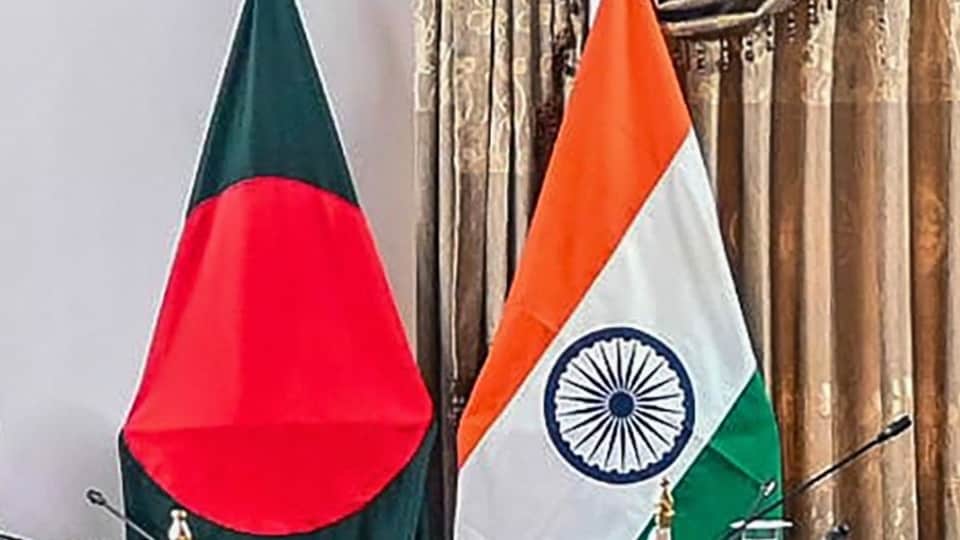
The India–Bangladesh relationship has entered one of its most volatile phases in decades, marked by mutual suspicion, provocative rhetoric, and escalating security and economic countermeasures. The aftermath of Operation Sindoor has exposed not only the fragilities of bilateral ties but also the deeper fault lines within South Asia’s regional order. As geopolitical currents shift, strategic mistrust between New Delhi and the current government in Dhaka threatens to reshape alliances and challenge the regional cooperation architecture.
Operation Sindoor, launched by India in May 2025 as a calibrated military response to the Pahalgam terror attack, was directed squarely at Pakistan. Yet its reverberations were sharply felt along India’s northeastern frontier. With renewed military focus on the West Bengal–Bangladesh border, India conducted the high-profile Teesta Prahar exercise in the riverine terrain of West Bengal. The deployment of next-generation weapon systems and advanced surveillance drones was interpreted by Dhaka not as a defensive measure against Pakistani infiltration but as an act of intimidation.
From India’s perspective, this militarisation stems from a persistent concern: That Pakistan’s ISI may exploit Bangladesh’s porous borders to orchestrate cross-border terror operations. Historical precedents—such as the use of third countries by non-State actors—bolster these concerns. However, India’s failure to accompany such actions with diplomatic outreach has deepened the perception in Dhaka that New Delhi is embracing a doctrine of coercive diplomacy.
Tensions escalated when a retired Bangladeshi general, closely associated with the current regime, publicly advocated for the occupation of India’s seven northeastern states in the event of an India–Pakistan conflict. His suggestion of a joint military alliance with China, while not officially endorsed, was ominous in both substance and source. Although Dhaka swiftly distanced itself from these remarks, Indian analysts remain sceptical. The critical question is: Can a State credibly distance itself from strategic provocations when those statements come from individuals embedded in its power structure?
This rhetorical escalation points to a broader trend: Bangladesh is asserting itself as a regional actor capable of strategic bargaining. By raising the spectre of cooperation with China, Dhaka is sending a clear message: It refuses to be a kind of satellite State. Instead, it seeks a multipolar regional arrangement, even if it means recalibrating its longstanding ties with New Delhi.
Trade, once a cornerstone of India–Bangladesh cooperation, has now been weaponised. In April 2025, Bangladesh imposed sudden restrictions on Indian imports of rice, yarn, and dairy products, citing concerns over pricing and quality. It also levied new transit duties that raised the cost of Indian goods moving through its territory. India responded by restricting access for Bangladeshi garment exports to the Northeast, redirecting them through seaports and effectively paralysing land-based trade. This tit-for-tat spiral impacted trade worth $770 million and marked a decisive turn towards zero-sum diplomacy.
While Indian officials defended their actions as national security measures, the economic fallout has been severe, especially for Bangladesh. Facing mounting trade deficits and currency devaluation, Dhaka turned to Beijing. During Prime Minister Yunus’s March 2025 visit, China offered duty-free access to Bangladeshi goods and committed over $21 billion in infrastructure investments. But this was more than economic generosity—it signalled Beijing’s long-term strategic investment in South Asia’s reordering. With projects like the revival of the Lalmonirhat airbase and proposals for a logistics hub near the Siliguri Corridor, China is embedding itself deeper into India’s strategic periphery.
India’s northeastern states—long marginalised economically and politically—have now become central to the region’s geopolitical rivalry. Yunus’s reference to potentially granting China access to the Siliguri Corridor was not just a provocation; it revealed Bangladesh’s evolving geopolitical calculus. For Dhaka, the corridor is no longer just a geographic choke point—it is a bargaining chip in its quest for strategic parity with India.
For New Delhi, such posturing is a red line. The Siliguri Corridor is of paramount strategic importance. Any threat to its integrity cannot be ignored. But this also raises uncomfortable questions: Has India done enough to bind the Northeast economically, politically, and emotionally to the rest of the nation? A region plagued by underdevelopment and sporadic insurgency cannot function as a sturdy strategic frontier.
The challenge for India, then, is this: How can the Northeast be transformed from a liability into a strategic asset, without resorting to coercive centralism? While some in Dhaka may scorn India’s longstanding support for Sheikh Hasina’s leadership, they would do well to remember that in South Asia, karma often comes cloaked in irony. As the subcontinent inches toward geopolitical chaos, it is only India, with its demographic heft, institutional resilience, and strategic depth, that holds the capacity to stabilise the region.
Those quick to mock Delhi’s choices forget that many of the very figures they now revere—be it Matangini Hazra, Surya Sen, or Khudiram Bose—were once branded as insurgents or dacoits. A little historical memory might humble those playing geopolitical roulette. As Dhaka courts dragons and entertains the imperial fantasies of retired generals, it would do well to remember who lit the torch of 1971—and who kept the darkness at bay.
India’s current approach to the Bangladesh crisis reflects a worrying diplomatic myopia. Rather than engaging proactively, New Delhi has defaulted to muscular posturing and reactive policy. It has failed to leverage its deep historical and cultural ties with Dhaka, allowing China’s economic diplomacy and Bangladesh’s insecurity to fill the vacuum. Moreover, India has neglected regional multilateral forums like Bimstec and Saarc—potential platforms for dialogue and confidence-building.
The absence of Track II diplomacy, people-to-people initiatives, and cross-border institutional collaboration has further widened the trust deficit. The critical question stands: Has India overestimated the utility of hard power in regional diplomacy while under-utilising the soft power instruments that have long served it well?
A deeper academic lens reveals that tensions in India-Bangladesh relations stem less from tactical errors and more from a persistent epistemic asymmetry—each State sees its role and identity differently than the other perceives it. India often approaches Bangladesh with a paternalistic mindset, expecting alignment in return for its 1971 support, while Bangladesh’s rising strategic elite views this as hegemonic. This disconnect leads to strategic misrecognition, where intentions are misread and cooperation is mistaken for dominance. Unless both sides shift from hierarchical diplomacy to reciprocal, interest-based engagement, mutual mistrust will persist beyond the reach of deterrence or economic tools.
The post-Sindoor phase of India–Bangladesh relations is emblematic of a deeper crisis in India’s neighbourhood policy. This volatility is not merely the product of external provocations, but also of internal policy drift and strategic complacency. Bangladesh, emboldened by Chinese overtures and frustrated by Indian overreach, is no longer hesitant to play hardball.
To navigate this turbulent moment, India must recalibrate its regional strategy. It must blend assertiveness with diplomacy, security with engagement, and national interest with regional interdependence. The Northeast must be integrated more robustly into the national framework—economically, politically, and psychologically—to withstand external pressures.
Most importantly, India must revisit its diplomatic priorities and restore multilateralism as a cornerstone of regional stability. Without a coherent, forward-looking strategy, India risks not just alienating a key neighbour but unravelling the very regional order it seeks to uphold.
This article is authored by Amal Chandra, political analyst, and columnist and Anusreeta Dutta, cotutelle doctoral researcher, BITS Pilani.


