
Cancer care sits at the intersection of some of health care’s hardest challenges. Patients need timely access to effective treatment, the cost of care must remain manageable, and the health system must continue to make room for the science that improves outcomes. These goals are complementary, and meeting them takes collaboration among government, healthcare providers, industry and other stakeholders.
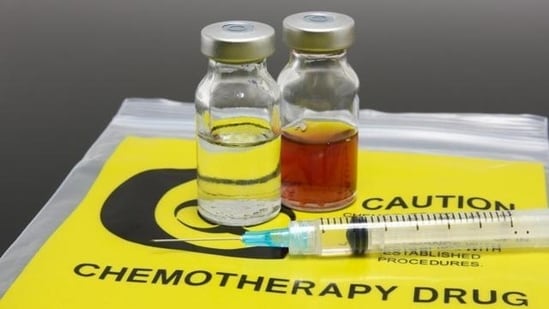
With the introduction of trade margin rationalisation (TMR) 2026, some media reports have asked why the prices of several innovative oncology medicines have not come down. It is a fair question, and the short answer is that the trade margins on these medicines were already within the cap that TMR now sets. The detail shows what TMR is designed to do and where efforts on affordability can be most effective.
Under the Drug Price Control Order 2013, scheduled drugs – those in the National List of Essential Medicines – carry a fixed ceiling price. These currently include 63 oncology drugs, among them immunosuppressives and palliative-care medicines. Non-scheduled drugs remain under price monitoring, with annual increases capped at 10%. TMR, which applies to certain non-scheduled drugs and was first used on 42 oncology drugs in 2019, works differently. It does not set a medicine’s price. It caps the margin between the manufacturer’s price to the trade and the maximum retail price (MRP) charged to the patient.
Under the 2026 framework, effective November 9, 2026, the permitted MRP is the first-sale price (the Price to Stockist/Price to Distributor) plus a trade margin of 30% of the MRP, plus GST. A medicine sold to the trade at ₹70 can, therefore, carry an MRP of no more than ₹100 before tax. The NPPA expected MRP reductions of 20–70%, depending on each medicine’s existing mark-up.
{{/usCountry}}Under the 2026 framework, effective November 9, 2026, the permitted MRP is the first-sale price (the Price to Stockist/Price to Distributor) plus a trade margin of 30% of the MRP, plus GST. A medicine sold to the trade at ₹70 can, therefore, carry an MRP of no more than ₹100 before tax. The NPPA expected MRP reductions of 20–70%, depending on each medicine’s existing mark-up.
{{/usCountry}}The formula lowers an MRP only where the existing margin is above 30%. Where the margin is already within the cap, it returns the same MRP. That is the position for the innovative oncology medicines supplied by member companies of the Organisation of Pharmaceutical Producers of India (OPPI), whose trade margins do not exceed 30%. Their MRPs have, therefore, not changed. An unchanged MRP is not a failure of the policy or a sign of non-compliance. It shows that the margin was already within the limit the Government has now set for the whole market.
The 2019 pilot on 42 oncology drugs cut the MRPs of 526 brands by up to 90%, and the Government expects the 2026 framework to save patients about ₹2,500 crore a year. The cases brought before the Supreme Court were of this kind: A cancer drug reaching retailers at about ₹2,700 against an MRP of ₹27,000, and a chemotherapy injection billed by a hospital at ₹1.3 lakh when a distributor could source it for about ₹11,000.
Innovative cancer therapies are not comparable to long-established medicines. Developing a new medicine typically takes 10 to 15 years and costs from over $1 billion to more than $2.6 billion per approved medicine, counting the cost of failed trials. Clinical testing alone accounts for 50% to 68% of total R&D expenditure, given the complexity, duration and number of human participants required. This is why the price of an innovative therapy may appear high even when its trade margin is fully within the cap.
That investment has delivered results. The five-year survival rate for all cancers combined has reached 70%, driven by targeted therapies, immunotherapies, and cell and gene therapies. The research-based biopharmaceutical industry helped deliver 14 major oncology USFDA approvals in 2025 and 15 in 2024, and hundreds to over 1,000 potential cancer medicines and vaccines remain in clinical trials or FDA review.
The price reflects the cost of discovering, testing and bringing the medicine to patients, including the many candidates that never reach them, and not distribution margins. Recognising this is not an argument against affordability. It is a reason to address affordability through measures suited to each component of the price.
An informed affordability discussion must distinguish between the price at which a manufacturer supplies a medicine and the margins added later in the chain. The cap applies at the first point of sale, yet the starkest gaps raised before the Court arose later, at distributors, retail counters and hospital pharmacies. Greater visibility across the chain would show where price build-up occurs and help target interventions where they matter most, without constraining patient access.
Innovative biopharmaceutical companies also address access through Patient Assistance Programmes (PAPs), which provide medicines free of cost or at discounted prices to eligible uninsured, underinsured and out-of-pocket patients. In cancer care, where therapy can be prolonged and costly, PAPs complement Government initiatives. Affordability needs multiple solutions: pricing and trade-margin policies, access programmes and collaborative approaches.
Improving affordability means improving patient access, and sustainable access requires that Indian patients continue to benefit from global advances in medical science. Affordability, availability and innovation must reinforce one another.
(The views expressed are personal)
This article is authored by Anil Matai, director general, Organisation of Pharmaceutical Producers of India.