Ask someone what they do to protect their heart, and you will probably get an answer.
They may tell you about their cholesterol levels, their blood pressure, how often they exercise, whether they eat less salt or whether heart disease runs in their family. Ask the same person about their lungs, and the answer is often much simpler: “I don't smoke.”
That is where our conversation about lung health often begins and ends.
As a pulmonologist, I see the consequences of this gap regularly. People come to us after months, sometimes years, of coughing, breathlessness, wheezing or reduced exercise capacity. Some have assumed that getting breathless while climbing stairs is simply a consequence of getting older. Others have become accustomed to a daily cough. Many have spent years treating recurring symptoms as allergies or pollution.
The lungs, unlike blood pressure or blood sugar, do not usually announce that something is wrong with a number we routinely measure. They can compensate surprisingly well, and the body often adapts gradually to declining respiratory function. A person may quietly stop taking the stairs, walk more slowly, avoid exercise or give up activities they once enjoyed without recognising that these changes may be telling them something about their breathing.
This does not mean that everyone needs a lung test or a CT scan as part of an annual health check. In fact, routine screening for COPD in adults who have no respiratory symptoms is not recommended. What we do need is something more basic: lung health needs to become part of our health awareness.
{{/usCountry}}This does not mean that everyone needs a lung test or a CT scan as part of an annual health check. In fact, routine screening for COPD in adults who have no respiratory symptoms is not recommended. What we do need is something more basic: lung health needs to become part of our health awareness.
{{/usCountry}}And in India, there is good reason for that.
Chronic respiratory diseases are not a marginal part of our health burden. A major analysis of the Global Burden of Disease data found that chronic respiratory diseases accounted for 6.4% of total DALYs in India in 2016, with COPD and asthma responsible for the majority of this burden.
Then there is tuberculosis, which remains an enormous public health challenge. India accounted for approximately a quarter of all estimated TB cases globally in 2024.
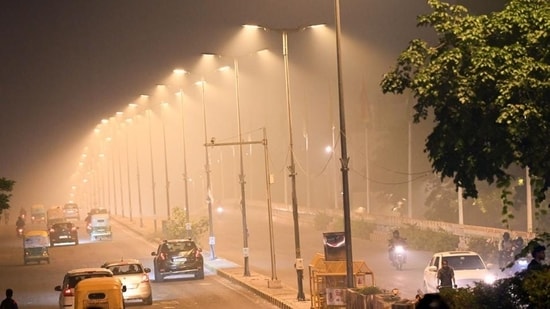
And increasingly, there is the air around us.
Air pollution is not simply an environmental inconvenience that makes certain days unpleasant. Fine particulate matter and other pollutants can affect the respiratory and cardiovascular systems, contribute to chronic disease and worsen existing respiratory conditions. WHO identifies outdoor and household air pollution as important risk factors for COPD, lung cancer, pneumonia and other respiratory diseases.
But pollution is only one part of the story.
We often reduce lung health to smoking, as though a non-smoker automatically has healthy lungs. Smoking is certainly an important risk factor, but our lungs encounter many other exposures over a lifetime: second-hand smoke, household air pollution, occupational dust and chemicals, infections and allergens. WHO identifies tobacco smoke, air pollution, occupational exposures and respiratory infections among the important determinants of lung health.
There is also a tendency to think about respiratory illness as something that happens to ‘other people’.
Asthma is often dismissed as a childhood problem. COPD is associated almost exclusively with older smokers. Tuberculosis is still surrounded by stigma. Breathlessness is attributed to being unfit. A persistent cough is treated with whatever medicine happens to be available at the pharmacy.
These assumptions can have consequences.
One of the most important things I tell patients is that symptoms are information. A cough that persists, unexplained breathlessness, recurrent wheezing, reduced exercise tolerance or repeated chest infections deserve attention, particularly when they are new, worsening or interfering with daily life. The right response is not necessarily to panic or to demand a scan. It is to understand why the symptom is happening.
That distinction matters because good lung health is not about constantly worrying about your lungs. It is about knowing when to pay attention to them.
We have become much better at recognising that prevention matters for cardiovascular and metabolic health. We monitor blood pressure. We check blood sugar and cholesterol. We discuss weight, exercise and diet. We know that habits accumulated over decades can shape our health later in life.
We should bring the same mindset to breathing. That begins with some very ordinary questions.
Do I smoke or use tobacco? Am I exposed to second-hand smoke? What is my occupational exposure? What is the air quality where I live and work? Do I have asthma, allergies or recurrent respiratory infections? Am I vaccinated against preventable respiratory infections when appropriate? Have I noticed a change in my ability to walk, exercise or sleep because of my breathing?
And perhaps most importantly: Have I normalised a respiratory symptom that I should actually be discussing with a doctor?
There is another reason this conversation matters. Lung health is not simply about avoiding disease. It is about preserving function.
Our lungs allow us to work, exercise, sleep, travel, talk, laugh and participate in ordinary life without having to think about every breath. When respiratory disease becomes advanced, it is not just lung function that is affected. Everyday independence can shrink with it.
The good news is that there is much we can do. Avoiding tobacco, reducing harmful exposures, staying physically active, maintaining appropriate vaccinations, managing conditions such as asthma and COPD properly, and seeking medical advice when symptoms persist can all form part of protecting respiratory health. Chronic respiratory diseases are often manageable, and appropriate treatment can reduce symptoms, prevent exacerbations and help people remain active.
Perhaps we need to stop thinking of breathing as something our bodies simply do for us and start thinking of it as something worth protecting.
We do not need to become anxious about every cough or check our lungs every year simply because we check our blood pressure. We need something more sensible: greater awareness, earlier attention to symptoms, fewer myths and a better understanding of the factors that shape respiratory health.
Our lungs work silently for us every minute of every day.
Maybe it is time we started paying them the same attention we give the rest of our health.
(The views expressed are personal)
This article is authored by Dr Bornali Datta, director, Department of Respiratory & Sleep Medicine, Medanta the Medicity, Gurgaon.