Close to the city of Varanasi, where Narendra Modi is contesting Arvind Kejriwal, lies a small village called Lamahi, the birthplace of Munshi Premchand. Premchand, in his most well-known novel, Godan, created two Dalit characters called Hori and Dhaniya, who were agricultural labourers and married to each other. Hori is a man of few words and is very submissive in nature while his wife Dhaniya is vocal and articulate. I wanted to question the Dalits living in Varanasi whom among Hori and Dhaniya they would like to emulate and which party they would vote for.
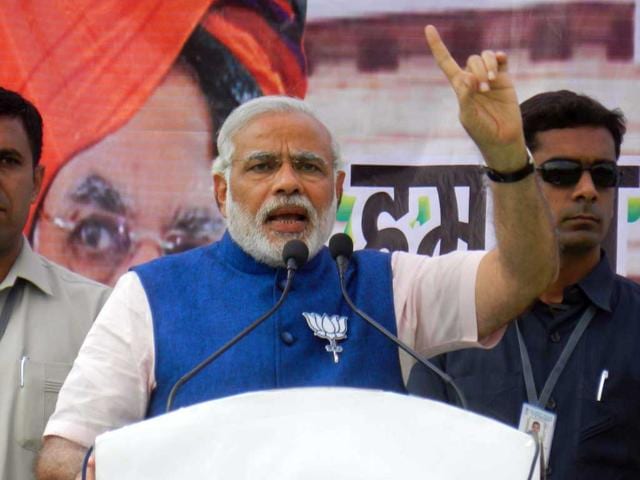
I visited a village called Sirgo-bardhanpur, a Dalit-Yadav hamlet situated just behind Banaras Hindu University. It is inhabited chiefly by people belonging to the Chamar caste, which comprises 12% of the state’s Dalit population, which is 21.6% of the population of Uttar Pradesh. I found that most of the people are familiar with both Modi and Kejriwal. In terms of influence, some are more influenced by Modi and some by Kejriwal. However, when it comes to voting, BSP leader Mayawati and the Congress are attractive to them.
In some other villages such as Dalipur and Anai, which lie around 20 km from Varanasi and are inhabited chiefly by people belonging to the Musahar caste, there is no propaganda about Modi or Kejriwal as there are hardly any telecommunication facilities like TV or cellphones. The people there still think the elections are a fight among Mulayam Singh Yadav’s party, Mayawati’s party and the Congress.
On April 25, just before launching his campaign in Varanasi, Kejriwal took a holy dip in the Ganga after applying chandan and tilak. Someone must have advised him that since the middle classes of Varanasi are highly religious, in order to link with them it is important to display a certain amount of religiosity. It is, however, not commonly known that Varanasi also has a large Muslim, Kabirpanthi and Ravidasi population. Among the Hindus too there is a large section of the intellectual youth. While linking with the symbols of Varanasi, Kejriwal also mentioned Raja Harishchandra, but forgot that Varanasi is also the land of Raja Dom. The city is considered the land of moksh and the road to moksh passes through the burning grounds, whose king was Dom. According to mythology, Harishchandra spent his bad days as the servant of Raja Dom.
{{/usCountry}}On April 25, just before launching his campaign in Varanasi, Kejriwal took a holy dip in the Ganga after applying chandan and tilak. Someone must have advised him that since the middle classes of Varanasi are highly religious, in order to link with them it is important to display a certain amount of religiosity. It is, however, not commonly known that Varanasi also has a large Muslim, Kabirpanthi and Ravidasi population. Among the Hindus too there is a large section of the intellectual youth. While linking with the symbols of Varanasi, Kejriwal also mentioned Raja Harishchandra, but forgot that Varanasi is also the land of Raja Dom. The city is considered the land of moksh and the road to moksh passes through the burning grounds, whose king was Dom. According to mythology, Harishchandra spent his bad days as the servant of Raja Dom.
{{/usCountry}}In order to draw the Dalit population into the Hindutva fold, the RSS has been carrying on the ‘Samrasta Abhiyan’ or ‘communal harmony programme’ for 20 years. Under this programme the top leaders of the RSS and the BJP of that region visit the Dalit hamlets and eat ‘khichri’ with the inhabitants. For a long time the RSS and the BJP have been trying to link Raja Dom with the Hindutva campaign. In the 1990s the head of the RSS from that region himself visited the house of Raja Dom and invited the members to eat khichri at the communal harmony feast organised by the RSS. Due to their efforts, some of the small Dalit communities are inclined towards Hindutva politics.
However, even today the older Dalits are reminded of Indira Gandhi when they talk about the charisma of Modi. They believe that the country needs a leader like her and not someone like Modi.
Thus the Dalits of Varanasi are a divided lot like Hori and Dhaniya of Premchand. But most of them are only looking for relief from their daily grind, whether it is from the BSP or the Congress.
Badri Narayan is professor, GB Pant Social Science Institute, Allahabad
The views expressed by the author are personal