E-Paper



Book review: Sonia Rafeek's The House of Girls transalted by Ministhy S spotlights a metafictional Bait Al Banat in UAE
Sonia Rafeek's new novel – translated from Malayalam to English by Ministhy S – attempts to archive Emirati women’s contributions, histories, and experiences.

 Prefer HTon Google


What happens when a book arrives at your doorstep, written in your name, but not by you? In The House of Girls, Sonia Rafeek spins a layered, metafictional tale where fiction and reality blur, and forgotten women step into the light. Translated from Malayalam into English by Ministhy S, the novel follows Nazia Hassan — a Malayali woman living and working as a hospital receptionist in Dubai — who receives a mysterious book, Bait Al Banat (House of Girls), authored under her name.
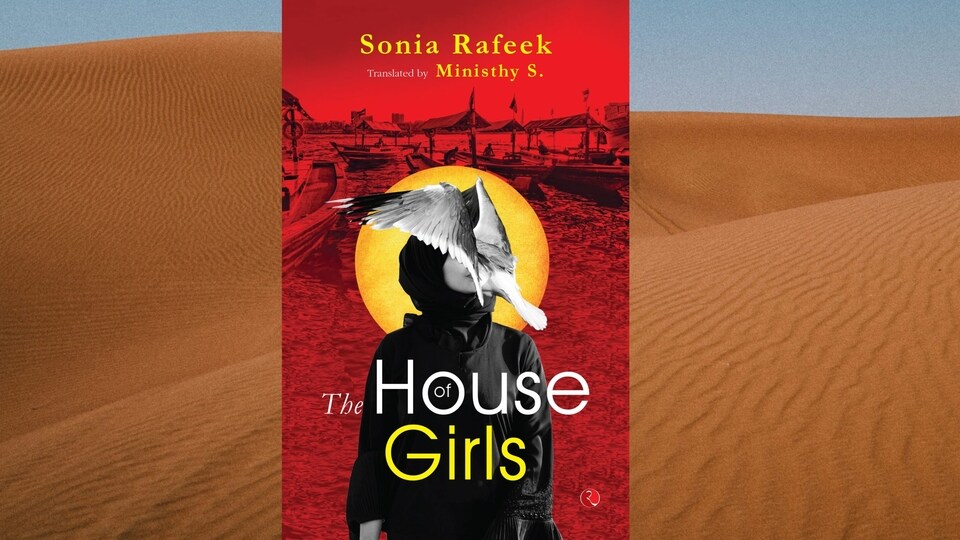
The mystery of who wrote the book is central, but it’s not the only intrigue here. As Nazia begins reading, the reader too is drawn into the parallel world of Mariam, Soraiyya, and Shamsa. Unmarried Muslim women living in Dubai’s Gold Souk in 1959, they are forever relegated to the epithet of girls due to their marital status. These characters are loosely centred around the women of the Bait Al Banat Women’s Museum in Dubai (UAE). The museum, created to archive and honour Emirati women’s contributions, histories, and lived experiences, plays its silent yet present part in the historiographic metafiction.
The novel’s structure — stories nested within stories — gives readers Nazia’s eyes, aligning our curiosity and confusion with hers. However, the non-linear narrative falters, the pacing stutters, and the central mystery stretches longer than necessary. The pay-off, when it comes, just cuts the mark for being emotionally and thematically satisfying.
Past and present love encounters inform the book. While lone unmarried women are the centre, they are not stereotyped and the trope is not overused to the point of exhaustion. Decentring the men, these are women whose entanglements with men (platonic, romantic, or filial) aren’t romanticised but seen as solid, complex parts of their being. The author captures the nuances of cultural silencing without turning her characters into case studies.
The House of Girls isn’t a loud novel. It’s a quiet reckoning about what women carry, what they inherit, and how they sometimes break the frame to finally be seen.
Title: The House of Girls
Author: Sonia Rafeek
Translator: Ministhy S
Publisher: Rupa Publications
Price: ₹395