
 E-Paper



140 Maoists, including senior leaders Rupesh and Ranita, to surrender in Chhattisgarh
The Maoists crossed the Indravati River along the borders of Dantewada, Bijapur districts. They will be ferried to Jagdalpur, where the formal surrender ceremony is scheduled to take place

 Prefer HTon Google


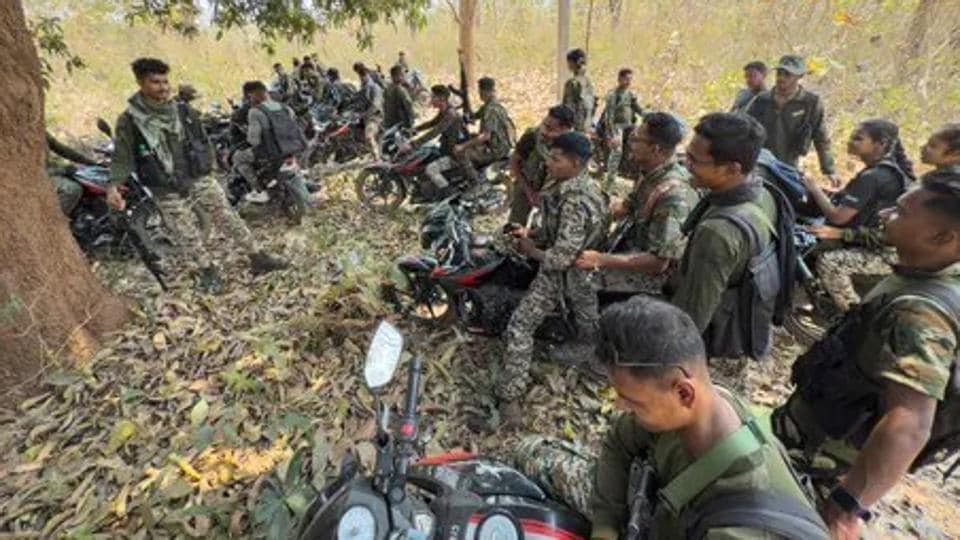
Abujhmad: Around 140 Maoists, including senior CPI (Maoist) leader Rupesh and Dandakaranya Special Zonal Committee’s (DKZC) Maad division in-charge Ranita, will lay down arms and formally surrender before Chief Minister Vishnu Deo Sai and Home Minister Vijay Sharma in Chhattisgarh’s Jagdalpur on Friday, a senior official from the Chief Minister’s Office said.
Rupesh, a prominent Maoist leader from Andhra Pradesh who was active in Chhattisgarh, has coordinated between various divisions of the DKZC and managed logistics, communication, and training in the Maad area. Over the years, he was regarded as a bridge between the Central Committee and the local zonal structure. His surrender, officials say, will “severely weaken the outfit’s operational capability in Bastar.”
Maad division in-charge Ranita is one of the senior women commanders in the outfit and has been active across several Bastar districts.
“Both leaders had been in hiding in deep forest zones, but recent operational pressures and outreach efforts persuaded them to opt for surrender,” an officer, requesting anonymity, said.
According to police officers, the Maoists came out of the forests and crossed the Indravati River along the borders of Dantewada and Bijapur districts. They will be ferried to Jagdalpur, where the formal surrender ceremony is scheduled to take place.
For decades, senior leaders, including Central Committee members and zonal commanders, used the vast, forested, and hilly expanse in Abujhmad — spread across Narayanpur and adjoining districts — as a training ground and command hub.
“The surrender of Rupesh and Ranita symbolises the end of an era. Maad and Abujhmad were once thought to be beyond the state’s reach — this development shows how much the ground reality has changed,” a senior police officer said.
The development comes just two days after senior Politburo member and key Maoist strategist Mallojula Venugopal Rao, alias Sonu or Bhupati, surrendered before the police in Maharashtra’s Gadchiroli district, along with around 60 cadres.
Union Home Minister Amit Shah wrote on X, “It is a matter of immense pleasure that Abujhmar and North Bastar in Chhattisgarh that were once terror bases, have today been declared as free from Naxal terror. Now a trace of Naxalism exists in South Bastar, which will be wiped out soon by our security forces. Since January 2024, after the BJP government was formed in Chhattisgarh, 2,100 Naxalites have surrendered, 1,785 have been arrested, and 477 have been eliminated. These numbers mirror our fierce resolve to decimate Naxalism before the 31st of March 2026.”
The state government will extend rehabilitation benefits to the surrendered cadres under its surrender and rehabilitation policy, which includes financial assistance, housing support, and vocational training.
Home Minister Vijay Sharma said the focus remains on consolidating peace through development, governance outreach, and reintegration of surrendered cadres.
-kW0H-U20214218012MgB-250x250%40HT-Web.jpg)


