E-Paper



19 new ministers join Gujarat cabinet after rejig
The reshuffle expands the council’s social and regional base. It includes seven Patidars including the CM, eight other backward classes, three scheduled castes, four scheduled tribes, and three women

 Prefer HTon Google


Nineteen new faces joined and six others kept their seats in the Gujarat council of ministers on Friday after a dramatic reshuffle that saw 11 lawmakers dropped as the Bharatiya Janata Party (BJP) effected an administrative overhaul to prepare for the local body elections next year and state polls in 2027.
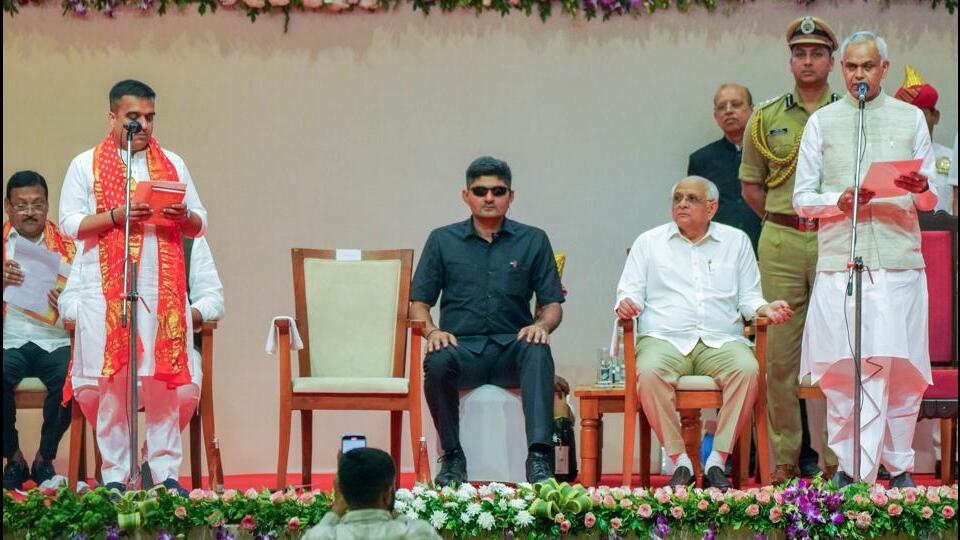
The oath-taking ceremony at Mahatma Mandir in Gandhinagar was administered by governor Acharya Devvrat in the presence of BJP chief JP Nadda, Union ministers Mansukh Mandaviya and CR Patil, and Gujarat BJP chief Jagdish Vishwakarma. It came a day after all 16 members of the cabinet tendered their resignation to chief minister Bhupendra Patel.
“By preserving our ancient heritage and the lofty human values of Indian culture, we will keep Gujarat forever at the forefront of development and ensure the welfare of every citizen of the state,” Patel said on X after the swearing-in ceremony.
Harsh Sanghavi, a three-time MLA from Majura in Surat, was elevated to deputy chief minister, reviving the post after nearly four years. The 40-year-old leader, who earlier served as minister of state for home, will now handle a wide range of portfolios including home, police housing, jail, border security, civil defence, prohibition and excise, transport, law and justice, sports, youth and cultural affairs, industries, MSME, printing and stationery, tourism and civil aviation. The position of deputy CM was last held by Nitin Patel in the Vijay Rupani government in 2021.
“Grateful for the love and support from everyone. Instead of hoardings and banners, let’s share our joy through social service and bring light to those in need,” Sanghavi said on X.
CM Patel retained the key portfolios of general administration, administrative reforms and training, planning, non-resident Gujaratis’ division, revenue and disaster management, roads and buildings, Narmada, Kalpasar, mines and minerals, ports, information and broadcasting, and all subjects not allotted to other ministers.
Rivaba Jadeja, MLA from Jamnagar North and wife of cricketer Ravindra Jadeja, was one of three women in the new council, alongside Manisha Vakil and Darshana Vaghela, representing the BJP’s effort to promote younger, educated women in governance.
The reshuffle expands the council’s social and regional base. It includes seven Patidars including the CM, eight other backward classes, three scheduled castes, four scheduled tribes, and three women. The Saurashtra region, which plays a decisive role in state politics, now has eight ministers, up from five in the previous council.
The reshuffle also saw the exit of 11 ministers from the previous council. Among those dropped included Jamnagar Rural MLA Raghavji Patel and Devgadh Baria MLA Bachu Khabad, whose son’s alleged involvement in an MGNREGA recruitment scam drew public criticism.
State BJP chief Jagdish Vishwakarma was also relieved of ministerial duties to focus on organisational work.
Arjun Modhwadia, the MLA from Porbandar and a former Gujarat Congress president who joined the BJP last year, was given forests and environment, climate change, science and technology. A mechanical engineer by qualification, Modhwadia’s inclusion signals the BJP’s intent to consolidate its influence in Saurashtra.
Jitubhai Vaghani, the MLA from Bhavnagar West and former education minister in the Vijay Rupani government, returned to the cabinet with the charge of agriculture, cooperation, fisheries, animal husbandry and cow breeding, reinforcing rural and coastal representation. Naresh Patel will head tribal development, khadi, cottage industries and rural industries; Pradyumn Vaja from Kodinarassembly constituency will oversee social justice and empowerment and the entire education portfolio; and Ramanbhai Solanki from Jasdan will manage food, civil supplies and consumer affairs.
Kanubhai Desai from Pardi continued as finance minister, also handling urban development and urban housing. Rushikesh Patel from Visnagar retained energy and petrochemicals, panchayat and rural housing, legislative and parliamentary affairs, and Kunvarji Bavaliya from Jasdan continued with labour, skill development and employment, rural development. Parshottam Solanki from Bhavnagar Rural remained minister of state for fisheries. Praful Pansheriya from the Kamrej assembly seat was appointed minister of state for health with independent charge. Together with Harsh Sanghavi, they are the six members from the previous council whose resignations were not accepted.
Among the ministers of state (independent charge), Ishwarsinh Patel will head water resources and water supply, Prafull Panseriya, a doctor by profession, will handle health, family welfare and medical education, and Manisha Vakil will oversee women and child development, while also serving as minister of state for social justice and empowerment.
The ministers of state include Kantilal Amrutiya (labour and employment), Ramesh Katara (agriculture and cooperation), Darshana Vaghela (urban development and urban housing), Kaushik Vekariya (law, energy and petrochemicals), Pravinkumar Mali (forests, environment, climate change and transport), Dr. Jayrambhai Gamit (sports, industries, MSME, tourism and civil aviation), Trikam Chhanga (higher and technical education), Kamlesh Patel (finance, home, excise and civil defence), Sanjaysinh Mahida (revenue and disaster management, panchayat and rural housing), PC Baranda (tribal development, food, civil supplies and consumer affairs), Swarupji Thakor (khadi and cottage industries), and Rivaba Jadeja (primary, secondary and adult education).
Soon after the ceremony, CM Patel chaired the first meeting of the reconstituted cabinet at his office in Gandhinagar that lasted for over one and half hours. Chief secretary Pankaj Joshi, who conducted the oath proceedings, coordinated the session that discussed early departmental coordination and implementation of development and welfare schemes.
Gujarat Congress chief Amit Chavda said the reshuffle “exposed the government’s failures” and accused the BJP of merely replacing faces instead of addressing corruption and administrative paralysis. “Over half the ministers being dropped shows that this was a failed team,” he said.