Pune has witnessed the steepest urban growth among India’s largest cities over the past three decades, expanding its built-up footprint by 332% between 1995 and 2025, according to a new study by a real estate platform, which tracked the land area covered by human-made structures using satellite imagery.
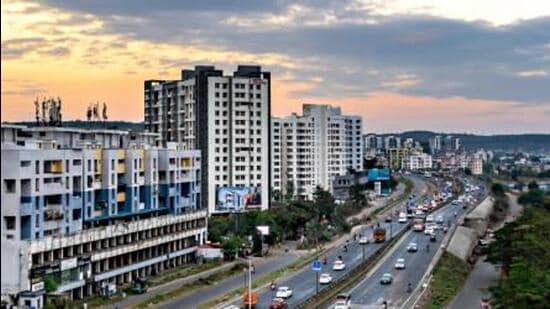
Pune’s built-up area surged from 86 sq km in 1995 to 373 sq km by 2025. Once known primarily as an education hub, the city evolved into a technology and manufacturing centre, attracting large-scale residential and commercial development that pushed its urban boundaries outward in multiple directions, the study ‘Cities in Motion: Tracing 30 Years of Urban Expansion in Key Indian Cities’ by online real estate portal Square Yards said.
Bengaluru, India’s technology capital, recorded the second-fastest growth, with its built-up area increasing 186% — from 174 sq km to 498 sq km over the same period. The IT boom, international airport development, and large infrastructure projects such as the Outer Ring Road and Namma Metro catalysed new real estate corridors and peri-urban expansion, said the report.
Chennai followed with a 137% rise in built-up area, growing from 197 sq km in 1995 to 467 sq km by 2025, fuelled by its automobile, electronics, IT and logistics sectors. New corridors, including the Outer Ring Road and the Chennai–Bengaluru Industrial Corridor, opened up growth in the western and northern zones, complementing southern expansion along the IT-heavy OMR corridor, the report added.
Delhi NCR, already India’s largest urban agglomeration, expanded more steadily, adding 400 sq km — a 71% rise — to reach a massive 967 sq km Hyderabad nearly doubled to 519 sq km, while Ahmedabad grew 102% to 285 sq km Kolkata (611 sq km) and Mumbai Metropolitan Region (588 sq km) saw comparatively slower growth at 87% and 43% respectively, with Mumbai’s land constraints resulting in vertical rather than horizontal expansion.
“The urban built-up footprint across the top-eight cities has doubled since 1995 to 4,308 sq km in 2025. And while metros continue to dominate, the real excitement is also in Tier 2 and 3 cities, where better infrastructure and capital flows are powering the next wave of growth,” Tanuj Shori, CEO and founder of Square Yards, said.