The government is looking up to China to give a fillip to India’s economy.
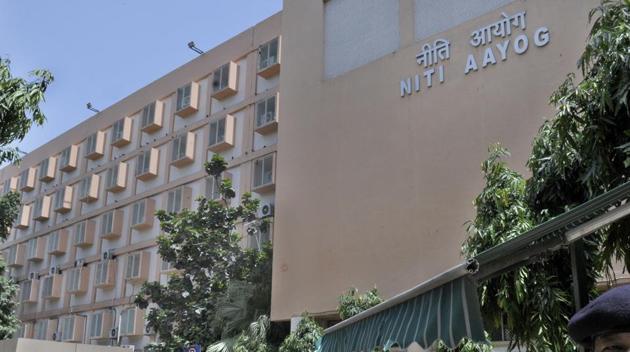
Or so it seems. There are 67 references to “China” and “Chinese” in the Three-Year Action Agenda: 2017-18 to 2019-20 prepared by the government think tank Niti Aayog.
The agenda, released by finance minister Arun Jaitley on August 24, not only hails and acknowledges China’s economic muscle but also highlights how India comes up short.
China may not be the most neighbourly neighbour – Doklam standoff is in its third month — but it is the world’s second biggest economy and has a lot going for it.
From special economic zones to job creation, from world-class universities to modern cities, from communication technology to soft power – the Niti Aayog, which is chaired by Prime Minister Narendra Modi, has taken note of it all.
The agenda underscores the need to “replicate” China’s very large special economic zones along its coasts by developing two employment zones on India’s east and west coasts.
For Make in India to succeed, the country would have to manufacture for a global market, as China and some other countries do. But for that, Indian products have to be competitive, it says.
{{/usCountry}}For Make in India to succeed, the country would have to manufacture for a global market, as China and some other countries do. But for that, Indian products have to be competitive, it says.
{{/usCountry}}The Shenzhen model of urbanisation could inspire smart cities. Shenzhen used to be an unremarkable town until 40 years ago but an urbanisation push transformed it into a megacity, one of China’s wealthiest.
Highlighting the role exports play in increasing productivity, employment and wages, the document says there are only four developing countries — China, Taiwan, Singapore and South Korea — that “successfully transformed themselves” within three decades. But China, with a population similar to India, is most comparable.
“In 2015, the world merchandise exports amounted to $16.6 trillion. China accounted for 13.72% of these exports and India only 1.67%,” says the report.
The Aayog’s governing council, including Modi, many Union ministers and chief ministers, deliberated on the draft document in April.
Their comments were incorporated in the agenda, commissioned by the prime minister’s office in May 2016.
The action agenda wants India to harness its soft power by setting up centres “similar to” Confucius Institutes of China, Alliance Francaise of France and Goethe institutes of Germany.
It also talks about creating world-class universities by “learning from” China and Singapore. China follows a tiered system where the top-rung institutes — Beijing and Qinghua — receive significantly higher funding. “We too should be careful that we do not spread available funds too thin. Instead, we should adopt the tiered funding model for public universities,” says the agenda.
It also sees an opportunity in rising wages in China. Many multinational firms, especially in labour-intensive sectors, are turning uncompetitive and are looking for alternative low-wage locations. India could be a “natural home” for such firms, it says.