A realpolitik appraisal of the ‘Mandal-Kamandal’ fight in UP
The BJP, on the other hand, has always claimed that Mandal-based parties such as the SP have only helped their own causes (for instance, the Yadavs in both Bihar and UP) in the name of social emancipation after capturing power.
The Uttar Pradesh elections seem to be resurrecting the past memories of Mandal versus Kamandal contest only at the level of polemics. After chief minister and Bharatiya Janata Party (BJP) leader Yogi Adityanath’s claim of the polls being an 80% versus 20% (read Hindu versus Muslim) contest, Yogi’s former cabinet colleague Swami Prasad Maurya, who deserted the BJP to join the Samajwadi party (SP), claimed the election was actually a fight between 85% versus 15% (read non-upper caste Hindus and
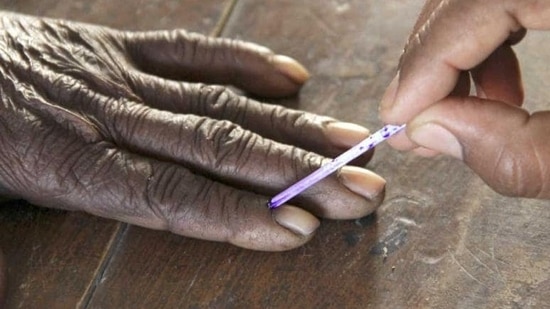
A realpolitik appraisal of the ‘Mandal-Kamandal’ fight in UP (Picture for representation purpose)
Average assets of MLAs and candidates
Ticket distribution pattern does not endorse either 80-20 or 85-15 contest
{{^usCountry}}{{/usCountry}}
Polemics about the elections being an 80-20 or 85-15 contest suggest the larger cohort, which the parties claim to represent, is united behind them. The least one would expect is that the party in question tries to mobilize the groups it is targeting. Data on caste background of candidates, sourced from the database of the Trivedi Centre for Political Data (TCPD), does not support such claims.
If the BJP were really serious about consolidating all Hindu votes, it would make an equal distribution of tickets among them. That is not the case. Almost half of the BJP’s candidates in the 2017 elections were upper castes. It was far greater than their share in population. The BJP also fielded a lower share of Yadavs, who are the core support base of the SP in the state. Yadavs and Jatavs, the core support base of the SP and BSP, respectively, have a higher share among the candidates of the parties, but their share is not too disproportionate. Similarly, the SP and BSP fielded a significant share of upper caste candidates, something that goes against the clichéd Mandal rhetoric. In other words, parties are more pragmatic when it comes to distributing tickets on the ground than what their political polemics would suggest.
Caste-wise share of candidates for four major parties in 2017 Uttar Pradesh
Political power is key to upward mobility of the social elite
If it is only the super rich who contest elections, and all political parties make social compromises against what their political rhetoric suggests, why do people fall for such rhetoric? The newfound assertion of the non-domiant castes in Indian politics can be thought of as the relatively less privileged social elite leveraging their social group’s electoral strength to make stronger bargains from the socioeconomically dominant communities in the political system.
The communities currently enjoying a dominant economic position would not be where they are had they not had political power. This is best seen in a comparison of average asset levels of candidates and MLAs in the 2017 assembly elections in Uttar Pradesh. It uses a caste-wise database of candidates compiled by TCPD that the centre matched with candidate-wise asset database from ADR at HT’s request.
The comparison showed Yadav candidates were not far from the average asset level of upper-caste candidates, whereas SC and ST candidates are almost at the same asset level as non-dominant OBCs. It will not be wrong to say that every community wants to move to the right hand side on the chart, and the ones already on the right cannot retain power unless they do business with the ones on the left.
Caste-wise average assets of candidates and MLAs
With the Indian economy having lost higher growth momentum of the past decade, and given the shrinking footprint of the state in the economy, it will become even more difficult for the entrenched sociopolitical elite to accommodate the aspirations of their strategic allies from non-dominant social groups. It means that political conflict and perhaps the revolving doors for non-dominant caste allies are unlikely to end anytime soon in India.
Roshan Kishore is the Data and Political Economy Editor at Hindustan Times. He heads the newsroom's data journalism team, which produces Number Theory, a daily data-driven feature for the print edition and the HT app. Number Theory uses data analysis and story-telling based on it to add value to the newsroom’s daily coverage by putting stories in a larger context on a range of issues, including politics, macroeconomy, markets, global affairs and climate. Under his leadership HT’s data journalism work has established itself as a niche product in Indian journalism and pushed the boundaries of marrying academic rigour with news sense and speed. Along with writing and editing data stories, he has also been writing a weekly political economy column called Terms of Trade for HT Premium. A trained economist with an MPhil degree from Jawaharlal Nehru University, Kishore has also been a visiting fellow at the Centre for Advanced Studies of India (CASI) at the University of Pennsylvania. Along with his journalistic work, his writings have also appeared in journals such as the Economic and Political Weekly and working papers for CASI and UNESCAP.
Get Latest News, breaking headlines, and top India News, and today real-time updates from across the nation. Stay informed on politics, government policies, crime, Today Weather, and major developments on Hindustan Times
Get Latest News, breaking headlines, and top India News, and today real-time updates from across the nation. Stay informed on politics, government policies, crime, Today Weather, and major developments on Hindustan Times
Home/India News/A realpolitik appraisal of the ‘Mandal-Kamandal’ fight in UP
{{^htLoading}}
Advertisement
{{/htLoading}}
SHARE THIS ARTICLE ON
{{#usCountry}}{{/usCountry}}
Notifications
Get breaking alerts directly from the newsroom
Notifications are on!You'll be notified when news breaks