The Aam Aadmi Party on Friday raised concern over the "alarmingly high" number of swine flu or H1N1 cases in Delhi, urging the government to step up public awareness efforts and take measures to contain the spread of infections.
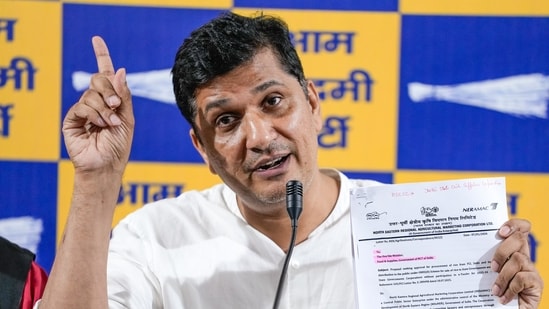
AAP Delhi president Saurabh Bharadwaj claimed that several people in the capital are experiencing flu-like symptoms.
"Across Delhi, an alarmingly high number of people, especially school-going children, are suffering from high-grade fever, cough and flu-like symptoms. Some say it's H1N1," Bharadwaj said in a post on X.
Deep Dive
What are the symptoms of H1N1 that are being reported in Delhi?
Why are H1N1 cases increasing in Delhi during the monsoon season?
How can individuals protect themselves from H1N1 infections?
Also Read | JP Nadda to review Delhi’s H1N1 situation today amid rise in swine flu cases
Saurabh Bharadwaj on Delhi swine flu cases
He alleged that the government had not undertaken adequate measures to address the situation and called for greater public awareness as well as adequate availability of medicines at hospitals and dispensaries.
"To my understanding, it is highly contagious and spreading like corona. Once a family member gets it, almost everyone gets sick in turn," Bharadwaj said.
{{/usCountry}}"To my understanding, it is highly contagious and spreading like corona. Once a family member gets it, almost everyone gets sick in turn," Bharadwaj said.
{{/usCountry}}Also Read | Shabana Azmi diagnosed with swine flu, misses student protest after being advised five days of isolation
Govt's swine flu measures
Union Health Minister J P Nadda on Friday reviewed the influenza situation and preparedness measures in Delhi amid a rise in H1N1 cases in the national capital.
Nadda reviewed the national influenza surveillance and epidemiological situation, trends in influenza-like illness (ILI) and severe acute respiratory infections (SARI), testing and laboratory surveillance, as well as the preparedness of healthcare facilities, with a particular focus on Delhi, the Union Health Ministry said in a statement.
Delhi Health Minister Pankaj Kumar Singh also attended the meeting.
“The health minister emphasised the need for close monitoring of influenza trends and proactive preparedness to ensure early detection and timely clinical management of cases,” the statement said.
1,777 cases of swine flu in Delhi
Delhi has recorded 1,777 cases of swine flu so far this year.
Earlier on Friday, Delhi health minister Pankaj Kumar Singh and health department officials met Union Health Minister J P Nadda and senior officials from the Union Ministry of Health and Family Welfare to review the swine flu situation in the capital, according to a PTI report.
Medical practitioners said H1N1 infection, commonly known as swine flu, typically causes fever, cough, sore throat, headache, body aches and fatigue.
People experiencing persistent high fever, breathing difficulty, chest pain, confusion or worsening symptoms are advised to seek medical attention promptly.
Also Read | H1N1 flu cases swell in Delhi: Symptoms, precautions and who is at risk
What is happening?
Delhi has reported 2,392 influenza-A cases, including 1,777 H1N1 (swine flu) infections, so far this year, with Health Minister Pankaj Kumar Singh saying Friday that the capital is fully equipped to handle the seasonal rise in influenza cases.
Singh attended a meeting chaired by Union Health Minister J P Nadda on Friday to review Delhi's preparedness to manage seasonal influenza and vector-borne diseases.
In a statement issued after the meeting, Singh said there was no shortage of beds, doctors, medicines or essential medical equipment in the city. He added that the number of patients was being closely monitored and hospital arrangements were being strengthened based on requirements.
The Delhi State Health Mission is conducting surveillance through the Integrated Disease Surveillance Programme (IDSP), with daily monitoring of influenza-like illness (ILI), severe acute respiratory infection (SARI) and influenza cases reported through the IDSP-IHIP (Integrated Health Information Platform) portal, according to the statement.
The statement said regular updates were being shared with senior authorities to track the situation.
Advisories have also been issued to chief district medical officers, district surveillance officers and hospitals for the screening, reporting and monitoring of ILI, SARI and influenza cases.
Technical guidelines covering patient categorisation, treatment protocols, ventilatory management, mask use and home care have also been circulated, the statement said.