
 E-Paper



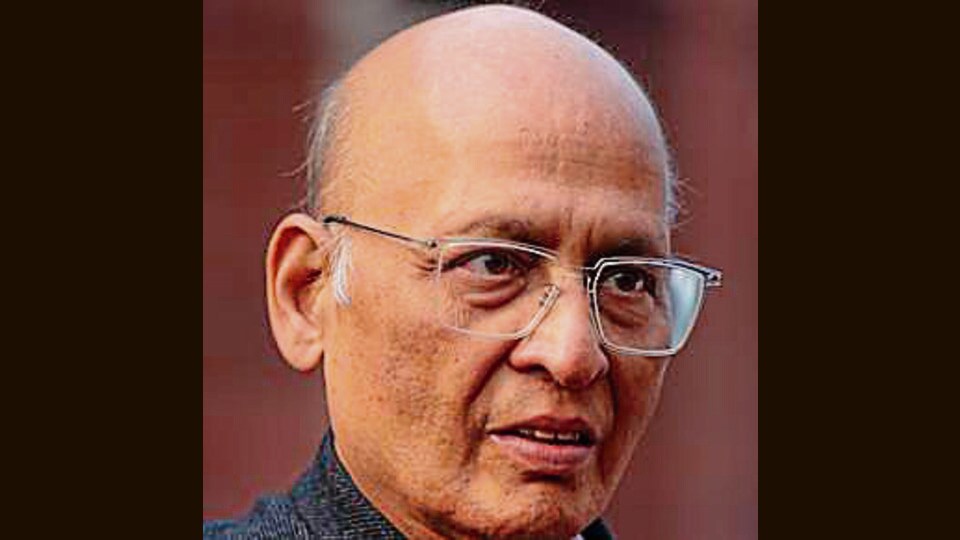
Abhishek Manu Singhvi interview: ‘There is no evidence on how ONOP reduces net expenses’
Congress leader Abhishek Manu Singhvi opposes 'one nation, one election' bills, arguing they undermine democracy and regional autonomy in India.

 Prefer HTon Google


New Delhi Congress leader and top constitutional lawyer Abhishek Manu Singhvi spoke to HT about the ‘one national, one elections’ bills tabled in the Lok Sabha this week, listing his objections to the idea and arguing that it is not a right fit for a parliamentary democracy such as India. Edited excerpts:
ONOP is not a new concept. The first four elections between 1952 to 1967 were held simultaneously.So why not bring back the system?The idea has a peculiar though superficial attraction to what I call the drawing-room classes and the chattering classes. It appeals to our sense of discipline, orderliness and uniformity but that is an unreal view of democracy. To impose a compulsory legal mandate upon the people’s verdict is clearly unconstitutional.
If the electoral cycle is once reset and it continues in that synchronised way, we will be very happy. But this law means repeated resets. And how do you ensure that one state will not fall after two or three years of the initial reset? When you have these multiple frailties and uncertainties of government, which are an essential part of the democratic bargain, and then enforce an artificial legally mandated election cycle repeatedly, it is clearly a decimation of vital democratic principles.
If a state government falls after two years, all that this law says is that the newly elected persons in the new election in that state will have a term of only three years duration. This reset button will operate after each such contingency. Are you not affecting the vital democratic rights of those states, the electorates of those states and the persons elected?
But the Law Commission has three reports and made several arguments, including the high cost of scattered polls.This argument is overstated. You are not reducing polls. You are only synchronising them, There is absolutely no documented evidence on how the actual net expense can be saved. A figure is thrown at you in the (Kovind) report with absolutely no justification, no data and no methodology is shared. So, this 1% to 1.5% of GDP will be saved is a ridiculous assertion without any data. On the contrary, people forget that elections generate taxes, commerce and economic activity.
If you really want to save money, make a one-time investment in more EVMs and complete Lok Sabha polling in four weeks instead of seven weeks. But frankly, the committee’s task was not to examine the desirability of ONOE. It was and was only to justify it because Numero Uno has decided it must operate as a law.
The 2018 Law Commission report shows in 2016-17 in Maharashtra, the Model Code of Conduct was in operation in 307 of 365 days and that this hampers governance.That’s the only virtue that I can find that -- there will be fewer MCC periods and MCC does lead to some degree of inactivity in the administration. But it’s a small a cost to pay to superimpose elections upon states. You can organise elections in a way that they slowly converge to the nearest three months, not by law and compulsion. But beyond this point, if MCC is an obstacle, so be it. MCC is for a higher object to ensure a level playing field. We can’t have polls like China.
Many Opposition leaders are demanding state ratification. But Article 368 says that the amendment to Article 82 doesn’t need to be approved by the majority of states. What’s your view?Does it require rocket science or does it require a PhD to understand that a state ratification of this supposed constitutional amendment is mandatory? I’m altering the state cycle of elections. I’m affecting regional parties. I’m affecting states per se and I will not take state ratification. I’ll be very happy if they don’t because according to me that’s the best ground to strike it down.


