E-Paper



Accounting for colonial rule reduces India’s climate role by 15%
Previous analysis had put India’s share of cumulative historical emissions at 3.4% of the global total

 Prefer HTon Google


India’s responsibility for the climate crisis is likely to be 15% lower than thought if the period of the British colonial rule is accounted for, a new analysis has found.
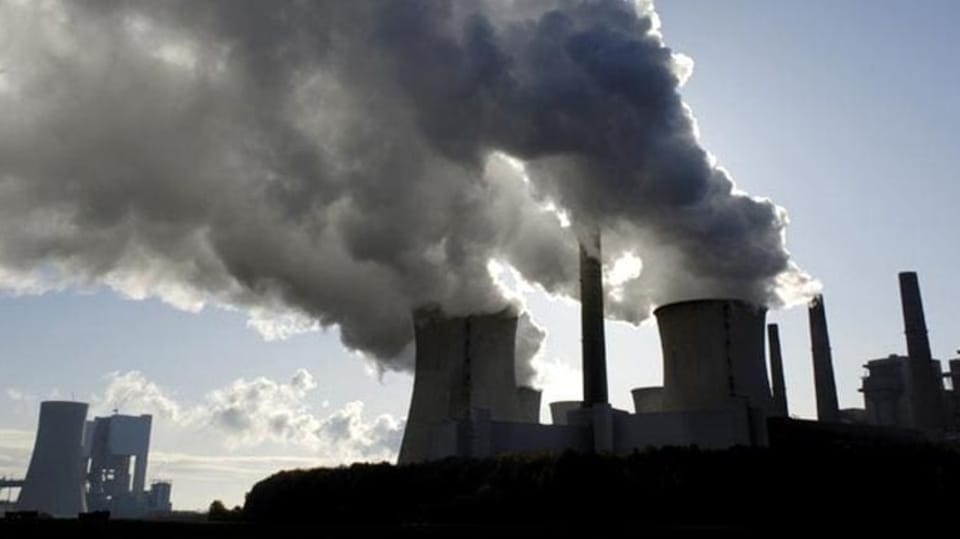
Previous analysis ranked India as the seventh-largest contributor to current warming (in the 1850-2021 period), behind the United States (1), China (2), Russia (3), Brazil (4), Germany (5) and Indonesia (6) – but ahead of the United Kingdom (8). But when colonial emissions and historical emissions are considered (for 1850-2023 period), the UK jumps to the fourth spot, while India remains at the seventh, according to an analysis by Carbon Brief, a UK-based website covering the latest developments in climate science, climate policy and energy policy.
Previous analysis had put India’s share of cumulative historical emissions at 3.4% of the global total, including CO2 from fossil fuels, cement, land use, land use change and forestry (LULUCF).
However, this drops to 2.9% of the global total, when emissions under colonial rule are assigned to the UK. Moreover, with colonial emissions from other former territories added to the UK’s total, it ranks fourth in the world, with 5.1% of historical emissions – a much larger share than India’s, according to the Carbon Brief analysis.
Colonial rule and its relationship with the climate crisis and nature’s degradation has been captured by author Amitav Ghosh in his works. It has also been discussed in the light of climate reparations and justice among climate activists. At the 26th edition of the climate change conference (COP26) in Glasgow, a key grouping of developing countries, which includes India and China, raised objections against some segments of the draft proposal and said those would amount to “carbon colonialism” by rich nations.
More significantly, the Intergovernmental Panel on Climate Change (IPCC) in its sixth assessment report last year identified colonialism as one of the factors driving vulnerability.
“Vulnerability of ecosystems and people to climate change differs substantially among and within regions, driven by patterns of intersecting socioeconomic development, unsustainable ocean and land use, inequity, marginalisation, historical and ongoing patterns of inequity such as colonialism, and governance,” IPCC had said.
There are also other significant shifts in responsibility for current warming when reassigning emissions under colonial rule by other former imperial powers. For instance, Netherlands’ rank jumps from 35 to 12 when colonial emissions are considered, while France’s rank moves from 12 to 11.
India’s share of cumulative historical emissions 1850-2023 falls further still when accounting for CO2 embodied in traded goods since 1990, the earliest year for which such data is available. After accounting for both colonial emissions and traded CO2, India’s cumulative total amounts to 70.7GtCO2, nearly 19% less than previously thought and just 2.8% of the global total, Carbon Brief has said.
When accounting for emissions under colonial rule, each of India’s 1.4 billion people is responsible for some 52 tonnes of CO2, far below China (216 tCO2) or top per-capita emitters the Netherlands (2,014 tCO2) and the UK (1,922 tCO2).
The Carbon Brief analysis is particularly important in view of the polarised debate among the rich and emerging economies on the issue of historical responsibility and the liability for providing climate finance and technology for transition in developing nations.
Globally, 10% of the population with the highest income accounted for nearly half (48%) of emissions with two-thirds of this group living in developed countries, the United Nations Environment Programme said on November 20 in its Emissions Gap Report 2023 titled “Broken Record.”
HT reported on November 23 about the divergent expectations of developed and developing countries that are top 4 emitters on the issue of equity and responsibility. In their submissions on the first global stocktake to UN Framework Convention on Climate Change (UNFCCC), which is to conclude at COP28 in Dubai, EU emphasises that all parties need to contribute to climate action, in particular those parties currently emitting a high share of global GHG emissions at country level or per-capita, highlighting that equity should be an enabler of the highest possible ambition for all Parties, in line with the Paris Agreement. US says equity is already reflected throughout the articles of the Paris Agreement and is germane to the entire GST. The US submission says GST cannot be used as a backdoor attempt to undermine the Paris Agreement paradigm referring to the nationally determined nature of climate action. “We are concerned about comments that it is up to developed country parties alone to fill gaps in implementing the Paris Agreement,” it says.
China emphasises the right to development and eradicating poverty for all parties, expressing serious concerns that most developed countries, with the most advanced economic and technological resources, whose emissions already peaked decades ago, have committed to achieving net zero GHG emissions only by 2050 instead of much earlier. India’s submission pointed out vulnerable communities who historically contributed the least to the current climate crisis are disproportionately affected.
The Carbon Brief analysis is based on historical CO2 emissions from fossil fuel use, cement production, and LULUCF, between 1850 and 2023. Historical fossil fuel CO2 estimates rely on records of fossil fuel production and sale, with each unit of coal, oil and gas that is burned, releasing a predictable amount of CO2 according to the Carbon Brief team. Estimates for LULUCF are based on records of changing patterns of land use, combined with models that translate these changes into related CO2 impacts. The historical CO2 emissions figures used in the analysis are from a paper published in the journal of Scientific Data in March 2023, covering the years 1850-2021.
Emissions from fossil fuels and cement are estimated for the years 2022 and 2023 based on the percentage changes reported by Carbon Monitor, using country-specific figures where available. Historical emissions estimates are combined with data on foreign rule, taken from a 2010 paper published in the American Sociological Review.
“Previous analyses, including our own, have implicitly allocated none of the historical emissions under colonial rule to the colonial powers. Historical responsibility is ethically complex, but it is clear that colonial powers had a significant influence – and held the ultimate decision-making power – on landscapes, natural resource use and development patterns taking place under their rule. It would be hard to justify ignoring this completely. Arguably, the true share of historical responsibility for current warming lies somewhere between these two extremes, where emissions are fully assigned to either the colonial powers or their former colonies,” said Simon Evans, Carbon Brief senior policy editor.
“It is well known that colonial powers extracted natural resources from colonised lands to support their economic and political power, yet the link to historical emissions had never been quantified until now. Our findings reinforce the significant historical responsibility of developed countries for current warming, particularly the former colonial powers in Europe. Many of these countries now have small and declining emissions. Yet their relative wealth today – and their historical contributions to current warming – are recognised within the international climate regime as being tied to a responsibility to lead, not only in terms of cutting their own emissions, but also in supporting the climate response in less developed countries,” he added.
To be sure, it is relatively more difficult to assign responsibility based on consumption-based emissions historically. The data available for it since 1990 shows India’s emissions deceasing in a consumption-based accounting and that of developed countries increasing compared to their territorial emissions. However, the precise ranking of countries could be different if a consumption-based accounting of emissions was carried back to 1850. Part of the reason for this is that the British were also exporting factory-made goods to countries that were catching up with the industrial revolution. “Often, the British empire was extracting natural resources from overseas colonies and using them to make manufactured goods in its factories at home, before exporting those goods elsewhere. So, in short, I think it’s fair to say that a complete history of consumption-based emissions might look rather different – but such data does not exist, to my knowledge,” Evans said.
“The colonial era was marked by aggressive resource exploitation and environmental mismanagement. Forests were cleared, soils were depleted, and biodiversity was lost. The infrastructural and urban development models established during colonial times focussed more on exploitation and control than on sustainability or resilience.
Moreover, the economic structure imposed by the British, prioritising their own gains, left countries, including India, impoverished and more susceptible to climate hazards like floods and rising sea levels. The disruption of traditional governance and natural resource management systems during colonial rule has made the fight against climate change even more challenging,” said Harjeet Singh, head of global political strategy at Climate Action Network International responding to Carbon Brief’s analysis.
“Given this historical context, the need to include emissions from the colonial era in current emissions accounting is not just a technical consideration but a moral imperative. It involves acknowledging the full scope of a country’s historical contribution to climate change, including the enduring impacts of colonial policies that have contributed to poverty and the heightened vulnerability of former colonies. This is not merely about learning from and rectifying historical injustices; it is about reshaping global climate policy to be more equitable and just,” he added.
“It’s also important to factor that colonies that became independent continue to suffer from internal inequities, experts said and hence need to address climate vulnerability within the country. “Climate change made various colonies and contemporary post-colonial countries more vulnerable as they have had to bear the brunt of climate-related hazards that increasingly have become more intense, less predictable, and more frequent. These countries historically contributed less emissions to the cumulative carbon budget, but in comparison were disproportionately facing more impacts. They were less prepared after colonial rule to deal with the cumulative fallouts with fewer economic, political and social resources. That exacerbated the vulnerabilities of populations; however, now all governments have to balance their own domestic and foreign policies to not further exacerbate the vulnerabilities to climate change of their citizens, since there are great internal inequities within developing countries too,” said Professor Farhana Sultana, department of geography and environment, Maxwell School of Citizenship and Public Affairs, Syracuse University, US.