
Sign in

After Kashmir, Mission Kabul is on terror groups Jaish, Lashkar radar

Counter-terror officials say the focus on Afghanistan by these two terrorist groups mirrors the priorities of Pakistan’s ISI

Updated on: Jun 5, 2020, 11:56:34 IST
Hindustan Times, New Delhi | By
Share
Share via
  • facebook
  • twitter
  • linkedin
  • whatsapp
Copy link
  • copy link

Lashkar-e-Tayyiba and Jaish-e-Mohammed, the terrorist groups that have been mostly active in Jammu and Kashmir for years, are rapidly mobilising operatives to radicalise, train and fight in Afghanistan on directions of Rawalpindi GHQ over the last few months, people familiar with the development told Hindustan Times on Thursday
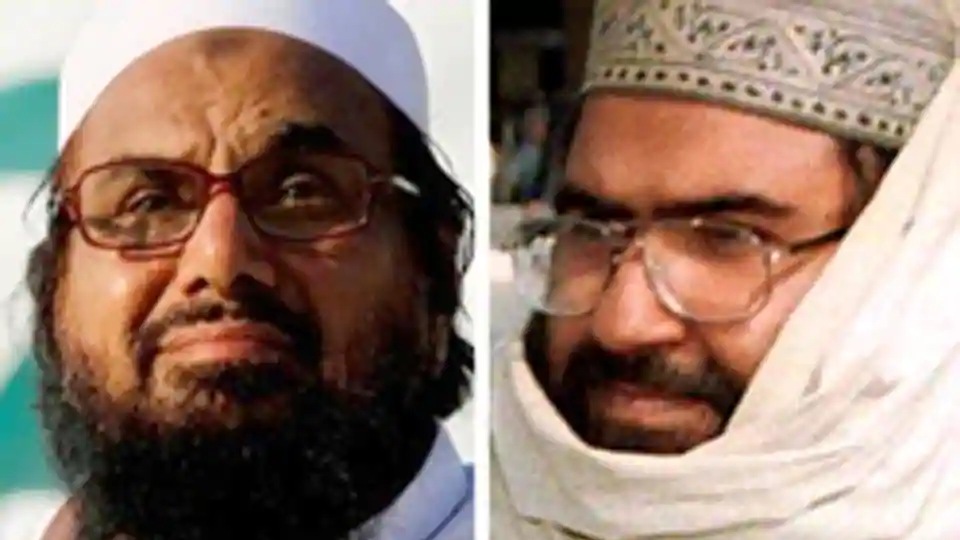
Terrorists of the Hafiz Saeed-led Lashkar-e-Tayyiba and Masood Azhar’s Jash-e-Mohammed have infiltrated into Afghanistan over the last few months (Agencies)

The two terror groups are estimated to have 1,000 terror operatives in the war-torn country, most of them inducted after the February pact between the Taliban and the United States. And counting.

In the last few months alone, about 200 Lashkar operatives had infiltrated into Afghanistan’s Kunar province from Bajaur Agency in Pakistan. In the last week of May, another group of 30 Lashkar-e-Tayyiba terrorists led by an ex-ISI officer Bilal aka Zarqawi slipped into Kunar’s Dangam district.

A fortnight earlier, 45 Jaish operatives shepherded by Taliban commander Mullah Nek Mohammad Rabhar had entered Nangarhar’s Sherzad province through Kurram Agency in Pakistan.

Face of Lashkar’s terror in Afghanistan

Sheikh Khitab :A Pakistani national and head of Lashkar-e-Tayyiba is active in eastern Afghanistan

Maulvi Samiullah : A Pakistani national and incharge of a newly-formed LeT group in Afghanistan was associated with the module that attacked Kabul gurdwara on March 25

Abu Hamza : He is incharge of the Lashkar in east Afghanistan and is based in Kunar province. He hails from Afghanistan’s Baghlan province

Junaid, Saifullah and Abuzar: They operate under Maulvi Samiullah and are reported to be active in eastern provinces.

Sayed Akbar Jan Zardhan: He is an LeT commander who is active in Gayan, Zerok and Barmal districts of Paktika

QariZiaur Rehman: Deputy governor of the ISKP in Kunar and acts as coordinator between Lashkar and Al Qaeda

Sheikh Abdul Aziz Nuristani: Nuristani is an affiliate of Jamia Farooqia Madrassa at tajabad in Peshawar, ex-senior judge of Taliban in Nuristan province. He now works for Lashkar.

Counter-terror officials in Delhi and Kabul said the focus on Afghanistan by these two terrorist groups underlines how their deployments and actions mirror the priorities of Pakistan’s ISI.

For now, the ISI’s emphasis appears to be to prepare the ground to continue terror activities in case the Taliban-US peace process leads to a political settlement, one official said. From Kashmir to Afghanistan, the Pakistan state has used terror groups as its strategic arm to achieve outcomes its diplomacy can’t. This is another example, an official said.

But the deployment in Afghanistan is also designed to serve as the new terror factory that can dish out terrorists for any cause that serves Pakistan interest.

Bilal aka Zarqawi, the ex-ISI official who led the team of 30 LeT terrorists that entered Afghanistan was earlier incharge of a major terror training centre in Pakistan-occupied Kashmir capital Muzaffarabad.

One of the early attacks this year in which Lashkar operatives are believed to have played a role is the massacre at Guru Har Rai Gurdwara in Kabul’s old city that left over 25, most of them worshippers at the shrine, dead. The attack had been linked to a centre being run jointly by the Islamic State Khorasan Province (ISKP) and the Taliban’s sword arm Haqqani Network.

Jaish’s top operatives in Afghanistan

Qazi Swahibullah: Key leader in Shiltan district of Kunar province

Dil Mohammad: He is incharge of central Kunar province

Fazal Akbar Salarzai: Jaish incharge for Walarsar between Dangam and Shiltan districts of Kunar province

Zohoor Zarqawi: He is incharge for eastern afghanistan and hails from pakistan’s Waziristan region

Fresh information emerging from Afghanistan indicates that Maulvi Samiullah, a Pakistani national who is incharge of the newly formed Lashkar group in Afghanistan, was also involved.

Counter-terror officials said they had come across evidence to indicate that Lashkar operatives were, on occasions, also carrying out their missions in Afghanistan under the aegis of the cover of Jamat al-Dawa and Jaish-e-Salafi.

The effort to map the presence and activities of the two terrorist groups in Afghanistan is still work in progress, one of them said. “But we have been able to identify some of those playing key roles,” he added.

  • Shishir Gupta
    ABOUT THE AUTHOR
    Shishir Gupta

    Shishir Gupta is Executive Editor at Hindustan Times and one of India's top journalists covering national security, strategic affairs, foreign policy and geopolitics. Over the past three decades, he has extensively reported on India's military, diplomatic and security landscape, covering every major conflict and national security challenge, from the 1999 Kargil War and the 2020 East Ladakh standoff to Operation Sindoor in 2025. He has also covered major terror attacks, including the IC-814 hijacking, the 26/11 Mumbai attacks and the 2025 Pahalgam terror strike, along with numerous Pakistan-backed terrorist incidents in the Kashmir Valley and across India. He has reported on national and state elections for more than three decades. A recognised authority on strategic affairs, Gupta has covered India's nuclear programme since the Pokhran-II (Shakti series) tests in May 1998 and has written extensively on global nuclear issues, Indian diplomacy and the country's expanding global outreach. He has also reported widely on international conflicts and terrorism, with a special focus on the Indian subcontinent. Gupta has interviewed Prime Minister Narendra Modi more than four times, including Modi's first interview with the print media after becoming Prime Minister in May 2014. His other interviews include three with the Dalai Lama, as well as conversations with Benjamin Netanyahu, Amit Shah, Yogi Adityanath, S. Jaishankar, Nirmala Sitharaman and Piyush Goyal. He is the author of Indian Mujahideen: The Enemy Within (Hachette, 2011) and Himalayan Face-off: Chinese Assertion and Indian Riposte (Hachette, 2014). He was awarded the Chevening-Wolfson Joint Scholarship at Wolfson College, University of Cambridge, UK, in 1998 and participated in the International Visitor Leadership Program (IVLP) of the US State Department in 2006. He received the Ben Gurion Prize from Israel in 2011 and the K. Subrahmanyam Prize for Strategic Studies in 2015 from the Manohar Parrikar Institute for Defence Studies and Analyses (MP-IDSA). Since 2024, he has hosted Point Blank, Hindustan Times' weekly YouTube show on global geopolitics.Read More