Ahead of the assembly elections due in March-April, the Bharatiya Janata Party (BJP) government in Assam on Tuesday launched the Orunodoi scheme under which Rs 830 monthly will be paid to nearly 2.2 million families belonging to economically weaker sections to help them meet their nutritional and medical needs.
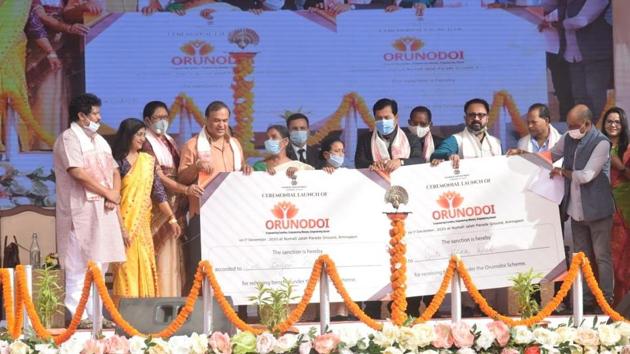
The scheme was among the 18 flagship schemes announced in the 2020-21 state budget in March.
“This scheme is our gift to the people of Assam and part of our continued efforts at all round development of the state. The amount transferred each month will help beneficiary families to fulfil their nutritional and medical needs,” said chief minister Sarbananda Sonowal while launching the scheme.
Also read | BJP promises implementation of Bodo accord, development ahead of BTC polls in Assam
From December, Rs 830 would be transferred monthly into the bank accounts of the beneficiaries to buy medicines, sugar, pulses and fruits.
Officials said preference is being given to families headed by women, widows, and those separated or divorced. Families with special needs members and those below poverty line, who are not getting benefits of government’s free rice scheme, will also benefit from the Orunodoi scheme.
The money will be transferred into the bank accounts of women members of the beneficiary families to ensure that it is spent on the genuine needs.
{{/usCountry}}The money will be transferred into the bank accounts of women members of the beneficiary families to ensure that it is spent on the genuine needs.
{{/usCountry}}“This is the biggest social welfare scheme of Assam ever. It is also the largest direct benefit scheme...,” said Assam minister Himanta Biswa Sarma.
In the first phase, around 1.8 million families would get the money. After elections to the Bodoland Territorial Council are over this month, the number of beneficiary families will increase to 2.2 million.
The scheme will cost the exchequer over Rs 200 crore monthly. Rs 2,800 crore has been earmarked for the scheme in this year’s budget. The government hopes to gradually increase the number of beneficiaries.