Artificial intelligence is already cutting the time it takes to design new medicines from years to months, oncologist and author Siddhartha Mukherjee said on Saturday, but it must now make medicines faster, cheaper and better for patients if it is to prove its worth.
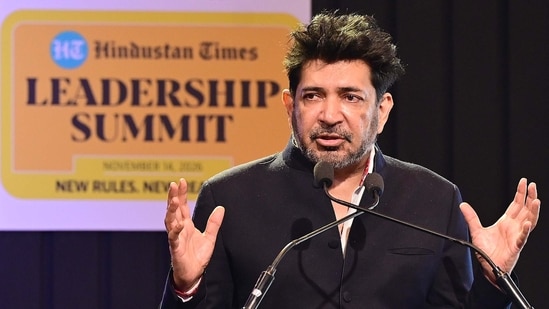
“The single mitigating feature of AI is its capacity to produce transformative medicine,” Mukherjee, co-founder and chief executive of the drug-discovery company Manas AI, said at the 24th edition of the Hindustan Times Leadership Summit. “Exhibit A of AI’s transformative power for human good is medicine. And if we fail in exhibit A, that creates an enormous problem for… whether we put up data centres or not, or what the value is of AI in various other industries.”
The harder part, he said, is what happens after a molecule is designed: testing it in people and getting it approved, which have barely changed. AI could speed up clinical trials too, he said, but only with safeguards, so that medicines that do not work are not released to patients.
India, he said, has a “historic opportunity” to show what AI can deliver if it reforms how new drugs are tested and approved.
{{/usCountry}}India, he said, has a “historic opportunity” to show what AI can deliver if it reforms how new drugs are tested and approved.
{{/usCountry}}To lay out his case, Mukherjee explained how arduous drug discovery can be.
Every medicine binds to a protein in the body, the way a key fits a lock, he explained. There are 10 to the power of 24 possible small-molecule keys, far too many to try one by one, so modern drug design starts with the lock: find a “keyhole” in the target protein, then build a molecule from scratch to fit it.
Also Read | Remarkable progress, but cancer won't be cured in the near future: Siddhartha Mukherjee at HTLS
This is where AI comes in, he said, citing his company Manas, which combines AI, “which is a neural system”, with what it calls “medicinal intelligence”: “the rules of physics and chemistry”.
Illustrating how the technology can compress timelines for drug discovery, he cited the case of daraxonrasib, a pancreatic cancer drug. “It took a human researcher about ten years to find that keyhole,” Mukherjee said, adding: “It took our algorithm two hours to find that same keyhole.” That gain, he said, came “just from the keyhole finding module”.
Manas sends 50 to 100 compounds at a time to Chinese chemical companies, which return test data in about three weeks.
One molecule for a particular cancer, he said, “was generated completely without human intervention” and is “about two hundred times more potent than the competitor medicine that is available in the market”. Such work once took seven to eight years, he said; it now takes three to four months.
“But the back end, which is where we actually put these molecules into humans and test them against diseases, is still very much the same,” he said. “More medicines are emerging very rapidly from our engines, and then they’re getting blocked at the pinch point.” AI does not change what he called the “phase two coin flip”, the chance that a drug fails in mid-stage trials.
Also Read | ‘Every cancer is different’: Manas AI's CEO Siddhartha Mukherjee on the search for a cure |HTLS 2026
In a Q&A with HT’s R Sukumar, Mukherjee was asked whether medicine was “too hung up on the accepted model of clinical testing”, and if there is a case to radically overhaul that, given the computing power AI now offers. “Well, the quick answer is, yes, of course, there’s a radical way to change it,” Mukherjee said, but added that the question was whether it should be changed.
Medicine invented the randomised, blinded clinical trial “essentially to overcome human bias”, he said. “We want to see our medicine succeed.”
Trials could be sped up by using historical or simulated data as the comparison group, he said, but he warned of “BIBO, bias in, bias out”. Relying on such data alone, he said, risks “unleashing medicines into the world which actually don’t work or don’t work as well as we think they do”.
He suggested conditional approval, which he said the Europeans are trying “quite a lot”: a medicine is approved after a rapid trial, the trial continues with proper controls, and the approval can be withdrawn after two or three years.
He called India’s chance to change the economics of medicine the punchline of his talk. “Of all countries in the world, China and I truly believe India, with appropriate regulatory and technological reform,” can reverse a long trend in which, he said, the “number of medicines approved over time has actually been decreasing… and the cost of each medicine has been increasing”. “We have a historic opportunity in this country,” he said.
India can make the difference in testing, he said, “because we have a highly educated population of physicians, physician scientists”.
He cited Immuneel, a Bengaluru cell-therapy company he said he launched about three years ago with Kiran Mazumdar-Shaw. Its therapy for blood cancers first used binders borrowed from other countries. “But for the first time, we have created a synthetic binder using AI,” he said. He described the new molecules, made with Manas, as “first in class, first in kind, made in India”.
Also Read | Medicine is AI’s real test, and India has a historic opportunity: Siddhartha Mukherjee
“The medicine that costs $500,000 in the United States is now being sold. It’s now a commercial product, is being sold for $35,000 in India,” he said.
“The human resources and the human capital which is present here is really the answer,” he said, to speeding up what he called “the second half of the equation”.
He closed his talk where he began: “If it’s not true that medicines become faster, cheaper, better, then we have failed the AI revolution.”
Mukherjee, born in New Delhi and trained at Stanford, Oxford and Harvard, is on leave from Columbia University’s medical faculty.
He won the 2011 Pulitzer Prize for General Nonfiction for The Emperor of All Maladies, his history of cancer.