Activist Sonam Wangchuk has rejected allegations of any foreign links to the Cockroach Janta Party (CJP) protest movement he supported, saying his decision was based on available data, conversations with its members and what he saw on the ground.
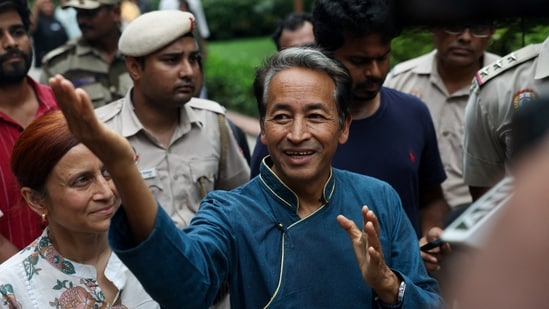
Wangchuk was questioned about claims surrounding the funding and alleged foreign connections of the movement in a podcast with Prakhar Gupta. He began by asking Wangchuk, "Are you CIA? I don't know how else to respond, but this is what a CIA person would do, so sophisticated..."
Wangchuk responded with humour, saying, If I am, I am yet to discover it. Maybe they have such a sophisticated way of hiring that even the person doesn't know until he is dead and 500 years have passed."
Sonam Wangchuk was a key part of the CJP protests led from Jantar Mantar, starting in June, and resulted in the resignation of education minister Dharmendra Pradhan over exam irregularities in July. Wangchuk was on an indefinite hunger strike in support of the protesters.
Boston University claim, questions over verification
On questions about claims concerning CJP founder, Abhijeet Dipke, including his educational credentials and the alleged links with Pakistan, Bangladesh, or US, Wangchuk said he had not conducted an elaborate investigation himself.
{{/usCountry}}On questions about claims concerning CJP founder, Abhijeet Dipke, including his educational credentials and the alleged links with Pakistan, Bangladesh, or US, Wangchuk said he had not conducted an elaborate investigation himself.
{{/usCountry}}“I didn't run some sophisticated research software.”
Asked whether the assessment was partly based on data shown to him, Wangchuk said it was. “Yes, it was data. Our authorities, including the Lieutenant Governor, were saying that they have a huge following in Bangladesh, Pakistan, and the US that I didn't know about. So I went and looked at the analytics of their followers. It turned out that 94 per cent of their followers were from India, and only six per cent were from other countries.”
Listen in
I jokingly thought, "India is indeed the Vishwaguru (world leader)-India started this, and now a 'Cockroach Janata Party' is forming in Pakistan, so at least India is leading in protests," Wangchuk said
"A six per cent foreign following is not a high-risk following. If it were 30 per cent foreign and 70 per cent Indian, red lights would have blinked for me. But six per cent outside and 94 per cent inside, combined with what was visible on the ground, made me realize there was no such thing. Then I got on calls with them, asked questions, and didn't feel at all that they were working for any foreign power," he added.
You might have issues with them eating burgers or their past jobs, but they are not being handled by any outside power, he said, adding that it was clear from their conversations and analytics.
So, based on that, and seeing that there was no ill intention in this movement, I decided to support them. Especially since they were saying they might be arrested when they landed in Delhi, I did two things: I said I would join them, and if they were arrested, I would go on a hunger strike. I gave them that cover because I was convinced there was nothing fishy."
On being pressed whether seeing screenshots of the data was enough for him to conclude that the people involved were trustworthy and that he could publicly associate himself with their cause, Wangchuk said he remained open to further scrutiny, while maintaining that he did not believe the people involved had been paid by any outside force.
“In hindsight, I don't think they were paid off by anyone. But as you say about the university record, I am in full support of any investigation. Anyone who leads shouldn't lie; if they make big claims that turn out to be small, it should be investigated. But at that time, based on what was visible, and after hearing that 20 children had committed suicide over this issue-which is what they were raising a voice for-that was the big issue. 20 kids giving up their lives is a massive, uncelebrated tragedy. If a single person dies in some other context, the whole country rises. Look at Mohamed Bouazizi in the Arab Spring-one person's sacrifice changed eight countries. Here, 20 children died and they are being forgotten unceremoniously. That deeply saddened me. Since I am associated with education policy and these are its tragic manifestations, it moved me deeply. In front of that cause, small things didn't matter. They were raising a voice for a genuine concern.”
Asked whether his support was ultimately for the cause rather than the organisation or individuals involved, Wangchuk made the distinction clear.
Yes, for the cause."