
 E-Paper



Army seeks statecraft, military lessons from ancient Indian texts
The Indian Army’s deep dive into the enduring wisdom of ages is part of Udbhav or emergence, a project that seeks to bridge the historical and the contemporary

 Prefer HTon Google


NEW DELHI: The Indian Army, the world’s second largest, plans to draw on centuries-old treatises such as Kautilya’s Arthashastra, Kamandaka’s Nitisara and Tamil poet-saint Thiruvalluvar’s Thirukkural , abbreviated as Kural, as part of a broader effort to rediscover ancient Indian philosophies of statecraft, strategy, diplomacy and warfare, and establish their relevance in the 21st century, officials aware of the matter said on Friday.
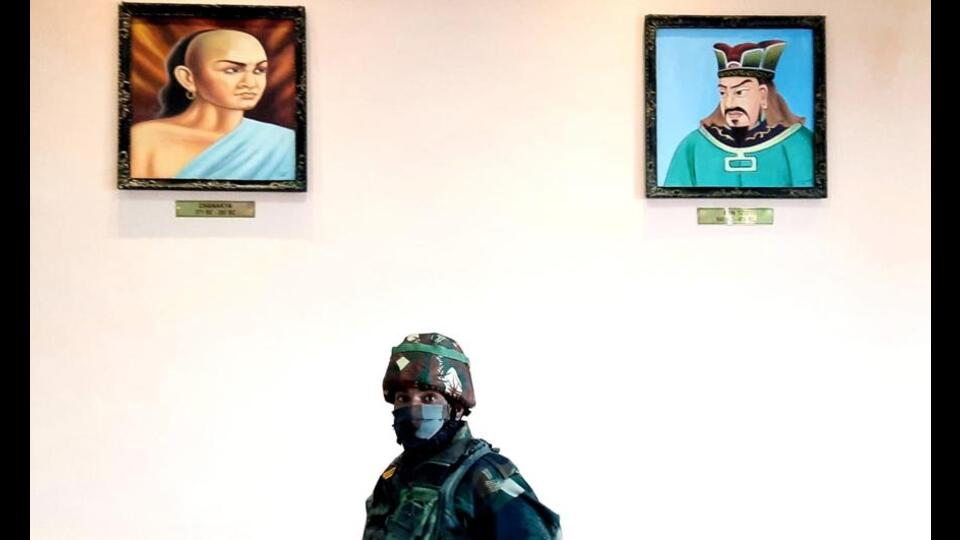
The army’s deep dive into the enduring wisdom of ages is part of a project named Udbhav or emergence. It comes in the backdrop of a flurry of efforts --- some controversial --- by the government to encourage Indianisation in critical areas including defence, education, health and science.
At its core, Udbhav seeks to bridge the historical and the contemporary, army spokesperson Colonel Sudhir Chamoli said in a statement on Friday on the inaugural panel discussion under the project.
“The goal is to understand the profound depths of indigenous military systems, their evolution, strategies that have been passed down through the ages, and the strategic thought processes that have governed the land for millennia,” Chamoli said.
The discussion, titled Evolution of Indian Military Systems, Warfighting and Strategic Thought ---Current Research in the Field and the Way Forward, was organised jointly by the army and the United Service Institution of India (USI), the country’s oldest think tank founded in 1870. The keynote address was delivered by Lieutenant General Raju Baijal, director general, Strategic Planning, while Lieutenant General Vinod G Khandare (retd), principal adviser, defence ministry, chaired it. The panelists included serving officers, former soldiers and scholars.
The discussion turned the spotlight on the country’s rich and often understudied strategic and military heritage, the statement said.
“By reintroducing these classical teachings into the contemporary military and strategic domains, the Indian Army aims to nurture the officers to apply ancient wisdom in modern scenarios and allow a more profound understanding of international relations and foreign cultures.”
The army described the event as an ambitious step to revitalise “knowledge creation from India’s rich classical heritage.”
“The scope of the discussion encompassed the study of ancient texts from the 4th century BCE to the 8th century CE, with a focus on Kautilya, Kamandaka, and the Kural.”
This was the first step in a series of upcoming engagements to push Project Udbhav. The pioneering initiative bears testimony to the army’s recognition of India’s age-old wisdom, the statement added. “The aim is not limited to just rediscovering these historical narratives but also to also develop an indigenous strategic vocabulary, which is deeply rooted in India’s multifaceted philosophical and cultural tapestry. The overall aim is to integrate age-old wisdom with modern military pedagogy.”
The army earlier supported a project related to the compilation of Indian stratagems based on ancient texts. This resulted in a book on 75 aphorisms, and another publication, Paramparik Bhartiya Darshan --- Ranniti aur Netritva ke Shashwat Niyam or Traditional Indian Philosophy --- Eternal Rules of Warfare and Leadership. The army is encouraging all ranks to read this book.
The armed forces are focussed not only on the indigenisation of military hardware but also their customs. The call for doing away with colonial customs and adopting Indian ways was made by Prime Minister Narendra Modi in March 2021 at the Combined Commanders’ Conference at Kevadia in Gujarat when he asked the three services to rid themselves of irrelevant legacy systems and practices.
He then underlined the importance of enhancing indigenisation in the national security system, both in sourcing equipment and weapons, and doctrines, procedures and customs.
In his 2022 Independence Day speech, Modi spoke of the “panch pran” or five pledges for India to become a developed country by its 100th year of independence --- one of those resolutions was to uproot all signs of colonial slavery from mindset and habits.


