
 E-Paper



‘Article 370 is done,’ says Jaishankar; points to ‘double conundrum’ with China
Jaishankar said for any country in the world, neighbours are "always a conundrum", and so are "major powers".

 Prefer HTon Google


External Affairs Minister S Jaishankar on Friday asserted that the era of uninterrupted dialogue with Pakistan was over even as he stressed that no country in the world is free from challenges with its neighbours due to the very nature of proximity, which brings both opportunities and complications.
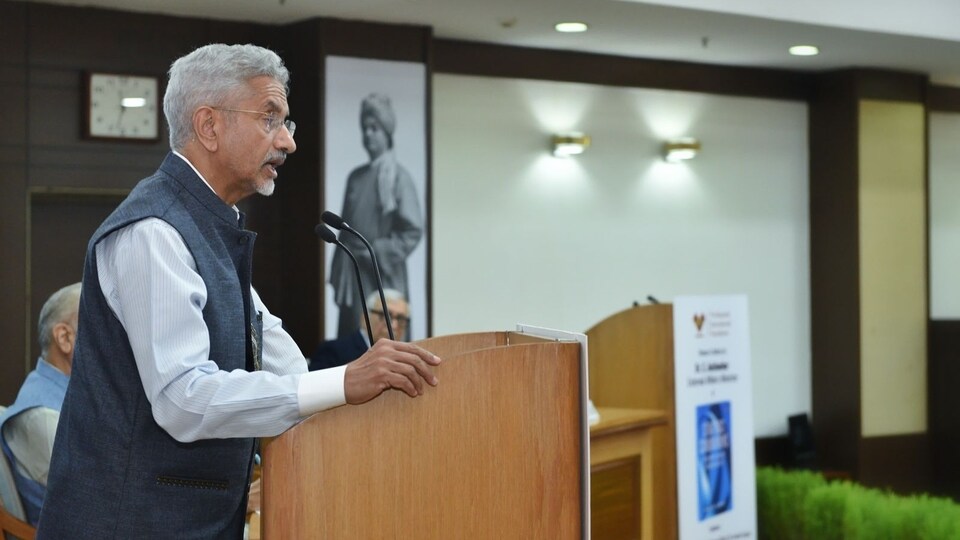
Speaking at the launch of Ambassador Rajiv Sikri’s book Strategic Conundrums Reshaping India’s Foreign Policy, Jaishankar said the abrogation of the special status to Jammu and Kashmir was final.
“Actions have consequences and in so far as Jammu and Kashmir is concerned, I think (Article) 370 is done. So the issue today is what kind of relationship can we possibly contemplate with Pakistan,” the minister said.
"What I do want to say is that we are not passive, and whether events take a positive or negative direction, either way we will react," he added.
Also Read | India sees education as key vehicle to accelerate more intensive engagement with world: Jaishankar
On the relationship with Bangladesh – which saw a student-led uprising and the subsequent ouster of Prime Minister Sheikh Hasina – Jaishankar acknowledged the country’s strategic significance, describing it as “India locked” and highlighting the strong people-to-people ties.
Jaishankar also said for any country in the world, neighbours are "always a conundrum", and so are "major powers".
Major powers will be a conundrum because they are major, because of the breadth of their interests. They will always have an agenda, which will overlap with us, but to differing degrees, also diverge, he said.
Also Read | Jaishankar on those ‘upset’ over PM Modi-Putin hug in Moscow: ‘In our part of world…'
In the case of China, you have a "double conundrum", because it's a neighbour and a major power. So, the challenges with China fits this double definition, he added.
Jaishankar also discussed the complexities of relations with Myanmar, Sri Lanka, and the Maldives, pointing out that while these relationships have seen ups and downs, they are crucial for regional stability and cooperation.


