Prime Minister Narendra Modi will launch the government’s flagship Ayushman Bharat- Pradhan Mantri Jan Arogya Yojna (AB-PMJAY) - on Sunday from Ranchi. Here’s all you need to know about the government’s Rs5 lakh cashless health insurance cover:
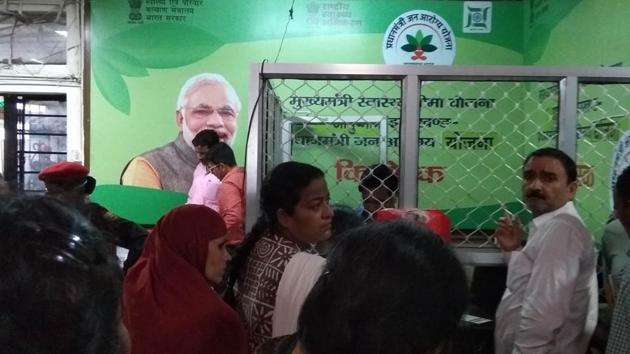
*Ayushman Bharat Yojana has 10.74 crore families as beneficiaries.
*Under the scheme, each family will have an insurance cover of Rs 5 lakh per year and there is no cap on the size of the family.
*The transactions would be cashless.
Read more: Ayushman Bharat, building India’s new health base
*The insurance scheme has 1,350 packages to cover treatment including those for cancer surgeries, radiation therapy, chemotherapy, cardiac surgeries, stenting; neuro (brain) surgeries, spine surgeries, dental surgeries, eye surgeries, specialised tests such as MRI, CT scans etc.
*A majority of states except Odisha, Delhi, Punjab, Telangana, Kerala, Karnataka are on board for the scheme.
*An Aadhaar card is not mandatory for a beneficiary to avail services under Ayushman Bharat. The scheme will be entirely paperless, cashless and IT-based.
*The finance model involves private insurers, trust/society and a mixed model insurance. Ayushman Bharat will be implemented by national and state health agencies
{{/usCountry}}*The finance model involves private insurers, trust/society and a mixed model insurance. Ayushman Bharat will be implemented by national and state health agencies
{{/usCountry}}*The scheme is being launched against a background of soaring costs of medical treatment in the country with in-patient hospitalisation expenditure rising by 300% over the past decade. Patients spend 80% out of their pocket for their treatment, according to National Sample Survey Office’s (NSSO) figure of 2015.
*Sixty eight per cent of rural households primarily depended on their household income or savings for treatment while 25% depended on borrowings.
*Seventy five per cent Urban households relied more on their income/saving and 18% relied on borrowings according to the survey.
*According to NSSO 2015, six million families were being pushed into poverty due to catastrophic health expenditures.