What brought down the Sri Lankan economy? The one-line answer to this question is that it has been a combination of bad luck, bad policy, and bad politics. Sure, the entire world was buffeted by the economic impact of the pandemic and continues to be affected by the subsequent commodity price spike triggering high inflation, but for the Sri Lankan economy, these came as the proverbial last straw which broke the camel’s back.
The Sri Lankan economy started losing growth momentum much before the pandemic struck.
An April 6 analysis by Pavitra Kanagaraj in Hindustan Times pointed out that the compound annual growth rate of Sri Lanka’s GDP was just above 3% between 2015 and 2019, a sharp fall from the 6% figure for the 10-year period ending 2015. The fact that Sri Lanka’s export basket is heavily dominated by primary commodities and their prices fell sharply in the post-2015 period, added to the growth headwinds faced by the island’s economy.
Things have only gone downhill since the pandemic. According to the Asian Development Bank’s April forecast, Sri Lanka’s economic growth will dip to 2.4% in 2022 and only improve marginally to 2.5% in 2023.The state of economic and political chaos in the period which has followed since April means that these numbers are likely overestimates.
“The central bank estimates a contraction in growth of 4% to 5% this year, Prime Minister Ranil Wickremesinghe told parliament on Tuesday, although the government targets a smaller contraction of 1% in growth next year”, Reuters reported on July 7. The Sri Lankan central bank raised interest rates to the highest level in two decades as annual inflation increased to a record 54.6% in June, the story added.
{{/usCountry}}“The central bank estimates a contraction in growth of 4% to 5% this year, Prime Minister Ranil Wickremesinghe told parliament on Tuesday, although the government targets a smaller contraction of 1% in growth next year”, Reuters reported on July 7. The Sri Lankan central bank raised interest rates to the highest level in two decades as annual inflation increased to a record 54.6% in June, the story added.
{{/usCountry}}Sri Lanka has been facing an acute shortage of foreign exchange, both to repay its international debt and pay for import of essentials, and the country’s central bank has been trying to manage the country’s external commitments with the economy’s day to day commitments.
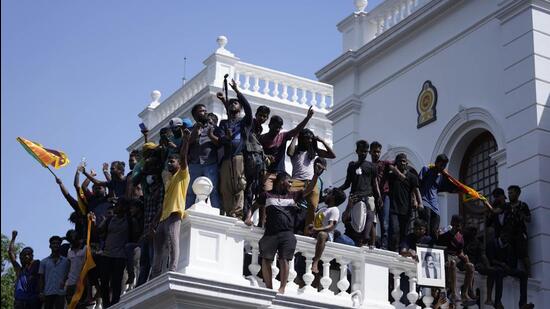
This task has only been rendered more difficult because of the ongoing political instability — any plan to come to terms with Sri Lanka’s external sector problems will require imposition of severe austerity measures. A complete breakdown of trust between the people and the political leadership and the lack of clarity on future political transition has only made economic management of the crisis more difficult.
To be sure, there is more to the Sri Lanka’s economic meltdown story than just tepid commodity prices driven export earnings and the pandemic’s impact.
Tourism earnings, which contributed to as much as 5% of Sri Lanka’s GDP in 2018, started falling after the Easter bombings of April 2019. The pandemic-driven restrictions on travel worsened this pain further.
Bad policy also added to the economy’s pain. In April 2021, the Sri Lankan government decided to ban the import of chemical fertilisers which dealt a body blow to agricultural production in the country. “During the main rice cultivation season in 2019, Sri Lanka produced 3.5 billion kg of the grain. Agriculture experts predicted paddy output could fall as much as 43% this year due to the import ban,” a November 2021 Reuters report said.
“In December 2019, President Rajapaksa introduced a series of tax tweaks such as reduction of the value-added tax (VAT) from 15% to 8%, and an increase in income threshold to exempt more people from personal income tax. This led to the share of government revenues in GDP falling from 12.65% in 2019 to 9.17% in 2020”, the HT analysis cited above said.
The road ahead for Sri Lanka’s economy depends on the future of the island’s politics. A bail-out package from the International Monetary Fund that the country has been negotiating may not fructify till there is a degree of political stability. And whichever government takes over— the fragmented opposition has thus far not been able to mount a unified challenge — a turnaround will require strong medicine.