E-Paper



Bangladesh’s foreign policy won’t be country-specific: Tarique Rahman
Bangladesh Nationalist Party (BNP) chief Tarique Rahman kept open the possibility of continued cooperation under China’s Belt and Road Initiative (BRI)

 Prefer HTon Google


Dhaka’s foreign policy will be decided by the interests of the nation and its people and won’t be country-specific, Bangladesh Nationalist Party (BNP) chief and next prime minister Tarique Rahman said on Saturday, while keeping open the possibility of continued cooperation under China’s Belt and Road Initiative (BRI).
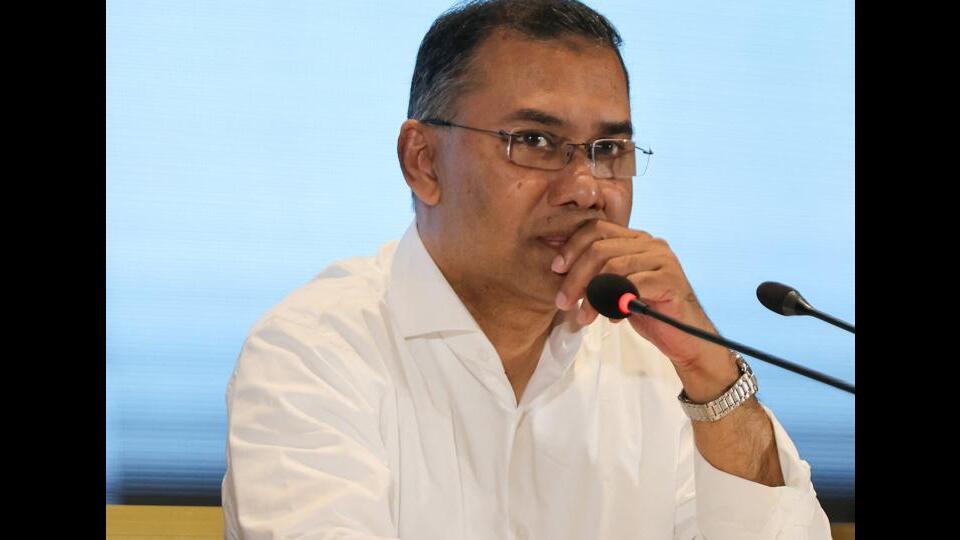
Rahman’s remarks, made at a news conference in Dhaka a day after the BNP pulled off a landslide victory in the general election, were in line with his slogan during the campaign that the party’s foreign policy will focus only on Bangladesh’s interests, independent of influence from India or Pakistan.
“We have cleared ourselves regarding the foreign policy, which is in the interest of Bangladesh, and the interest of the Bangladeshi people comes first. By protecting the interests of Bangladesh and the people of Bangladesh, we will decide our foreign policy,” Rahman said when he was asked about his vision for relations with India.
He responded to questions about ties with other regional countries, including China and Pakistan, by noting that his priority will be protecting the interests of Bangladesh. “If there is something that will not be in the interest of Bangladesh, naturally, we can’t go by that. I’m sure mutual interest is the first priority we will go by,” he said.
“Like many others, China is also a development friend of Bangladesh. So we hope that both the countries, even in the future, will be in a position to work together,” he said, while keeping open the possibility of continued cooperation under China’s BRI, which Bangladesh joined in 2016. “We’ll see if that helps Bangladesh, the economy of Bangladesh, then we’ll decide,” he said.
The election was held almost 18 months after the collapse of the government of former premier Sheikh Hasina, who aligned Bangladesh closely with India. During her tenure, Bangladesh was also one of the largest recipients of development assistance from India. BNP leaders have accused Hasina, who is currently in self-exile in India, of sacrificing the interests of the Bangladeshi people.
BNP leaders such as Amir Khasru Mahmud Chowdhury and Humayun Kabir, who are expected to play a key role in framing the foreign policy of the new government, have stressed that their approach won’t be country-centric – marking a clean break from the policies of Hasina, and will be based more on mutual respect and mutual interest.
Rahman also spoke of his plans to revive the South Asian Association for Regional Cooperation (Saarc), which was initiated by his father, former president Ziaur Rahman, against the backdrop of India’s stated preference for other regional mechanisms such as Bimstec that exclude Pakistan.
“As you know, Saarc was initiated initially by Bangladesh. So naturally, we would want to revive Saarc. We will discuss with our friends once we settle with the government, we’ll try to revive it,” he said.
Rahman responded to a question on the possibility of the BNP government reiterating the request for India to extradite Hasina by saying: “That depends on the legal process.”
Kabir, who is the foreign policy adviser to Rahman, told the media that the onus for resetting bilateral relations is on India, especially after the 15-year “autocratic regime” of Hasina, who did not give India space to engage with forces across Bangladesh’s political spectrum. “The onus is on India to reset its relations with Bangladesh,” he said, noting that relations over the past 15 years were between “Hasina and the government of India”, and not between the people of both countries.
“Now is a good time for India to reset its relations with Bangladesh, realising that in today’s Bangladesh, Sheikh Hasina not only does not exist, Sheikh Hasina is nothing short of a terrorist who fled [after] killing 1,500 people in the country, looting the state exchequer with her corrupt family members and party leaders,” he said, adding that India should not allow her to use its soil to destabilise Bangladesh.
The Indian side has signalled its intention to rebuild relations, which fell to their lowest point in decades during the term of the interim government led by Muhammad Yunus, and this was a message reiterated by Prime Minister Narendra Modi when he spoke to Rahman on the phone on Friday. Modi, who was among the first leaders to congratulate Rahman, assured him of India’s “continued commitment to the peace, progress, and prosperity” of both countries.
Modi also said he looked forward to working with Rahman to strengthen multifaceted ties and advance common development goals.