
 E-Paper



Chamoli tunnel toll stands at 8; fate of 2 still unknown as rescue operation continues
The death toll in the Chamoli tunnel accident rose to eight after rescuers recovered another worker’s body, while two workers remain missing

 Prefer HTon Google


Rescue workers recovered the body of another worker from an inundated tunnel in Chamoli, Uttarakhand, on Saturday, the eighth death after a suspected aquifer burst pushed a rush of water and debris through the under-construction passage earlier this week.
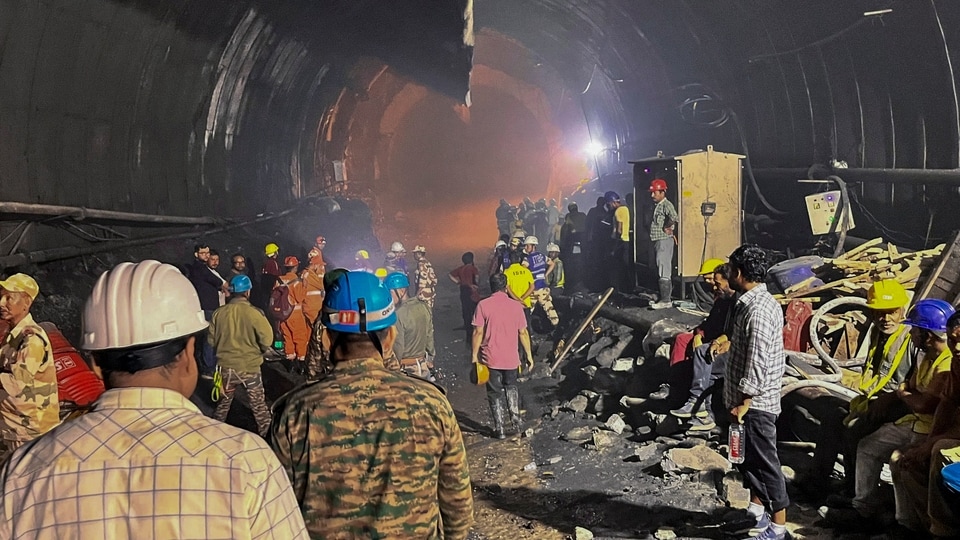
Rescuers recover eighth worker’s body from flooded tunnel
The search for two more workers missing since the accident was still underway but hampered by precarious conditions, said officials involved in the rescue at the Tehri Hydro Development Corporation (THDC) tunnel.
Twenty-two workers were on shift when the incident occurred around 7pm on Thursday. Of them, eight have been declared dead and 12 are in hospital with injuries.
Deep Dive

Also read: 7 killed, 3 trapped after under-construction tunnel in Uttarakhand's Chamoli collapses
Two workers remain missing as rescue operation continues
Officials said work is on to drain the inundated tunnel.
Chamoli district magistrate Gaurav Kumar said, “Suction pumps and other equipment are being used to facilitate the movement of rescue personnel inside the tunnel and help them reach areas where the missing workers may be trapped.”
Teams from the district administration, police, State Disaster Response Force (SDRF), National Disaster Response Force (NDRF) and other departments are coordinating the rescue operation, he said.
“Additional resources and equipment are being deployed at the site to speed up the operation,” he said.
Uttarakhand State Emergency Operation Centre (SEOC) officials identified the eight deceased as Pradeep Panwar, Mukesh Singh, Durlabh Sharma, Vijay Hansda, Jitendra Kumar, Lokeshwar, Bhuvneshwar, and Devnath.
Also read: 3 workers remain trapped as rescue ops continue at Uttarakhand tunnel
Rain-saturated aquifer suspected to have triggered tunnel flood
Preliminary assessments pointed to a rain-saturated aquifer that ruptured through the roof of the 3km tunnel about 1.44km from the entrance.
Rainwater from surrounding slopes had percolated into a water-bearing layer above the tunnel and released under pressure through a weak section of rock. The force was sufficient to push a column of air ahead of the water, throwing some workers towards the tunnel mouth even as others were pinned by debris deeper inside.


