The Centre on Thursday rejected SpaceX founder and CEO Elon Musk's allegation that Starlink was being “blocked by certain oligarchs” in India, saying the country’s regulatory framework for satellite communication services was “fair and non-discriminatory”.
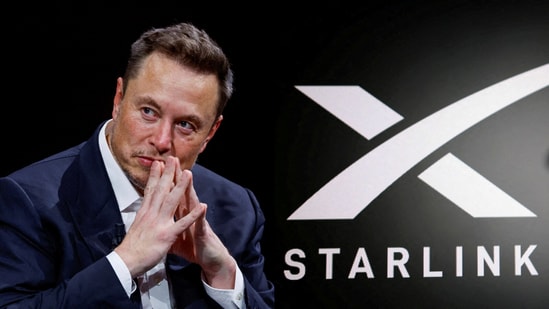
In a statement, the Ministry of Communications said suggestions that the framework or its application was discriminatory were “baseless and misconceived”.
“A post is being circulated in social media regarding the fairness of India’s regulatory framework for satellite communication services and suggesting that it is being applied in a discriminatory manner. The Government has put in place a fair and non-discriminatory authorisation framework for all telecommunication services, including satellite communication services,” the ministry said.
"...the suggestion that the framework or its application is unfair or discriminatory is baseless and misconceived,” it added.
Also Read | Elon Musk blames Starlink hurdles in India on ‘monopolistic chokeholds’
The government said telecom licences had been granted to three companies offering Global Mobile Personal Communications by Satellite (GMPCS) services based on non-geosynchronous satellite orbits. Under the terms of their licences, all the three entities – Starlink, Eutelsat OneWeb backed by Bharti Airtel, and Jio Satellite Communications – are required to demonstrate compliance with security conditions aimed at ensuring the safety of users and their data, it said.
{{/usCountry}}The government said telecom licences had been granted to three companies offering Global Mobile Personal Communications by Satellite (GMPCS) services based on non-geosynchronous satellite orbits. Under the terms of their licences, all the three entities – Starlink, Eutelsat OneWeb backed by Bharti Airtel, and Jio Satellite Communications – are required to demonstrate compliance with security conditions aimed at ensuring the safety of users and their data, it said.
{{/usCountry}}“Security assessment as part of this process is currently under way in respect of all the three licensees,” the ministry said.
Also Read | Starlink built India setup to meet security norms, says SpaceX executive; awaits nod
The development came a day after Musk alleged that Starlink was being “blocked by certain oligarchs” in India to protect their “monopolistic chokehold” over the country. He made the remarks as the satellite internet company awaits final clearances to begin commercial services in the country.
“Unfortunately, we are being blocked by certain oligarchs in order to maintain their monopolistic chokehold on the Indian people. You can guess who they are … This is a crime against the people of India!” he said in response to a post arguing that India needs Starlink to bridge connectivity gaps in underserved areas.
Also Read | 26/11 attack and strict satellite rules: Why Starlink's security clearance is taking so long
Without naming Musk, the government said all three satellite communication licensees were currently at “broadly the same regulatory stage”.
Starlink, owned by Musk’s SpaceX, has received a GMPCS licence from the government and is awaiting security clearance and spectrum assignment before it can begin commercial services.
At the India Mobile Congress on Wednesday, Starlink vice-president Lauren Dreyer said the company had built its India operations around the country’s security requirements and established 20 gateway sites comprising hundreds of antennas. “We are ready to serve in India, once India is ready,” she said.