
 E-Paper



Political focus shifts to apartment voters
According to the Bangalore Apartments’ Federation (BAF), which represents around 1,200 apartment complexes, approximately 17-20% of voters in the 28 seats in the city reside in apartments, making them a critical demographic for political parties to woo.


As the election campaign in Bengaluru intensifies, political parties are shifting their focus towards apartments, which house a significant proportion of the city’s electorate, leaders close to developments have said.
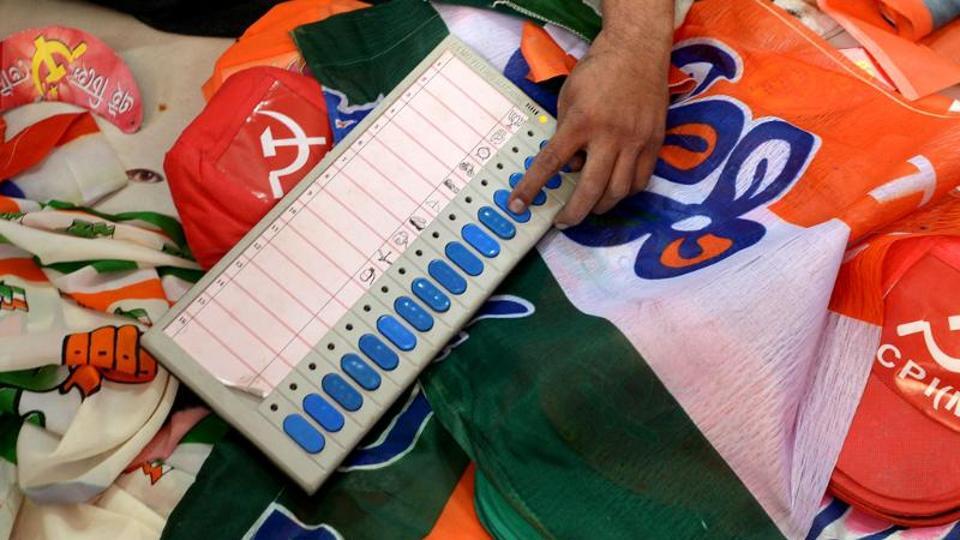
According to the Bangalore Apartments’ Federation (BAF), which represents around 1,200 apartment complexes, approximately 17-20% of voters in the 28 seats in the city reside in apartments, making them a critical demographic for political parties to woo.
The Congress party in Marchlaunched an “apartment cell” to focus on the urban voters and the “Apartment Mitra” initiative, aiming to foster an open channel between apartment representatives and the party to address issues and concerns.
The Bharatiya Janata Party (BJP), on the other hand, has had to contend with anti-incumbency sentiment over civic issues, particularly in the Mahadevapura seat, where incumbent Aravind Limbavali was dropped in favour of his wife, Manjula Aravind Limbavali after internal surveys suggested he faced a significant anti-incumbency.
“His constituency was flooded during last year’s monsoon. It was one of the worst-hit areas, and he even got into arguments with residents,” said a senior BJP leader.
Last year, the city was ravaged by floods after three days of rain, which inundated parts of the city, where global IT companies and home-grown start-ups are located. Residential areas were also severely impacted, with roads submerged and water and electricity lines snapped. Mahadevapura was one of the worst-hit areas, with residents feeling frustrated at the lack of action by those in power to improve road infrastructure despite paying the highest taxes to the civic agency, the above-cited leader said.
“Residents are angry as those in power did little to improve road infrastructure despite Mahadevapura contributing the highest taxes to the civic agency. This is working against him,” said the leader.
Meanwhile, former deputy chief minister and BJP’s Malleshwaram MLA Ashwath Narayan said that his constituency has a high number of apartments, making them an important part of the campaign.
“Even before the election, I used to visit apartments to get a sense of what the needs of the people are,” he said.
According to him, even though several people had led the city during the Covid-19 pandemic. However, most of them have returned.
“The apartment crowds are very cosmopolitan but are interested in the city’s development. We are trying to tell how we can make the city better,” he said.
Congress’s Krishna Byre Gowda said that the political campaigns have to be tailor-made for each voter group in the constituency.
“The concerns of the salaried classes are different compared to those who are daily wage earners. So, we have to take each one’s concern in their context. Since issues, language etc., change, we have to change the campaigns for apartments compared to the normal door-to-door campaign,” he said.
However, urban apathy during elections remains a big concern. Chief election commissioner (CEC) Rajiv Kumar said as against 72.44% voter turnout in Karnataka during the 2018 assembly elections, the four divisions in Bengaluru - BBMP South, North, Central and Bengaluru Urban - had recorded around 55% polling. Over 88% of the 8,615 polling stations in these four divisions (across the 28 assembly constituencies) are in urban areas.
In 2013 too, as against the 71.83% polling in the State, Bengaluru had recorded 52.83% polling. In 2008, it was even worse at 47.3% in the four Bengaluru electoral divisions.
Manoj Kumar Meena, chief electoral officer (CEO) for Karnataka, said officials have been assigned to visit areas with the lowest turnout, and several activities are being introduced, with the help of Resident Welfare Associations (RAF)s to improve turnout.
A month ago, The Bangalore Apartments’ Federation (BAF) launched ‘Every Vote Matters (EVM)’, a special campaign at its member apartment societies and villa resident welfare associations to spread awareness on elections and help residents register.


