Expert members of a National Green Tribunal (NGT) committee constituted to prepare the Bhagirathi eco-sensitive zone’s zonal master plan (ZMP) disagreed with its final draft finalised by the Uttarakhand government, citing concerns over issues such as cutting into the slopes for roads and change in land-use norms. The concerns have been highlighted in the annexures to ZMP published on the Union environment ministry’s website. A separate scrutiny committee constituted by the Union water resources ministry following a 2018 Supreme Court order also did not approve ZMP, the committee members noted.
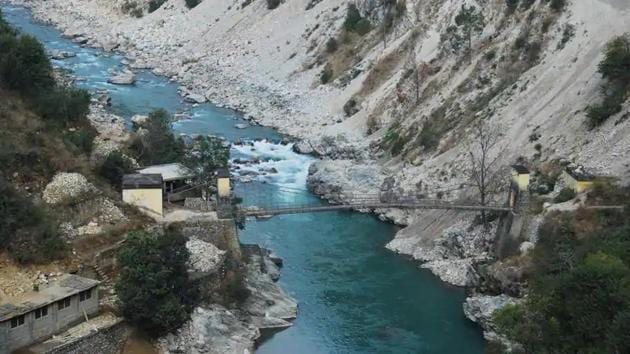
The eco-sensitive zone stretches from Gaumukh to Uttarkashi and covers an area of 4179.56 sq km across 88 villages.
Union environment minister Prakash Javadekar on July 17 said his ministry has approved ZMP, which will help expedite the Chaar Dhaam road project for four pilgrimage sites in Uttarakhand.
ZMP allows for land-use change for civic amenities and other infrastructure development in “larger public interest and national security” paving the way for the road project.
In a statement on July 17, the environment ministry said ZMP emphasises governance in the areas of forest and wildlife, watershed management, irrigation, energy, tourism, public health and sanitation, road infrastructure, etc. It added ZMP’s approval will boost conservation, the ecology of the area, and permitted developmental activities.
Activists and experts have said the approval of ZMP could make the entire Bhagirathi region vulnerable to natural disasters.
{{/usCountry}}Activists and experts have said the approval of ZMP could make the entire Bhagirathi region vulnerable to natural disasters.
{{/usCountry}}Professor Vinod Tare, an Indian Institute of Technology Kanpur professor who has been member of both committees, said no meeting was ever called of the NGT panel members. “We were asked to give our comments over email. When meetings were called, they were with Uttarakhand government officials, who were focused on presenting government schemes and projects. So, it is obvious that our comments have not been incorporated.”
NGT constituted the committee in 2017 following activist Keshar Singh Panwar’s petition against a ZMP drafted for the eco-sensitive zone in 2016 because it was lax on protecting the region. The panel included geologists, engineers, hydrologists, and environmental experts, who were asked to prepare a fresh ZMP.
As per the minutes of the NGT committee meetings, the members highlighted slope cutting as inappropriate as this could trigger landslides, soil erosion, and generate debris. They also cited a lack of clarity on initiatives like “Winter Chaar Dham” for winter tourism and noted road widening could lead to loss of deodar trees and a lack of livelihood opportunities for the local people.
Ravi Chopra, an NGT committee member, in his submission on June 11, 2018, called the final ZMP draft a missed opportunity. “…the final draft thus deviates substantially from the letter and spirit of the guidelines given in the December 2012 Bhagirathi eco-sensitive zone Gazette Notification (and amended in April 2018). It remains largely faithful to the rejected ZMP of October 2016. Based on the foregoing, it is not possible to accept the draft ZMP...”
In 2018, Tare wrote to the Uttarakhand government, saying the most important suggestions could not be seriously considered. “…much of the committee time was used for the presentation of material prepared by various departments… I once again request that a meeting of only committee members be arranged and the present version of ZMP be reviewed and modified. Otherwise, it is not in order to state that the ZMP is endorsed by the committee,” Tare wrote, as per the annexures.
“A final view on the draft ZMP was taken by the Uttarakhand government after seeking comments of the NGT committee. It was only then that the ZMP was forwarded to MoEFCC for approval,” said Arvind Singh Hyanki, who as secretary forests, Uttarakhand, sent the draft ZMP to the Union environment ministry for its approval in September 2018. Hyanki is presently Kumaon’s commissioner.
Panwar moved the Supreme Court in 2017 asking that the NGT committee be changed because it is headed by the additional chief secretary, Uttarakhand, who has been involved in granting clearances to hydroelectric projects. Responding to the appeal, the court in July 2018 directed the Union water resources ministry to get the ZMP scrutinised by an 11-member independent committee before approving it.
But there is no mention of the water resources ministry’s committee in the ZMP approved by the environment ministry. “We had shared the draft ZMP with all 11 expert members and received their comments on email. The summary of these comments [is] with the environment ministry but I am not sure if they have been incorporated. We did not participate in the meeting where the ZMP was approved,” said U P Singh, secretary, water resources.
RP Singh, secretary, environment ministry, said the water ministry’s comments were also considered while approving ZMP.
“The water ministry had mailed me ZMP and sought my comments. ZMP is a very good idea. It should be implemented for the entire Himalayas not just Bhagirathi. I sent the water ministry a number of comments on issues I had noticed because the zone is geologically very sensitive. But I was never communicated what happened to those comments, and how they are being used,” said Navin Juyal, a geologist at CSIR’s National Physical Laboratory.