
 E-Paper



Bismarck of India: How Patel corralled the princely states
The man rightly credited with saving India from Balkanisation, had enough states exercised their legal rights, is Vallabhbhai Patel

 Prefer HTon Google


Often forgotten in the narratives of how India achieved independence is the question of the princely states. Ruling over two-fifths of pre-Partition India, the princes were given the choice of acceding to India or Pakistan or becoming independent, once the treaties and instruments that bound them to the British Crown lapsed on the transfer of power.
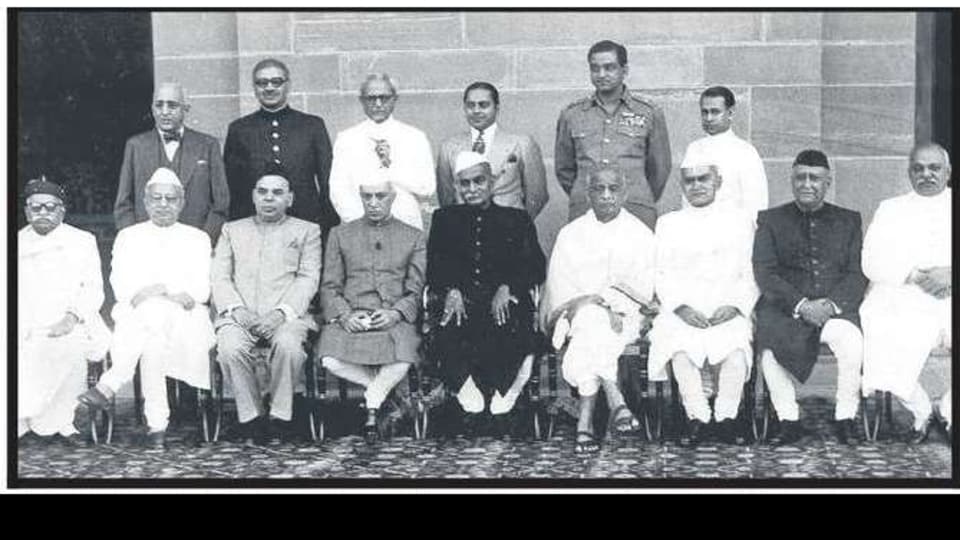
The man rightly credited with saving India from Balkanisation, had enough states exercised their legal rights, is Vallabhbhai Patel who took up the critical post of states minister in June 1947.
Today, Patel is often called the Bismarck of India for repeating the German chancellor’s feat of cajoling a group of scattered and disparate princedoms into giving up their sovereignty and creating a cohesive nation state.
Britain’s most loyal allies, the 562 princely states, were virtually untouchable — only those rulers who committed the most heinous of crimes were censured, or, in the rarest of cases, removed. Some states were not much bigger than a couple of cricket pitches. At the other extreme were behemoths such as Hyderabad, a state larger in area than most countries in Europe, and whose income and expenditure rivalled that of Belgium.
Regardless of their stature, Patel considered their rulers as little more than “worthless … sycophants”, who their slave-like subjects had “a right to dethrone”. He was adamant that if India was to be a territorially and politically viable nation, the states had to be part of it. Any deviation from this goal would risk plunging “a dagger into the very heart of India”.
Writing a few months after Independence, a Western journalist described Patel as “a Hindu Cromwell courteously decapitating hundreds of little King Charleses”, in the process turning the princes into pensioners and giving their subjects political unity and a voice they had never known before.
But the achievement was not Patel’s alone. It was Vappala Pangunni (VP) Menon who in June 1947 came up with the deceptively simple plan of accession limited to three subjects – defence, foreign affairs and communications – which would be used, to great effect, to disarm the princes. In the hectic lead up to Independence, Patel’s powerful personality, which mixed fury with charm and persuasion with coercion, would complement Menon’s skills as a tactician.
Unlike Jawaharlal Nehru who never missed an opportunity to express his visceral hatred of the princes, Patel was careful to cultivate close links with influential rulers such as those of Patiala and Gwalior and to appeal to the princes’ proud, glorious past, when their ancestors “had played highly patriotic roles in the defence of their family, honour and the freedom of their land”. But he was also adept at exploiting the deep divisions within the princely order. When Independence dawned, all but a handful of states had acceded to India — a momentous achievement that resulted in India acquiring, in a few months, more new territory than it had lost to Pakistan.
As deputy prime minister, Patel lauded the states for their “voluntary” surrender of power and insisted the solution to the states’ problem had been offered in the “friendliest disposition” with “nothing but the ultimate good of the princes and their people at heart”. But the process of integration was neither voluntary nor friendly. Nor was it the “bloodless revolution” that Patel described in a speech to the Lok Sabha in 1948.
Within months of Independence, instruments of accession were torn up and rulers were forced to surrender the internal autonomy they had been promised. So-called viable states such Jaipur, Bikaner, Gwalior, Indore and Baroda, which Patel and Menon promised would remain as separate entities, were forced to merge into larger entities.
Integration was also a violent affair. Upwards of 25,000 lives were lost after the Indian Army’s invasion of Hyderabad in September 1948. Although Patel managed to nullify Junagadh’s bid to join Pakistan through a show of force rather than a full-fledged invasion, the aftermath was accompanied by state-sponsored violence and intimidation against its minority Muslim population.
In the lead-up to Independence, some of the worst communal violence took place in Alwar and Bharatpur. In the first several months of 1947, as many as 30,000 Meo Muslims were killed, up to 20,000 forcefully converted, and an estimated 100,000 forced to flee the two states. Whole villages were razed, and scores of mosques desecrated by mobs.
When Nehru demanded that his deputy restrain the rulers of the two states, Patel cautioned against taking action. An infuriated Nehru sent his principal private secretary, HVR Iyengar, to get a first-hand report on the communal situation.
When Patel protested, Nehru threatened to resign, accusing his deputy of “restricting his freedom”. Patel refuted the charge, but then proceeded to countermand the Prime Minister by ordering all Meos to be evacuated to Pakistan.
Patel also turned a blind eye to the displacement of thousands of Muslims in the Sikh-ruled states of Patiala, Nabha, Faridkot and Kapurthala, where guerillas were provided with rifles, revolvers, ammunition and jeeps. In early September, the Maharaja of Faridkot told US embassy officials in Delhi that “Patel expressed satisfaction” after hearing that all Muslims had been evacuated from his state. Patel also provided the maharaja with 800 rifles and “remarked that before long [the maharaja] might have the task of defending territory other than that within the boundaries of his own state”.
The process of integration would also serve to widen the rift between Nehru and Patel as they clashed over how to respond to threats to India’s territorial integrity thrown up by Junagadh’s accession to Pakistan, the tribal invasion of Kashmir, and Hyderabad’s declaration of independence. Nehru’s reluctance to use force would infuriate Patel, who in turn would be branded a communalist for his insistence on sending in the army to dethrone Hyderabad’s Nizam.
In return for surrendering all their governing powers, around half the states were guaranteed privy purses, amounting to approximately 10% of their revenues as they stood in 1947. A socialist to the core, Nehru baulked at the expenditure of public money on privy purses in perpetuity while millions of Indians were starving.
Despite Patel’s antipathy towards the princes, he was determined to honour his promises to them by enshrining their privy purses, privileges and dignities in the Constitution, declaring that this was a small price to pay for sacrifices they had made.
Articles 291 and 362 would be enshrined in the Constitution on January 26, 1950. But Patel would have little time to savour the victory. He died on December 15, 1950 in Bombay. He was 75.
John Zubrzycki’s latest book is Dethroned: Patel, Menon and the Integration of the Princely India. The views expressed are personal


