E-Paper



BSF meet with Bangladesh counterpart uncertain
Although there hasn’t been any message from the government about the biannual meeting, the BSF has prepared agenda points.

 Prefer HTon Google


Uncertainty surrounds the next meeting of India’s Border Security Force (BSF) and Border Guard Bangladesh (BGB), a crucial mechanism for border management and countering trans-national crimes, following the political developments in the neighbouring country.
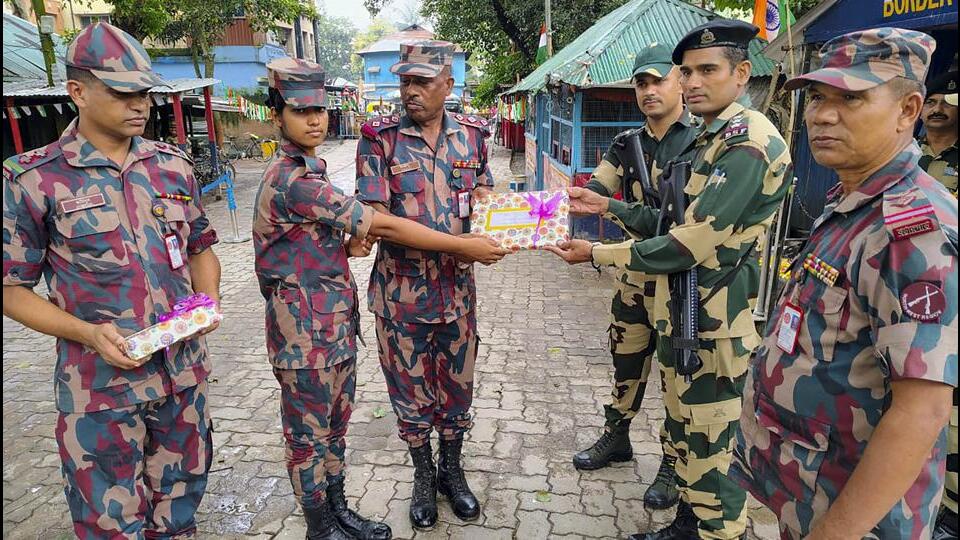
The heads of the BSF and BGB meet every six months, and the Indian side is set to host the next meeting. Although there hasn’t been any message from the government about the biannual meeting, the BSF has prepared agenda points in case there is a last-minute decision.
Officials who didn’t want to be named said there was still no indication regarding the scheduling of the meeting, and things would become clearer once the security situation on the Bangladeshi side improves.
The officials said the Indian side intends to raise with the BGB the issue of increased unauthorised infiltration into India, recent instances of some units of BGB stopping BSF troops from building a cattle fence in Cooch Behar area and instances of attack, assault and abuse on BSF personnel and Indian civilians by Bangladesh based criminals and miscreants.
Joint efforts to prevent trans-border crimes, action against Indian insurgent groups and issues related to border infrastructure within 150 yards of the international border are also expected to be raised by the Indian side, the officials said.
“During regular meetings at the border, we continue to raise these issues anyway with local BGB commanders. The border coordination conference at the level of directors general, however, holds detailed discussions on all larger issues for a mutually beneficial relationship,” said one of the officials cited above.
“The next meeting was originally scheduled to be held in New Delhi at the end of September or the first week of October and we are ready. But we have no confirmation as of now whether the BGB team will come.”
People familiar with developments on the Bangladeshi side said Dhaka had recommended the continuation of meetings and interactions under established mechanisms despite the recent change of government. Former prime minister Sheikh Hasina stepped down on August 5 following countrywide protests led by students and fled to India. An interim government led by Nobel laureate Muhammad Yunus was formed days later.
The Bangladeshi side is also keen for work to resume on India-funded projects. Work on these projects stopped as several Indian firms pulled out their personnel from sites in Bangladesh because of the violence that followed the fall of the Sheikh Hasina regime.
BSF officials admitted that after the change of regime in Dhaka, they have been dealing with an increasing number of illegal intrusions, aggressive posturing by BGB personnel at some places and smugglers trying to take advantage of the situation on the Bangladeshi side.
“We have heightened alertness on the entire 4,096-km border and we have been directed to ensure that no unauthorised person enters India from Bangladesh,” a BSF official said on condition of anonymity.
The last round of talks in Dhaka was attended by former BSF chief Nitin Agrawal and his then BGB counterpart, Maj Gen Mohammad Ashrafuzzaman Siddiqui, and the two sides discussed incidents of assault and attack on BSF personnel by Bangladesh based trans-border criminals. They agreed on combined efforts to reduce such incidents to an absolute minimum by increasing coordinated patrols, especially late at night and early in the morning, in vulnerable areas.
The two sides also discussed sharing of real-time information to ensure that deaths at the border would be brought down to zero and access to investigation reports on traffickers.
For now, trade activities are going on normally at the India-Bangladesh border, said a second BSF officer, who too didn’t want to be named.
India, officials in North Block said, has a three-tier institutional mechanism with Bangladesh since 1994 to resolve security and border management issues. These are talks between the heads of border guarding forces, a joint working group at the level of joint secretaries of both countries and home secretary-level talks.