Keeping an accused behind bars for more than six years without the trial even beginning amounts to “punishment in itself”, the Supreme Court has held, terming the state of affairs “unacceptable” and reminding courts that even the rigours of special laws must yield to the constitutional right to personal liberty.
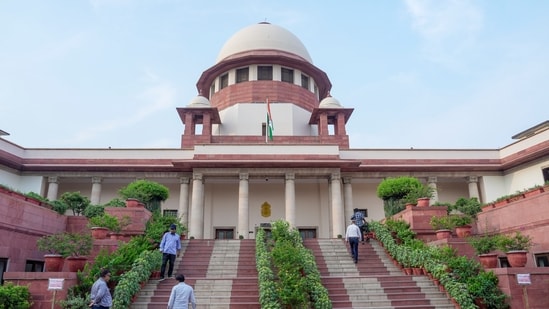
“Keeping an accused incarcerated without trial for more than six years itself amounts to punishment, which is unacceptable,” said a bench of justices Dipankar Datta and Sheel Nagu in a recent order, as it granted bail to a man arrested in a narcotics case.
The bench was categorical that the stringent restrictions under the Narcotic Drugs and Psychotropic Substances (NDPS) Act cannot override the constitutional guarantee of personal liberty.
Court takes note of case
The court noted that the accused, Arshdeep Singh, had been in custody since May 16, 2020, and although charges were recently framed, the trial was yet to commence. It also noted that he had no prior criminal antecedents. It pointed out that in such a case, the rigours of Section 37 of the NDPS Act must yield to Article 21 of the Constitution, which protects the right to personal liberty.
Setting aside an Allahabad High Court order from July 28, 2025, which had rejected Singh’s second bail application, the apex court directed his release on bail subject to conditions imposed by the trial court.
{{/usCountry}}Setting aside an Allahabad High Court order from July 28, 2025, which had rejected Singh’s second bail application, the apex court directed his release on bail subject to conditions imposed by the trial court.
{{/usCountry}}Section 37 of the NDPS Act imposes stringent twin conditions for granting bail in cases involving commercial quantities of narcotic substances. Where the prosecution opposes bail, the court must be satisfied that there are reasonable grounds to believe that the accused is not guilty and is unlikely to commit an offence while on bail. The provision is designed to make bail difficult in drug-trafficking cases. However, the Supreme Court’s intervention underscores that these restrictions cannot become a justification for indefinite pre-trial incarceration.
Interception of the accused by NCB
Singh was arrested by the Narcotics Control Bureau on May 16, 2020, after a truck in which he was travelling was intercepted on GT Road. Investigators claimed to have recovered 31kg of opium concealed in plastic bags in the truck. The prosecution alleged that the contraband was in his conscious and constructive possession, while Singh maintained that he was merely driving the vehicle and had no knowledge of the substance allegedly concealed in it.
His first bail application was rejected by the high court in July 2022. When he approached the court again, he argued, among other things, that the mandatory procedure under Section 52A of the NDPS Act, governing the disposal and documentation of seized narcotic substances, had not been followed.
The high court rejected this argument, relying on a Supreme Court’s 2024 ruling, which held that delayed compliance or non-compliance with Section 52A, by itself, would neither vitiate a trial nor constitute a standalone ground for granting bail. It also found no fresh ground warranting reconsideration of Singh’s plea, apart from the period of incarceration.
Also Read I Delhi court grants bail to woman accused of luring minor into drug trade
Apart from emphasising the quantum of recovery and that Singh was allegedly in conscious possession of the contraband, the high court also relied on the statutory restrictions under Section 37 and rejected his plea.
The Supreme Court, however, considered the prolonged incarceration and the absence of progress in the trial decisive, underscoring that the severity of an accusation cannot, by itself, justify keeping an undertrial in prison for years without bringing the case to trial.
The bench also made Singh’s liberty conditional on his diligent attendance at trial and directed that any breach of bail conditions, including attempts to influence witnesses, could lead to cancellation of bail.