E-Paper



‘Can’t be a police State’: Supreme Court calls for new bail law
A bench of justices Sanjay Kishan Kaul and MM Sundresh lamented that jails in the country are flooded with under-trial prisoners since a large number of arrests are made by police as a matter of routine and then the courts end up dealing with the bail applications in a “negative sense”.


India should never become a “police State” where investigating agencies act like vestiges of the Colonial era, held the Supreme Court on Monday, while calling upon the Union government to consider framing a new law to facilitate the grant of bail and usher in objectivity in the criminal justice system to ward off unnecessary arrests, especially in cases where the maximum punishment under the alleged offence is up to seven years in jail.
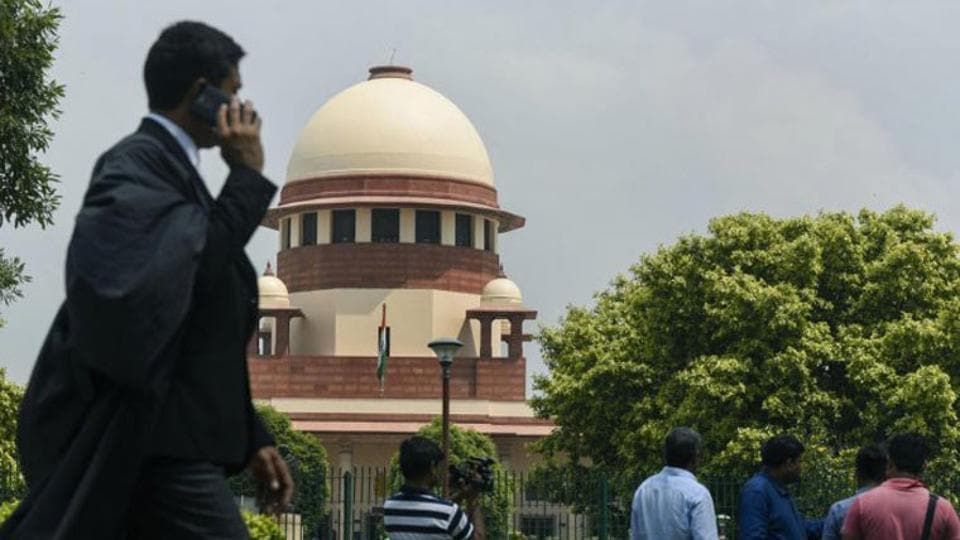
A bench of justices Sanjay Kishan Kaul and MM Sundresh lamented that jails in the country are flooded with under-trial prisoners since a large number of arrests are made by police as a matter of routine and then the courts end up dealing with the bail applications in a “negative sense”.
“The rate of conviction in criminal cases in India is abysmally low. It appears to us that this factor weighs on the mind of the court while deciding the bail applications in a negative sense. Courts tend to think that the possibility of a conviction being nearer to rarity, bail applications will have to be decided strictly, contrary to legal principles,” rued the bench, pointing out that an ultimate acquittal with continued custody would in fact be “a case of grave injustice”.
Issuing a slew of directions for the investigating agencies and the subordinate courts on arrests and grant of bail, the bench underlined that the persons accused with the same offence should never be treated differently, either by the same court or by different courts, and that even an exercise of judicial discretion cannot justify any violation of equality before the law.
The court order envisages revamping the criminal jurisprudence in the country at a time when various arrests and long pendency of bail applications have raised serious questions over the objectivity and efficacy of the judicial approach to such matters. The recent arrest of journalist and fact-checker Mohammed Zubair in connection to his old tweets, or rejection of bail to several old and infirm accused including Varavara Rao and Sudha Bharadwaj in the Bhima-Koregaon case, only highlight the issue plaguing the bail jurisprudence. 84-year-old tribal rights activist Stan Swamy died in judicial custody in Mumbai on July 5 last year in the Bhima-Koregaon case even as his bail application remained pending before the high court there. Zubair is currently under arrest for the charges having the maximum punishment less than seven years in jail.
“Uniformity and certainty in the decisions of the court are the foundations of judicial dispensation... The Government of India may consider the introduction of a separate enactment in the nature of a Bail Act so as to streamline the grant of bails,” said the court while releasing a set of guidelines in the meantime and seeking compliance reports from states and UTs within four months.
These guidelines obligate police officers to record in writing before arresting the accused in cases where the offence is punishable with imprisonment for a term less than seven years; issuance of a proper notice before a suspect is called for questioning; automatic grant of bail in cases where the accused was not arrested during investigation; adoption of a liberal view in cases pertaining to women and the infirm; disposal of bail applications within two weeks; and disposal of pre-arrest bail applications within six weeks.
The court cited Bail Acts in the UK and some states of the US where these legislations prescribe guidelines both for investigating agencies and the courts, premised on the principles of presumption of innocence and the grant of bail being a matter of right, as they contain sufficient provisions to deal with myriad situations in a criminal case.
“We believe there is a pressing need for a similar enactment in our country. We do not wish to say anything beyond the observation made, except to call on the government of India to consider the introduction of an Act specifically meant for granting of bail as done in various other countries like the United Kingdom. Our belief is also for the reason that the code as it exists today is a continuation of the pre-Independence one with its modifications. We hope and trust that the government of India would look into the suggestion made in right earnest,” said the bench.
It reminded the trial courts that they ought to act like the guardian angels of liberty. “Liberty, as embedded in the (Criminal Procedure) Code, has to be preserved, protected, and enforced by the criminal courts. Any conscious failure by them would constitute an affront to liberty. It is the pious duty of the criminal courts to zealously guard and keep a consistent vision in safeguarding the constitutional values and ethos,” emphasised the bench.
The court was dealing with a matter where an accused was sought to be arrested after completion of the probe although he was not taken into custody during the investigation. Senior advocate Sidharth Luthra and additional solicitor general SV Raju were requested by the court to assist it in laying down elaborate guidelines for the investigating agencies as well as courts in dealing with various categories of cases.
In its 85-page judgment, the bench regretted that while more than 2/3rd of the inmates constitutes under-trials, the majority of them may not even be required to be arrested, being charged with offences punishable for seven years or less.
“It certainly exhibits the mindset, a vestige of colonial India, on the part of the investigating agency, notwithstanding the fact arrest is a draconian measure resulting in curtailment of liberty, and thus to be used sparingly. In a democracy, there can never be an impression that it is a police State, as both are conceptually opposite to each other,” underscored the bench.
Landmark 2014 order
Borrowing from its 2014 landmark judgment in Arnesh Kumar vs State of Bihar, the top court said that investigating agencies must refrain from arresting accused for offences entailing punishment up to seven years in jail without explicitly specifying the need to do so. A trial court shall not approve the detention unless satisfied by the reasons cited by the police, noted the top court as it ordered strict compliance with the 2014 judgment.
The bench further referred to a string of guidelines issued by the Delhi high court in 2018 on the procedure to be followed by the police while seeking presence of a suspect for questioning, and directed that all the states and Union territories issue standing orders for the procedure to be followed before making arrests and summoning suspects.
“We do feel that this would certainly take care of not only the unwarranted arrests, but also the clogging of bail applications before various Courts as they may not even be required for the offences up to seven years... We also expect the courts to come down heavily on the officers effecting arrest without due compliance of Section 41 and Section 41A of CrPC (dealing with arrests and summoning),” said the court.
High courts should also monitor the release of undertrials who have suffered at least half the maximum sentence provided under the offence, directed the bench, adding the courts should not impose harsh conditions of surety while granting bail.
“Once again, we have to reiterate that ‘bail is the rule and jail is an exception’ coupled with the principle governing the presumption of innocence... Whatever the nature of the offence may be, a prolonged trial, appeal or a revision against an accused or a convict under custody or incarceration, would be violative of Article 21,” added the top court, holding that an inordinate delay in concluding a trial would also be a relevant factor in the grant of bail.
On women undertrials, the court regretted that many women who commit cognisable offences are poor and illiterate. “The statistics would show that more than 1,000 children are living in prisons along with their mothers... There is a grave danger of their being inherited not only with poverty but with crime as well,” said the bench, asking the trial courts to deal with their cases with sensitivity.
Senior advocate Geeta Luthra said: “Unless the courts come down heavily on the police machinery for violating the guidelines laid down in Arnesh Kumar, they will continue to be non-compliant, depending on how it suits the investigating agency.”
She added that a separate law for bail may not be really required, provided the investigating agencies follow in letter and spirit the guidelines issued by the constitutional courts of the country. “That would ensure fairness, justice and equality before the courts,” emphasised Luthra.
Senior advocate Vikas Pahwa said: “The landmark judgment on bail, which mandated ‘bail is a rule and jail is an exception’ was delivered by Justice Krishna Iyer in 1978. However, the jurisprudence on bail in the last few decades have deteriorated because of which 75% of the prisoners in our jails today are suffering pre-trial detention, which is unwarranted in law.”
Pahwa added that there is a plethora of judgments on bail, which the investigating agencies must follow to prevent rampant arrests and unwarranted detentions.
 ABOUT THE AUTHORUtkarsh Anand
Utkarsh Anand is the National Legal Editor at Hindustan Times, where he leads the newspaper's coverage of the Supreme Court, constitutional law, the judiciary and the Union law ministry. He joined Hindustan Times in 2020 after stints at Press Trust of India (PTI), The Indian Express and CNN-News18, and has over two decades of experience reporting on law, governance and public policy. His work has focussed on some of India's most consequential constitutional and legal developments, including the Supreme Court's judgments on Article 370, marriage equality, decriminalisation of homosexuality, the Babri Masjid dispute, electoral reforms and judicial appointments. He specialises in making complex legal proceedings and judgments accessible to readers while examining their wider social and political impact. Beyond daily reportage, Utkarsh has led investigative projects and enterprise reporting that have shaped public debate and prompted institutional responses. His work has received several journalism awards, including the Ramnath Goenka Excellence in Journalism Award. As National Legal Editor, he has also played a key role in expanding Hindustan Times' legal journalism footprint, mentoring reporters and strengthening coverage across platforms. A Chevening South Asia Journalism Programme Fellow, Utkarsh regularly writes analyses on the judiciary and constitutional issues, and his reporting is widely followed by lawyers, judges, policymakers, academics and readers seeking clarity on India's evolving legal landscape.Read More