
 E-Paper



Centre: New school curriculum to be ‘rooted in Indian, local context’
The document advocates incorporating Indian knowledge systems, heritage and traditions in the education system.

 Prefer HTon Google


Incorporating an Indian knowledge system rooted in the local context, developing “pride in India”, and doing away with the culture of rote learning are among the key guidelines suggested by a mandate document released by the Union education ministry on Friday for the development of a new National Curriculum Framework (NCF) for school textbooks in India.
Also Read | Centre seeks inputs from ministries for national curriculum
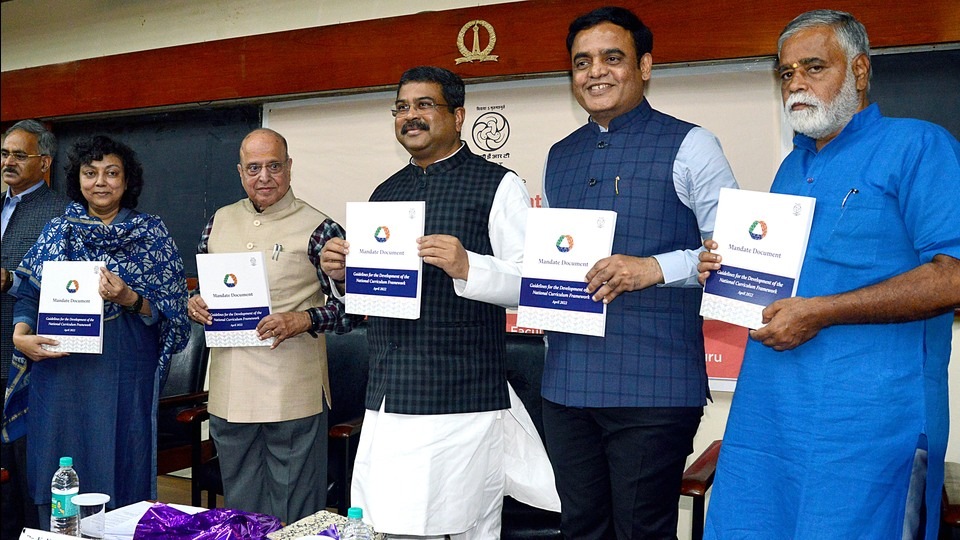
The document titled “Guidelines For The Development of The National Curriculum Framework”, which describes the formulation process of NCF, was launched by union education minister Dharmendra Pradhan in Bengaluru.
Calling it a step towards “decolonising” the Indian education system, Pradhan said, “The National Education Policy 2020 is the ‘Philosophy’, National Curriculum Framework is the ‘Pathway’ and the mandate document released today is the ‘Constitution’ to champion the changing demands of the 21st century and positively impact the future.”
The National Council of Educational Research and Training (NCERT) and the Union ministry of education have already initiated the process of the development of four NFCs in the areas of early childhood care and education, school education, teacher education, and adult education, as a part of the implementation of the National Education Policy (NEP) 2020.
Describing the purpose of education, the document says: “It is to develop good human beings, capable of independent, rational thought and action, with compassion and humaneness, with courage and creative imagination, based on sound ethical moorings and a rootedness in India.”
The document advocates incorporating Indian knowledge systems, heritage and traditions in the education system, and talks about including critical issues facing local communities, states, and the country in the curriculum. In line with the NEP, the document emphasizes giving preference to regional language as the medium of instruction until at least Grade 5, and preferably till Grade 8 and beyond.
According to the document, the curriculum should encapsulate the overall experience of students in school and should also focus on the school environment and culture. It further says that the main aim of the NCF should be to target the teachers as they are “ultimately the torchbearers of the change”. “The NCF should account for the reality of an average teacher and private a realistic pathway to the ideal from the current reality, in clear steps, taking into account the resources available to the teachers, the expected capabilities of the teacher and the surrounding system…”
The document also recommended the states and the Centre to act “urgently” with “great focus” to recover the learning gap caused by Covid-19 pandemic.
“While the NCF is under development, the country’s education system continues to have significant, urgent, and important priorities. The pandemic has driven disruption in the learning continuum amongst the vast majority of our children, and the States and the Centre must act urgently and with great focus to recover this gap in learning over the next 12 months,” it said.


