E-Paper



Centre opposes plea in SC seeking guidelines to curb internet shutdowns
The Union government argued that such an “advance ruling” would be untenable and that each instance of internet suspension must be challenged individually

 Prefer HTon Google


The Union government on Tuesday opposed a plea in the Supreme Court seeking nationwide guidelines to restrict internet shutdowns, arguing that such an “advance ruling” would be untenable and that each instance of internet suspension must be challenged individually.
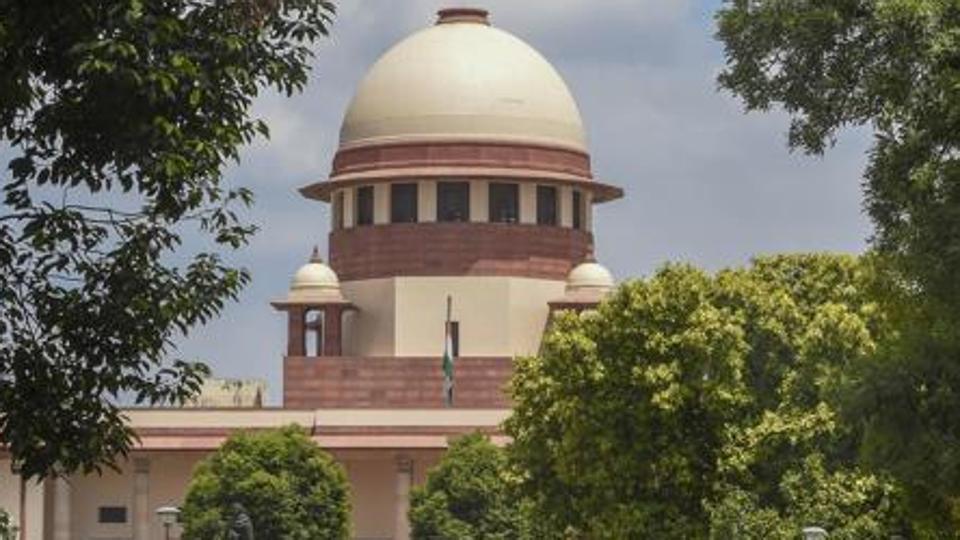
As a bench of justices Vikram Nath and PB Varale took up a petition challenging internet shutdown imposed by Centre and states to prevent cheating during public examinations, the Centre maintained that such instances must be challenged on a case-by-case basis. The petition, filed by the Software Freedom Law Centre (SFLC) in 2022, highlights the economic, social and legal ramifications of these shutdowns and calls for clear guidelines to curb their arbitrary use.
Representing the Centre, advocate Kanu Agrawal cited the Supreme Court’s landmark Anuradha Bhasin Vs Union of India (2020) judgment to assert that no sweeping directions could be issued for grievances against shutdowns.
Agrawal informed the court that the Centre had already directed all states and Union territories to adhere to the principles laid down in the Anuradha Bhasin ruling, which mandated proportionality and periodic review of internet suspension orders, besides necessary publication of such directives. “We have written to the chief secretaries and the Union also takes care of it. But this plea wants an advance ruling which cannot be done,” he added.
Agrawal’s submissions came after advocate Vrinda Grover, representing SFLC, described the issue as one of significant public interest. She pointed out that several states have resorted to internet shutdowns during high-stakes examinations like high school tests or patwari recruitment exams to curb cheating. However, Grover argued that such measures are disproportionate, causing widespread economic loss and infringing on citizens’ fundamental rights.
Opposing the plea, Agrawal argued that the Anuradha Bhasin judgment explicitly states that grievances regarding internet suspensions must be addressed on a case-by-case basis.
Following the brief submissions of the two sides, the bench deferred the hearing to January 29, 2025, allowing the parties to file additional documents and replies in the interim.
SFLC’s petition seeks the Supreme Court’s intervention to formulate a comprehensive framework regulating internet shutdowns. It argues that the existing legal provisions, including the Temporary Suspension of Telecom Services (Public Emergency or Public Safety) Rules, 2017, are often misused by states to enforce blanket shutdowns without adequate justification.
The petition further contends that such actions violate fundamental rights, disrupt economic activities, and infringe upon the right to education, commerce, and access to information. Advocates for the petition stressed that proportionality and necessity must remain central to any internet suspension order.
“Suspending internet services for an entire district, or for multiple districts, is a disproportionate action on part of the state, which has a damaging impact on economic activities and the livelihood of millions of citizens, and also denies access to the internet which facilitates various other rights including of communication, information, commerce and expression and speech,” the petition said.
The petition cited specific instances, such as the Rajasthan government’s statewide internet suspension during the 2021 Rajasthan Eligibility Examination for Teachers. Similar shutdowns were imposed in Gujarat, Arunachal Pradesh, and West Bengal. According to official data, at least 12 shutdowns lasting over 71 hours were recorded, affecting large populations and disrupting livelihoods, according to the plea.