
 E-Paper



Centre scraps 40% disability rule for scribes; mandates certified pools for PwD exams
The revised guidelines removed the 40% disability requirement—known as “benchmark disability”—for availing scribes and other exam-related assistance

 Prefer HTon Google


New Delhi: The ministry of social justice and empowerment has revised its guidelines to allow all persons with disabilities (PwDs), removing the 40% “benchmark disability” requirement, to avail themselves of scribes and other assistance during competitive exams, while directing exam authorities to create vetted pools of trained and certified scribes during this period.
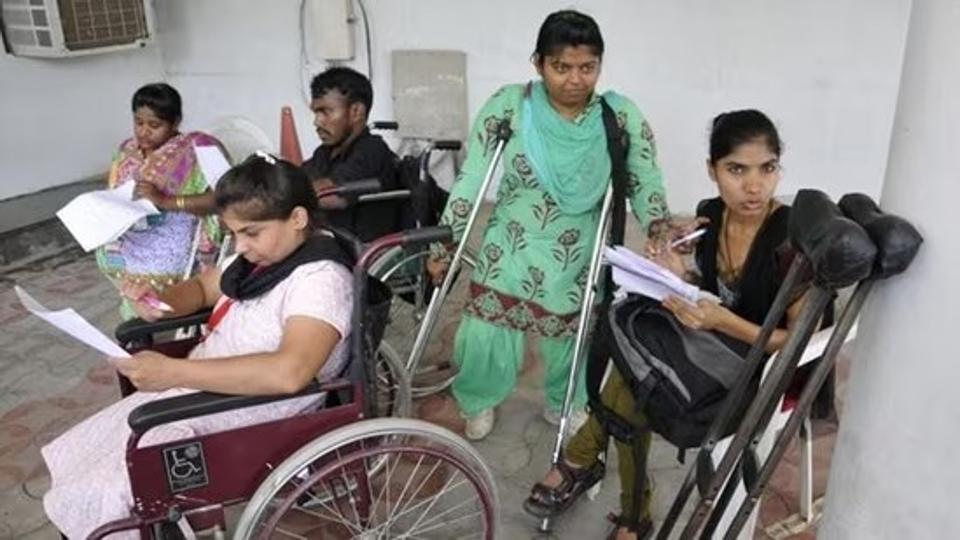
Following a series of Supreme Court directives, the ministry, through the department of empowerment of persons with disabilities (DEPwD), issued the revised policy last month, which will take immediate effect and apply to all competitive exams linked to employment and admissions to professional and technical courses.
The most recent directive by the Supreme Court came in Gulshan Kumar vs Institute of Banking Personnel Selection (IBPS), which held that denying exam assistance to persons with less than 40% disability violates the Rights of Persons with Disabilities Act, 2016.
The court had ordered the centre to adopt uniform guidelines and remove benchmark-based restrictions. “This court directs the government to ensure that all persons with disabilities, irrespective of the extent of their disability, are provided the same benefits in competitive examinations, including the provision of scribes and compensatory time,” the February 2025 ruling said.
The revised guidelines, which removed the 40% disability requirement—known as “benchmark disability”—for availing scribes and other exam-related assistance, now apply uniformly to any candidate with physical, visual, intellectual, neurological, or other disabilities that impair their ability to write.
Also Read: Gender & disability: Need inclusion at intersections
A certificate from a competent medical authority is required to access these benefits.
Exam authorities are also instructed to encourage candidates to take exams independently with the help of assistive technologies such as screen readers like Job Access With Speech (JAWS), NonVisual Desktop Access (NVDA), speech-to-text software, software-enabled laptops or desktops, braille, large print materials, and audio recording tools. These must be made available in both English and other Indian languages.
Another key administrative shift is the phasing out of privately arranged scribes, known as the “own scribe” system, which will be discontinued within two years.
Examination authorities such as the Union Public Service Commission (UPSC), Staff Selection Commission (SSC), National Testing Agency (NTA), and others must develop their own vetted pools of trained and certified scribes during this period.
Also Read: Open minds and workplaces to those with disabilities
“Significant inputs have been received from responsible bodies like UPSC, Department of Personnel and Training (DoPT), National Recruitment Agency (NRA), etc., expressing concern over the credibility and transparency of the exams being undertaken by the PwDs by using a scribe, in general. In particular, the provision of ‘Own Scribe’ has been identified as a significant vulnerability in maintaining the integrity and fairness of the examination process,” the guidelines state.
Examining bodies had reported instances where scribes completed exam papers with little or no instruction from candidates. “Instances of malpractice, including collusion between candidates and their privately arranged scribes, have been observed by various examining bodies, where scribes wrote answers independently without adequate dictation, thereby undermining the examination’s credibility,” the memorandum said.
Until institutional scribe pools are fully operational, candidates may still use their own scribes in “exceptional cases” or “as a last resort,” provided they submit a declaration of the scribe’s qualifications. Scribes must have an educational qualification that is two to three academic years below the minimum required for the exam. They cannot be candidates for the same examination or have any conflicts of interest.
Candidates using a scribe will need to sign an undertaking affirming these conditions. Falsifying scribe qualifications or violating these rules may result in cancellation of candidature. Candidates will also be eligible for compensatory time of at least 20 minutes per hour, regardless of whether a scribe is used.
All examination centres are required to ensure full physical accessibility, including the presence of ramps, lifts, wide corridors, audio announcements, and ground-floor seating. Quiet rooms will be provided for candidates with neurodevelopmental or chronic health conditions, and exam staff will undergo mandatory disability etiquette training.
Also Read: Rethinking law and care for psychosocial disabilities in India
To monitor and enforce these changes, all central ministries and recruitment agencies have been given a deadline of three months to revise and reissue their internal exam policies in accordance with the new guidelines. Authorities are also required to conduct periodic surveys and verification exercises to ensure compliance.
As per the Public Examinations (Prevention of Unfair Means) Act, 2024, the National Recruitment Agency is tasked with developing standards for fair and accessible computer-based testing. This includes ensuring technological support is provided on a case-by-case basis depending on the candidate’s needs.
To safeguard personal and medical information, the guidelines mandate strict data protection in line with the Digital Personal Data Protection Act, 2023. Examination authorities must securely store any documentation submitted by candidates and prevent unauthorized access.
Grievance redressal systems for PwD candidates are also mandated. Feedback mechanisms must be set up to assess the quality of scribes, and training and incentives will be offered to those empanelled.
Officials failing to implement these measures face possible penalties. Candidates or scribes found engaging in malpractice are also subject to disciplinary action.


