
 E-Paper



Centre’s caste enumeration won’t make state’s exercise irrelevant or redundant, says official
Karnataka Backward Classes panel chairman said that public is being misled by politicians that the moment the central government comes up with its census report and castes list, the state’s list will go

 Prefer HTon Google


The Centre’s announcement to include caste enumeration in the next population survey to begin in 2026 will not override state government’s socio-educational survey (commonly referred to as caste survey - a misnomer), slated to commence in the coming months, said a top government functionary.
While the Bharatiya Janata Party (BJP) and its constituents have hailed the Union cabinet’s decision to undertake caste enumeration as a “historic decision and reflection of its commitment to social equality”, Karnataka BJP president BY Vijayendra claimed it will put an end to chief minister Siddaramaiah’s attempt to divide the society in the name of ‘the caste census’. According to Vijayendra, the caste survey to be undertaken by the Karnataka State Commission for Backward Classes will be redundant and not serve any purpose once the national caste census is done.
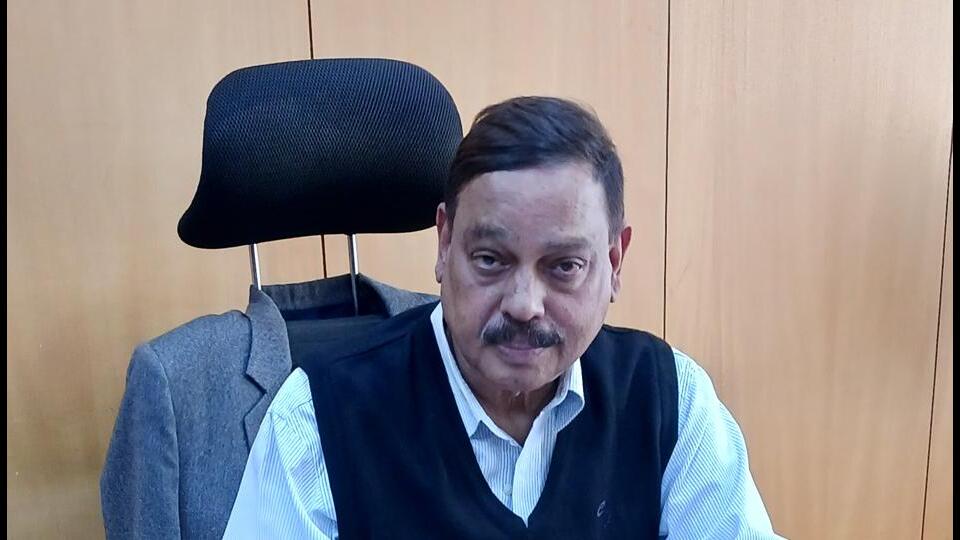
However, Karnataka State Commission for Backward Classes chairman Madhusudan R Naik, who has been tasked to do the survey, said: “The Centre’s caste enumeration results will in no way override the exercise that will be undertaken by his team which is proposed to be scheduled either during the Dasara or winter vacations of this year.”
“Merely because the central government is proposing a caste survey doesn’t take away the validity or the sanctity of a list of Backwards which will be prepared after survey work by the state government,” he told HT.
Naik said that public is being misled by politicians that the moment the central government comes up with its census report and castes list, the state’s list will go. Both lists will operate independently as the one prepared by the Centre is for education and employment in central government offices and institutions while the state’s is for employment in its government and educational undertakings.
The state’s list has a statutory backing, authority and sanctity to operate and that position has been clarified by the Supreme Court way back in 1996 in the AN Singh Vs Uttar Pradesh and in 2010 in the KK Murthy Vs the Centre that both lists are independent of each other and will prevail, he added.
Regarding caste enumeration to be included in the national census, Naik said though the Centre has proposed, the exercise cannot be done without amending the Census Act of 1948.
“The national census is to count the population. For a caste enumeration, I am assuming the Centre will act in accordance with law and not in violation of it. The central government has the executive powers, in terms of Article 340, but those powers have to be exercised in accordance with law. A minister’s statement (Union minister Ashwini Vaishnaw had made the announcement on April 30) that caste census will be done, does not become a validated exercise. There’s no concept of a caste census in the Census Act,’’ he maintained.
According to Naik, who was Karnataka’s Advocate-General from 2015 to 2018, one option for the Centre is to invoke Articles 338, 339 and 340 (Articles which empower the President to appoint a commission to investigate the social and educational conditions of the SCs/STs and backward classes respectively) to include caste enumeration in the population census.
The commission is scheduled to send its proposals to the state government on the modalities of how the survey should be done in a couple of days as the five members to the panel were appointed recently. “Members are discussing what proposals they should make to the government and all these should get decided in a week’s time,’’ Naik stated.
The state government notified a fresh socio-educational survey after keeping aside, the one done by commission’s former chairman H Kantharaj in 2015 and analysed by his successor K Jayaprakash Hegde in 2024 on the grounds that, the data was a decade old, and decisions by the courts require contemporaneous/recent origin. Naik, who took charge as the commission’s chairman in January 2025, said his panel is planning to ask the government to permit undertaking the survey either during the Dasara or Christmas vacations.
“Teachers are the most respected class and for enlisting their services for the survey, the commission has to ensure that it does not interfere with the academic calendar or affect provisions of the Right to Education Act. The Dasara festival is from 22,September to 7,October and the panel may propose to the government to either extend the vacation or the academic year by another 10 days,’’ he added.
The commission is yet to deliberate on whether the questionnaire by the Kantharaj panel should be continued or tweaked, methodology to be adopted for the survey and the experts to be consulted.
“Since we have the benefit of a similar exercise done by justice HN Nagamohan Das commission ( to look into sub-classification of SCs), I am hoping we should be able to finish the survey in 90 or 100 days, provided we complete the preparation two months from today before the Dasara vacation,’’ Naik said.
The commission is also planning to engage the services of experts drawn from the Indian Institute of Management-Mumbai and the United Nations advisory council.


