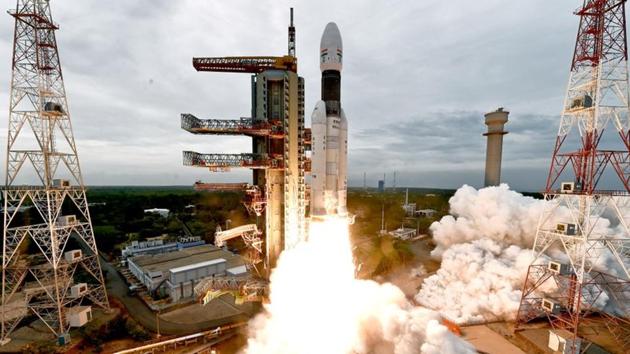
If all goes as planned, India’s Chandrayaan 2 will become the first Indian space craft to land on a non-terrestrial surface. Others such as the US, Soviet Union/ Russia and China have done human and rover landings on the Moon previously. India has previously undertaken orbital missions around the Moon and Mars, the Chandrayaan 1 and Mangalyaan respectively. The fact that the Chandrayaan spacecraft will be landing on the south pole, a region that has been unexplored before makes it even more special. Thefact that the exact spot for landing will be determined right before the landing makes it an extremely complex mission for India. Even China, which has built sophisticated space capabilities, made its first attempt to land on the near side of the Moon, although it did land on the far side of the lunar surface earlier this year.
WATCH NOW| Chandrayaan 2 a success for whole planet: Former NASA astronaut
While ISRO traditionally did not look at interplanetary or complex missions such as the Chandrayaan or Mangalyaan, this has become necessary as India’s space programme evolves into a more mature programme. This is also a reflection of the growing geopolitical competition that is now beginning to play out in space. The space competition that one saw during the Cold War had somewhat faded by the early 1980s, after both the US and Soviet Union demonstrated their own “firsts” in various accomplishments. In fact, the bragging rights also began to lose their value after a point of time because such endeavours were not seen as having much scientific or technological value-addition. But these have begun to make a comeback, except that the main actors are primarily in Asia with China leading in some of the endeavours, quickly followed by other players like India and Japan as well. There are also newer activities in outer space that is sparking the competition. For instance, space mining is beginning to gain a lot of interest in both the West and in Asia. Even the small city state, Luxembourg, is making significant investments in this regard. Asteroid mining, lunar mining and general advances in technology that aid in-situ resource utilization is pushing the countries to explore the practical value of space exploration.
There is also the security driven push to this competition. The US and Soviet Union were locked in major space competition for a couple of decades but the end of the Cold War had slowed down the pace to a large extent. The renewed space competition has China at the centre of it and Beijing has ambitions to catch up with both the US and Russia. But Beijing’s own actions have sparked major reactions in Asia and beyond. For instance, the first successful Chinese anti-satellite (ASAT) test in January 2007 sparked a new competition, pushing India to finally demonstrate its own capability earlier this year. This parallels other types of aggressive behaviour by China in its neighbourhood that has triggered new cooperation between those threatened by such actions and further competition with China. For instance, China’s behaviour has made the India-Japan strategic partnership a lot stronger in recent years, including in outer space. China’s actions have led to competition with the US, India and Japan, to a limited extent too. Because of the growing sophistication of China’s space programme, especially with regard to counter-space capabilities, other states have been driven to try and play catch-up with China. Of course, given the growing penetration of space for security and military purposes by all the major powers, India cannot afford to ignore these developments. China has marched ahead in many areas but India has to develop its own deterrent capabilities in space to remove some of the vulnerabilities that may persist in the bilateral and regional context. So, India will have to do a bit of catching-up with China for a while. While the Chandrayaan 2 mission may not have a direct social or economic benefit, demonstration of the growing sophistication of India’s space capabilities is much required for strengthening its credentials when it comes to debates about global governance of space. Moreover, highlighting India as a major space player makes it an attractive destination for launching satellites for a number of emerging players. All of these benefits and necessities makes India’s space ventures such as this worthwhile.
{{/usCountry}}There is also the security driven push to this competition. The US and Soviet Union were locked in major space competition for a couple of decades but the end of the Cold War had slowed down the pace to a large extent. The renewed space competition has China at the centre of it and Beijing has ambitions to catch up with both the US and Russia. But Beijing’s own actions have sparked major reactions in Asia and beyond. For instance, the first successful Chinese anti-satellite (ASAT) test in January 2007 sparked a new competition, pushing India to finally demonstrate its own capability earlier this year. This parallels other types of aggressive behaviour by China in its neighbourhood that has triggered new cooperation between those threatened by such actions and further competition with China. For instance, China’s behaviour has made the India-Japan strategic partnership a lot stronger in recent years, including in outer space. China’s actions have led to competition with the US, India and Japan, to a limited extent too. Because of the growing sophistication of China’s space programme, especially with regard to counter-space capabilities, other states have been driven to try and play catch-up with China. Of course, given the growing penetration of space for security and military purposes by all the major powers, India cannot afford to ignore these developments. China has marched ahead in many areas but India has to develop its own deterrent capabilities in space to remove some of the vulnerabilities that may persist in the bilateral and regional context. So, India will have to do a bit of catching-up with China for a while. While the Chandrayaan 2 mission may not have a direct social or economic benefit, demonstration of the growing sophistication of India’s space capabilities is much required for strengthening its credentials when it comes to debates about global governance of space. Moreover, highlighting India as a major space player makes it an attractive destination for launching satellites for a number of emerging players. All of these benefits and necessities makes India’s space ventures such as this worthwhile.
{{/usCountry}}(The author is a Distinguished Fellow & Head of the Nuclear and Space Policy Initiative, at the Observer Research Foundation.)