The Chief Minister’s Breakfast Scheme was on Friday extended to all government primary schools in Tamil Nadu, and is set to benefit 1.7 million students.
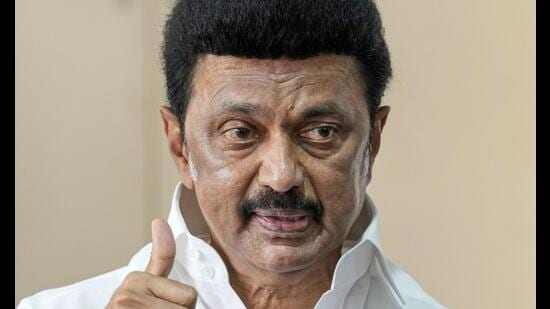
Chief minister M K Stalin launched the expansion by serving free breakfast to students of the panchayat union middle school in Tirukkuvalai, the birthplace of late M Karunanidhi. He sat down to eat breakfast with the students.
“The Chief Minister’s Breakfast Scheme is a pioneer scheme in India and a model for others to emulate,” Stalin said. Though the new National Education Policy rolled out by the Union government has suggested that free breakfast should be provided to school students along with midday meals, they have not taken any effort to implement the scheme, he added.
The scheme was launched in September last year covering about 3,000 government schools. Now 31,000 government schools across the state will benefit and ₹404 crore has been allocated. Initially, the pilot scheme was devised to provide nutritious breakfast to 100,000 students studying in classes 1 to 5 across 1,545 government schools and ₹33.56 crore was allocated.
The free breakfast scheme was introduced to ensure that hunger should not be a barrier to education, help increase students’ attendance and retention, prevent malnutrition, achieve average height in children, prevent underweight in adolescents, anaemia and vitamin B12 deficiency.
“Apart from all these, the primary objective is to reduce the workload of 6 working mothers,” a statement from the government said.
{{/usCountry}}“Apart from all these, the primary objective is to reduce the workload of 6 working mothers,” a statement from the government said.
{{/usCountry}}Tamil Nadu has pioneered such social welfare schemes and the free breakfast for students is another initiative in that direction. The Justice Party introduced the midday meal scheme in 1922 and expanded it in 1925.
In April 1947, it was announced that the midday meal scheme would be abandoned due to financial crunch. In 1957, the then Congress chief minister K Kamaraj resumed the scheme and ₹10 lakh was allotted.
In July 1982, founder of ADMK (later AIADMK) and the then chief minister M G Ramachandran introduced the Nutritious Meal Programme which fed all school students throughout the year. He announced that the children in the age group of 2 to 5 years, who attend pre-school education, and the children in the age group of 5 to 9 years, who pursue primary education, would be provided nutritious meal.
In 1989, Karunanidhi announced that one egg would be provided every two weeks along with the nutritious meal. In 1998, one egg was provided weekly once. In July 2006, two eggs per week was implemented. From September 2007 three eggs were provided per week. From 2008, bananas were given to the children who did not eat eggs. From 2010, five eggs every week have been given to children.