E-Paper



China focus: Imports, supply chain plan key
The Economic Survey asked whether the country can boost manufacturing or tap global supply chains without plugging into Chinese supply chains

 Prefer HTon Google


The Economic Survey on Monday proposed a China-specific strategy for India’s growth that welcomed Chinese investments instead of imports of Chinese merchandise, contrary to New Delhi’s tough stance against Beijing in response to the military standoff on the Line of Actual Control (LAC) since 2020.
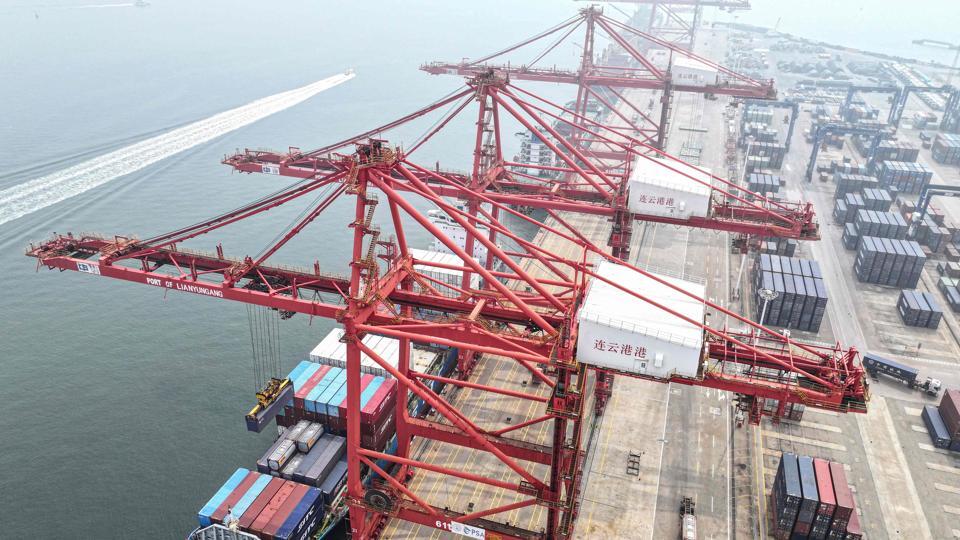
The survey asked whether the country can boost manufacturing or tap global supply chains without plugging into Chinese supply chains. It referred to India’s efforts to cope with China’s dominance in manufacturing and global supply chains, especially for materials needed for the country’s green transition, as the “Chinese conundrum”.
“Striking the right balance between the trilemma of trade with China, investment by China, and India’s territorial and non-territorial integrity and security is part of the strategy of growing India’s Mittelstand,” the survey said, referring to both the face-off at the LAC and efforts to grow small and medium enterprises.
Explaining the strategy, chief economic adviser (CEA) V Anantha Nageswaran said : “If we continue to import goods from China, given that they have excess capacity, the trade deficit will only continue to widen. Therefore, we need to strike the right balance between import of goods and import of capital (FDI).”
Abhishek A. Rastogi, founder of law firm Rastogi Chambers said the Survey has proposed a prudent strategy. “Allow capital, technology and skills to come to India in the form of FDI from China. Use these resources to boost local manufacturing and exports,” he said.
Since a brutal clash in Galwan Valley in June 2020 killed 20 Indian soldiers and at least four Chinese troops, New Delhi imposed several economic measures against China, including banning hundreds of apps, restricting foreign direct investment from China, ending direct flights and tightening visa regulations. Even before the standoff, India barred Chinese firms from participating in the roll-out of 5G telecommunications services.
In May, external affairs minister S Jaishankar even said Indian firms should assess business dealings with China through a “national security filter” and source more from domestic manufacturers.
The Economic Survey noted the dynamics of India-China economic relations remain “extremely complex and intertwined”, and said China’s domination of worldwide supply chains across product categories is a “key global concern”, especially after supply disruptions following the war in Ukraine.
Though India is the fastest-growing G20 member and recording growth rates that outpace China’s, “India’s economy is still a fraction of China’s,” and “China’s near-monopoly over the production and processing of critical and rare earth minerals” will have significant repercussions for India’s renewable energy programme, which is “vulnerable because of its massive dependence on imported raw materials”, the survey said.
While noting that Brazil and Turkey raised tariffs on import of Chinese e-vehicles but simultaneously took steps to attract Chinese FDI in this sector, the survey said India has a “similar decision to make, given its large bilateral trade deficit with China”.
“ Replacing some well-chosen imports with investments from China raises the prospect of creating domestic know-how down the road. It may have other risks, but as with many other matters, we don’t live in a first-best world. We have to choose between second- and third-best choices,” the survey said.
“In sum, to boost Indian manufacturing and plug India into the global supply chain, it is inevitable that India plugs itself into China’s supply chain. Whether we do so by relying solely on imports or partially through Chinese investments is a choice that India has to make,” it added.
The Economic Survey cautioned against thinking that India “can take up the slack from China vacating certain spaces in manufacturing”, and noted recent data cast doubt on whether China is “even vacating light manufacturing”. Another key issue for India is striking the right balance between importing goods and importing capital from China.
China’s dominance in a large number of products creates a “risk of economic coercion, where the government restrains access to crucial inputs for political leverage”. This was “most evident” in China’s exports of rare earth and critical minerals needed by most countries for the green transition.
“China’s dominance also has led to monopolistic practices which has considerably limited the space for new entrants to emerge as new manufacturing powers,” the survey said, noting the Chinese government can encourage companies to partner, merge or consolidate to gain market shares, and raise prices to restrict access to products. Some Chinese goods are so cheap that “no amount of tariff can reduce their price competitiveness”, and other Chinese products can move past import restrictions “without being noticed since they are packaged in third countries”.
China has also started retaliating against import restrictions, further complicating the manufacturing landscape for emerging economies. “For instance, in response [to] India’s anti-dumping probe against Chinese entities, China has been quietly blocking India’s access to solar equipment,” the survey said.
The Economic Survey also questioned the soundness of the “China plus one” strategy and concluded that “ the world cannot completely look past China, even as it pursues China plus one”.
India has two choices to benefit from the “China plus one” strategy – it can integrate into Chinese supply chains or promote FDI from China. Focusing on FDI seems “more promising for boosting India’s exports to the US” and “appears more advantageous than relying on trade”, it added.
This is because China is India’s top import partner and the trade deficit has been growing. “As the US and Europe shift their immediate sourcing away from China, it is more effective to have Chinese companies invest in India and then export the products to these markets rather than importing from China, adding minimal value, and then re-exporting them,” the survey said.
In the context of the green transition, the survey noted that China has positioned itself as an “indispensable source” of several critical minerals and rare earths needed for renewable energy and EVs. The sources of some minerals are graphite (China, 79%), Cobalt (Congo, 70%), rare earths (China, 60%), and lithium (Australia, 55%).
“The concentration level is even higher for processing, with China dominating across the board. India’s initiative to build domestic capacity should be seen in the backdrop of the current supply chain for [rare earths], which is heavily skewed,” the survey said.
India has therefore joined the Mineral Security Partnership (MSP) to enable access to critical minerals. MSP includes 14 countries, with India the only developing country.