New Delhi: India has taken a firm step towards the creation of military theatre commands by achieving a consensus between the chiefs of the three services, first in April, and then again in October (all three services got new chiefs in the intervening months), and the chief of defence staff (CDS) in favour of integrated formations and communications and the optimum utilization of resources, according to people familiar with the matter.
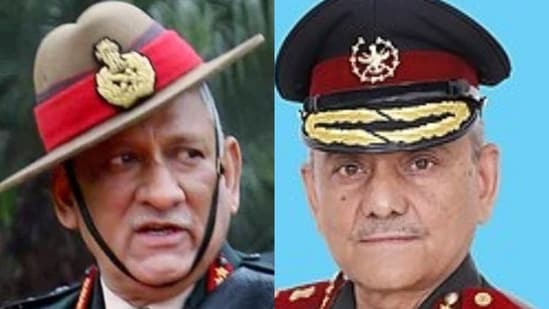
HT learns that the military theatre commands plan is ready and will be soon put up before the apex political leadership for approval. The first firm step towards theatre commands was taken on May 10 when the government notified the Inter-Services Organizations (Command, Control and Discipline) Act aimed at achieving synergy amongst the three services.
Rather than impose the military theatre commands on the three services, the government, through CDS Gen Anil Chauhan has adopted a bottom-up approach by discussing the entire proposal at every level of the services. The country will have three commands centered on the military threat from the West, North and in the maritime domain, which includes the island territories.
Defence Minister Rajnath Singh and national security planners have been briefed about the recommendations of the CDS on military theatre commands, the people cited above added. They explained that India’s plan is granular , and that the services have agreed to centralise communications, intelligence, cyber-security and logistics. The three services currently operate on separate communication networks – this meant a higher resonse time as everything had to go through the respective service’s headquarters in Delhi. Nor was there a seamless sharing of intelligence between the services with the army, navy and air force working purely on a need-to-know basis.
{{/usCountry}}Defence Minister Rajnath Singh and national security planners have been briefed about the recommendations of the CDS on military theatre commands, the people cited above added. They explained that India’s plan is granular , and that the services have agreed to centralise communications, intelligence, cyber-security and logistics. The three services currently operate on separate communication networks – this meant a higher resonse time as everything had to go through the respective service’s headquarters in Delhi. Nor was there a seamless sharing of intelligence between the services with the army, navy and air force working purely on a need-to-know basis.
{{/usCountry}}Experts have long held that theatre commands are the future. The P-5 countries all have theatre command structures, and India cannot afford to have its armed forces working in silos and on security architecture based on the past, they add. The most important outcome of theatre commands will be rationalisation of costly military resources and integration of platforms. The government is also keen on the Indian armed forces cutting down on ceremonial events and crafting battle strategies that are suited to regional context rather than blindly aping western tactics.
The three military theatre commanders will be equivalent in rank to the three service chiefs and will directly report to the Defence Minister via CDS for operational purposes. This will also ensure that the Defence Minister is abreast with developments on the border and at sea and up to date on operational matters as is the case in the P-5 countries.
With the three chiefs agreeing to military reforms in favor of theatre commands, the ball is in the court of the political leadership on when the new security architecture will be unveiled.