
 E-Paper



Constitution bench to take up pleas against 10% EWS quota
On Tuesday, the five-judge bench, led by Chief Justice of India (CJI) Uday Umesh Lalit, set down the clutch of related petitions for a detailed hearing from September 13

 Prefer HTon Google


A Constitutional bench in the Supreme Court will begin hearing the challenge to the central law on providing reservation benefits to the economically weaker sections (EWS) from September 13.
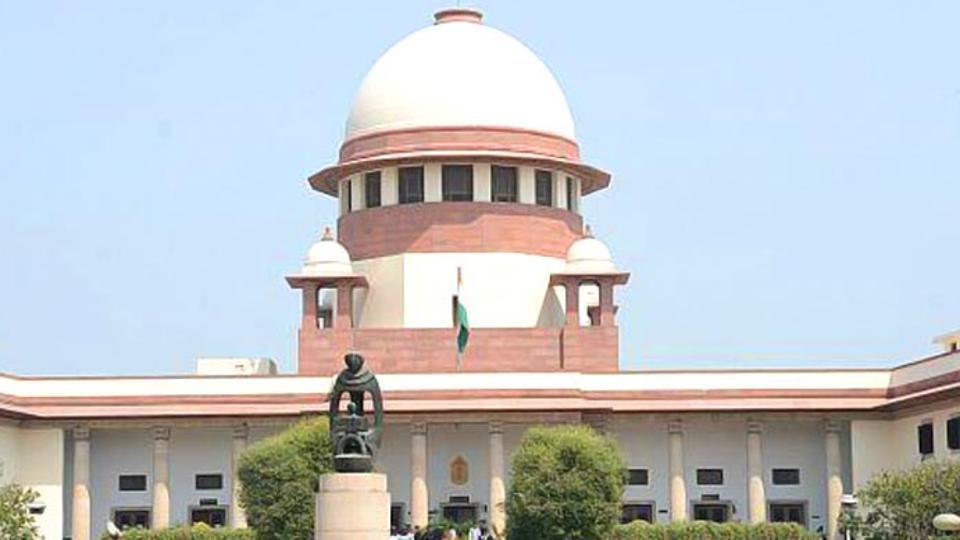
On Tuesday, the five-judge bench, led by Chief Justice of India (CJI) Uday Umesh Lalit, set down the clutch of related petitions for a detailed hearing from September 13, observing the court would want to resolve the legal issue.
The bench, which also included justices Dinesh Maheshwari, S Ravindra Bhat, Bela M Trivedi and JB Pardiwala, fixed September 6 for laying down the modalities of the hearing, which will include filing of the written submissions, case laws, and an estimation of time to be taken by lawyers from both sides to argue the matter.
Initially, the bench was of the view that it can allot two-and-a-half hours each day between Tuesday and Thursday for arguments but solicitor general (SG) Tushar Mehta and senior counsel Kapil Sibal requested the bench to give them some time to make a reasonable assessment of time and revert on the next date.
“We have certain time constraints. We would like to see that the submissions are over by the first week of October. Otherwise, it will be a race against time which won’t be conducive to discharge of our function...we will try to resolve some of these matters,” remarked the CJI.
Mehta and Sibal, on their part, assured the bench of their cooperation while adding that some preliminary exercise will have to be conducted before a timeline could be ascertained to complete the arguments in a case.
Mehta further pointed out that the Constitution bench matters relating to EWS reservation and a state law declaring all members of the Muslim community in Andhra Pradesh a part of backward classes are interrelated and could be heard together. Sibal agreed.
At this, the bench approved the suggestion of the lawyers to conduct the preliminary exercise before commencing the hearing of the two constitution bench cases on quota benefits from September 13. “So, we will list these two matters again on Tuesday next week so that you (lawyers) can give us your assessment of time etc and we can then start hearing from September 16,” it said.
The court also appointed lawyers Shadan Farasat, Mahfooz A Nazki, Kanu Agrawal and Nachiketa Joshi as nodal advocates to facilitate smooth hearing by ensuring common compilations containing submissions and case laws in the two cases are ready for the bench.
At this point, justice Bhat observed that the compilations should not have printed copies of the judgments. “Why waste so much paper? Let’s go back to consulting books. Why do we need to print everything and put them in compilation?” he asked.
The other members of the bench agreed with him. “Compilation shall not include any case law so long as cases are not available. Only index of citations along with para and page numbers to be given so that reference to books can be made,” the order recorded, further asking the arguing counsel to submit written submission not exceeding three pages each along with tentative time they would take to argue.
The court clarified that the case relating to EWS quota law will be the lead matter and will be taken up first.
In August 2020, the court had referred to a five-judge Constitution bench a batch of petitions challenging the 103rd Constitution Amendment of 2019 that provides 10% reservation for EWS in government jobs and educational institutions.
The law was challenged on the grounds that not only does it breach the 50% ceiling on reservation fixed in the 1992 Indra Sawhney case, the amendment is also unconstitutional for considering economic status as the sole criterion for identifying backwardness.
The Union government, before a three-judge bench in 2020, defended the law, citing Article 46, under which it has a duty to protect the interests of economically weaker sections as a part of state’s directive principles. On the challenge that the amendment violates the basic structure, the government argued that “to sustain a challenge against a constitutional amendment, it must be shown that the very identity of the Constitution has been altered”.



