E-Paper



COP30 prez says India central to $1.3 tn climate finance plan
COP30 president announced three key roadmaps by November, focusing on $1.3T climate finance, fossil fuel transition, ending deforestation, with India at center

 Prefer HTon Google


UN Climate Conference (COP30) president André Aranha Corrêa do Lago announced on Friday that three key implementation roadmaps will be released ahead of November, and said India was at the centre of global strategies to execute the $1.3 trillion climate finance blueprint, transition from fossil fuels, and end deforestation by 2030.
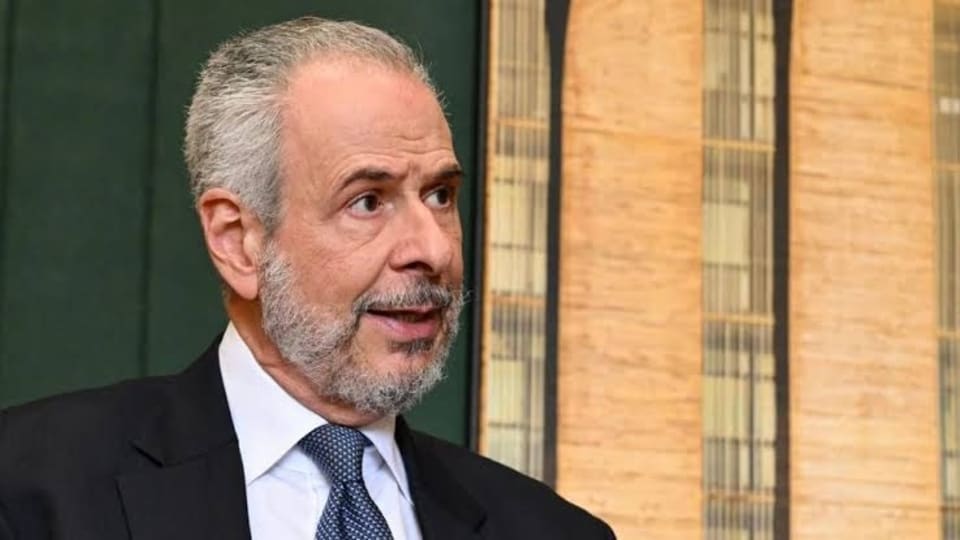
Speaking at a London School of Economics (LSE) panel during London Climate Action Week 2026, Lago stated the upcoming documents focus entirely on implementation rather than negotiation before Brazil transfers the COP presidency to Turkey.
Lago noted that one document, written with the Independent High-Level Expert Group (IHLEG) on Climate Change, details how to implement the $1.3 trillion annual target recognized in Belém. “Most people think COP is negotiational, but this is a document of implementation. There are two other roadmaps, in which again, India is absolutely essential. One is on transitioning away from fossil fuels and the other one on ending deforestation by 2030,” he added.
The event coincided with the first meeting of the High-Level Empowered Board on Green Transition, launched at India’s Raisina Dialogue 2026. Chaired by economist NK Singh, who headed the 15th finance commission, the board handles emerging-market pathways and will define climate finance under the UNFCCC—the UN Framework Convention on Climate Change—via quarterly workshops running through March 2027.
Singh stated the climate debate has shifted from targets to delivery, driven tightly by the cost of capital. “The prejudices and predilections of many institutions, including credit rating agencies, often become a major handicap,” Singh said, highlighting system bottlenecks like power storage and grid transmission.
Singh was chairing a panel discussion with key members of the board.
Among them was Lord Nicholas Stern, the chair of LSE’s Grantham Research Institute, who stated the green transition represents the premier development story of the 21st century. “There is a paradox where as climate science becomes more worrying, political commentary has become more fragile,” Stern said, warning that risks to India remain unrecognised.
UK Special Representative Rachel Kyte stated private capital must match localised energy shifts, citing different experiences such as that of Pakistan, where domestic solar accounts for 25% of generation, and South Korea, where a pro-net zero government is battling rising gas prices to stress on strategies that take into account different pathways.