
 E-Paper


Follow the latest breaking news, major developments and agenda-setting stories from India and around the world with the newsdesk at Hindustan Times. Operating round the clock, the desk brings together experienced editors, reporters and correspondents to deliver fast, accurate and contextual reporting across subjects that influence public policy, governance, business, society and international affairs. The HT News Desk covers politics, elections, government policies, the economy, business and markets, science and technology, the environment, law and order, infrastructure, education, climate issues and geopolitics, while closely tracking developments across states, institutions and global capitals. The team also leads coverage of major breaking news events, policy announcements, court proceedings, natural disasters, public emergencies and significant international developments. Reports published by the newsdesk are based on information gathered from reporters on the ground, official statements, government agencies, court records, regulatory filings, recognised institutions and other authoritative sources. Stories undergo editorial scrutiny and verification processes to ensure accuracy, fairness and relevance, and are updated as events evolve and additional information becomes available. Whether covering a key political decision in New Delhi, an economic policy shift affecting millions, a landmark court ruling or a major global event, the HT News Desk aims to provide readers with reliable, fact-based journalism that delivers not only the latest developments but also the context and analysis needed to understand their wider implications.
‘Covid-19 biggest challenge since World War 2’: PM Modi at G20 summit
Modi participated in the two-day virtual summit being chaired by Saudi Arabia along with the heads of state and government of the 19 member countries and representatives of the European Union and international organisations.


Prime Minister Narendra Modi on Saturday called for greater transparency in governance systems and decisive action by the G20 to counter the impact of the Covid-19 crisis that should focus on both economic recovery and preserving the earth.
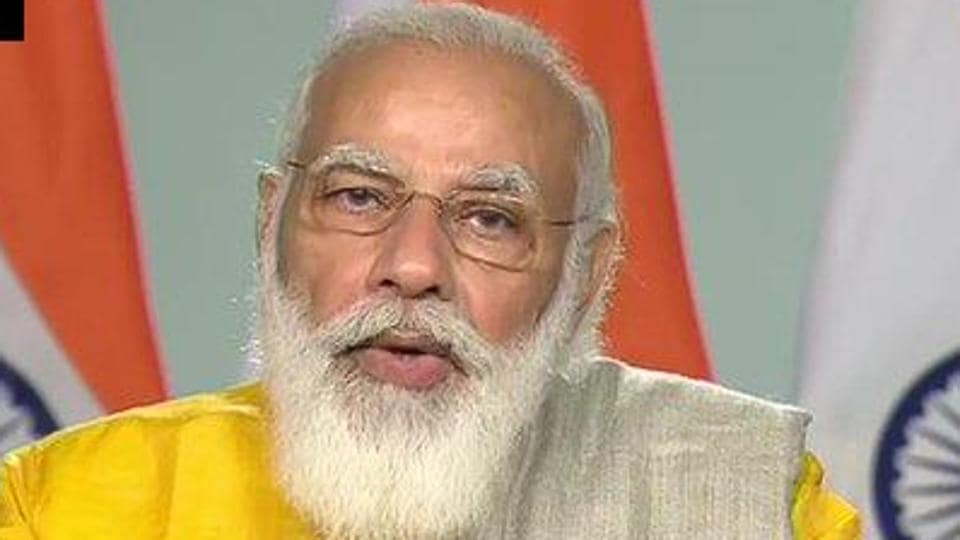
Modi participated in the two-day virtual summit being chaired by Saudi Arabia along with the heads of state and government of the 19 member countries and representatives of the European Union and international organisations.
Describing the pandemic as an important turning point in history and the biggest challenge faced by the world since World War 2, he called for decisive action by the G20 that should not be limited to economic recovery, jobs and trade, but also focus on preserving the earth.
Modi called for greater transparency in governance systems to inspire people to deal with shared challenges and said dealing with the environment as “trustees rather than owners” will lead to a holistic and healthy lifestyle, a principle whose benchmark could be a per capita carbon footprint.
He also sought a new global index for the post-Coronavirus world consisting of four elements – creation of a vast talent pool, ensuring technology reaches all segments of society, transparency in governance systems, and dealing with the earth with a spirit of trusteeship. This can help the G20 lay the foundation of a new world, he said.
In the past few decades, there was an emphasis on capital and finance and the time has now come to focus on multi-skilling and re-skilling. This will enhance the dignity of people and make them more resilient to face crises, he said. He added any assessment of new technology should be based on its impact on ease of living and quality of life.
Since “work from anywhere” is the new normal in the post-Covid-19 world, Modi suggested the creation of a G20 “virtual secretariat” as a follow-up and documentation repository.
This was the third summit this month where Modi and President Xi Jinping were on the same platform amid the India-China border standoff. They had earlier joined the summits of the Shanghai Cooperation Organisation (SCO) and the Brazil-Russia-India-China-South Africa (Brics) grouping.
The summit with the theme “Realising opportunities of the 21st century for all” has assumed importance in the wake of the pandemic, and its agenda includes two sessions focused on overcoming the pandemic, economic recovery and restoring jobs, and building an inclusive, sustainable and resilient future. There are also side events on pandemic preparedness and safeguarding the planet.
Ngozi Okonjo-Iweala, the Gavi Board chair, told the event on pandemic preparedness: “The virus is winning. Only through adequate financing for a global exit strategy like Access to Covid-19 Tools Accelerator (ACT-A) can economic vitality be restored at home and catastrophe in the poorest countries averted.”
A commitment by G20 leaders to invest $4.6 billion to fill the ACT Accelerator’s immediate funding gap will save lives, lay the groundwork for mass procurement and delivery of tests, treatments and vaccines, he said.
In his opening remarks, Saudi King Salman bin Abdulaziz said the G20 countries pledged over $21 billion to support global efforts to combat the pandemic and injected over $11 trillion to support individuals and businesses.
“Although we are optimistic about the progress made in developing vaccines, therapeutics and diagnostics tools for Covid-19, we must work to create the conditions for affordable and equitable access to these tools for all peoples. At the same time, we must prepare better for any future pandemic,” he said.


