
The Supreme Court has ruled that victims of a crime, or their legal representatives, must be given a reasonable opportunity to present their views before the State decides whether to grant premature release or remission to a convict. The ruling recognises that a victim’s right to participate in the criminal justice process does not end with the conclusion of the trial and imposition of a sentence.
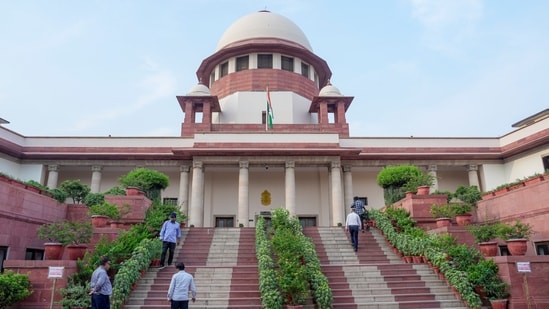
In an important victim-centric interpretation of remission laws, a bench of justices Dipankar Datta and Sheel Nagu held that the opportunity to make a representation must be read into the applicable prison rules, at least in cases involving grave offences where the victim or the victim’s family can reasonably be traced and approached.
The court clarified that such participation would not give victims a veto over the State’s decision, which must ultimately be taken independently by the competent authority.
Also Read | President recommends Lok Sabha to consider delimitation bill ahead of Parliament sitting
The ruling, delivered on November 26 in a petition challenging the Bihar government’s decision to prematurely release former MP Anand Mohan, also raises a larger question about the right of victims to be heard when courts themselves consider pleas by convicts for suspension of sentence and bail.
Implications for the Bilkis Bano rape case
The question acquires particular significance in the context of the Bilkis Bano gang rape case, in which the Supreme Court on October 28 suspended the life sentences of two of the 11 convicts, citing their 17 years of incarceration. Bano, who survived gang rape during the 2002 Gujarat riots and lost seven members of her family, including her three-year-old daughter, subsequently expressed anguish that the court had not even informed her about the proceedings, much less heard her before granting relief.
{{/usCountry}}The question acquires particular significance in the context of the Bilkis Bano gang rape case, in which the Supreme Court on October 28 suspended the life sentences of two of the 11 convicts, citing their 17 years of incarceration. Bano, who survived gang rape during the 2002 Gujarat riots and lost seven members of her family, including her three-year-old daughter, subsequently expressed anguish that the court had not even informed her about the proceedings, much less heard her before granting relief.
{{/usCountry}}“How could the honourable Supreme Court simply suspend the sentence of the men who did this to me? How could they not even inform me? How could they not even make sure my voice was heard in their courtroom?” she said in a statement after the order.
To be sure, the judgment in the Anand Mohan case deals specifically with the State’s executive power to grant remission and premature release under the applicable prison rules. The suspension of sentence and grant of bail to the two convicts in the Bilkis Bano case, on the other hand, involved the exercise of the Supreme Court’s judicial power. The two situations are legally distinct and the latest ruling does not automatically invalidate or govern the bail order in Bano’s case.
However, the reasoning adopted by the bench offers an important basis for examining the larger question of victim participation in proceedings that could result in a convict’s return to liberty before the full term of the sentence has run its course.
The bench noted that neither Section 432 of the Code of Criminal Procedure nor its corresponding provision, Section 473 of the Bharatiya Nagarik Suraksha Sanhita (BNSS), expressly provides for notifying or hearing the victim before a remission decision is taken. Yet, it questioned whether remission could continue to be treated as a matter exclusively between the State and the convict when criminal procedure had increasingly recognised victims as important participants in other stages of the justice system, including appellate and bail proceedings.
“The victim’s participation in the criminal justice process cannot be regarded as having exhausted itself merely upon the conclusion of the trial and the imposition of sentence,” it noted.
Bearing on victim and their family
Drawing on the three-judge bench ruling in Jagjeet Singh Vs Ashish Mishra (2022), which recognised a victim’s participatory rights from investigation through appeal or revision, the court said a decision to prematurely release a convict could have a direct bearing on the victim and the victim’s family, particularly in serious offences whose consequences continued long after the trial.
The victim could possess relevant information or have legitimate concerns relating to the continuing impact of the offence, the convict’s conduct, subsequent developments affecting the victim’s safety and the possibility of intimidation, harassment or renewed vulnerability following the convict’s release, it pointed out.
Also Read | What India’s Constitution would say, if it could speak
The court, therefore, held that an identifiable and traceable victim or the victim’s recognised legal representative must be afforded a reasonable opportunity to submit a representation before the competent authority decides a remission plea. Such a representation must be considered along with other relevant material, without taking away the State’s independent responsibility to decide the matter.
“The limited right that we propose to recognise is one of procedural participation: an opportunity to place relevant facts, objections and concerns before the authority, for their consideration along with the other relevant materials,” the bench said.
The implications of this reasoning for cases such as Bano’s warrant consideration, particularly because the court’s concern was not confined to the formal process of remission but extended to the impact that a convict’s release could have on the victim’s life, dignity and sense of security.
Proection of life and liberty
The judgment’s concluding observations went further by emphasising that the constitutional protection of life and liberty under Article 21 cannot be viewed as a guarantee tilted exclusively in favour of the convict. The court said the victim’s right to live with dignity and freedom from fear deserved equal constitutional recognition.
“For the victim and/or his family, such release could revive trauma, breed insecurity and unsettle their fragile attempt to rebuild their lives and move on,” held the bench, adding that their right to live without being haunted by the consequences of such release was as much a part of Article 21 as the convict’s right to secure liberty.
“The executive as well as the judiciary, as and when the occasion arises, must strike an appropriate balance that serves the cause of justice in its truest sense – justice to the convict, justice to the victim and justice to society at large,” it said.
The court ultimately set aside the Bihar government’s April 2023 notification that removed the disqualification for remission of convicts sentenced for murdering a public servant on duty, as well as the consequential order releasing Anand Mohan.
It directed him to surrender within a month and specifically ordered that the victim’s widow be given an opportunity to make a representation if his case for premature release were considered afresh.
Frequently Asked Questions
What did the Supreme Court rule about victims and remission decisions?
Does the ruling automatically affect the bail order in the Bilkis Bano case?
What did the Court order in Anand Mohan’s case?
ABOUT THE AUTHOR
Utkarsh Anand is the National Legal Editor at Hindustan Times, where he leads the newspaper's coverage of the Supreme Court, constitutional law, the judiciary and the Union law ministry. He joined Hindustan Times in 2020 after stints at Press Trust of India (PTI), The Indian Express and CNN-News18, and has over two decades of experience reporting on law, governance and public policy. His work has focussed on some of India's most consequential constitutional and legal developments, including the Supreme Court's judgments on Article 370, marriage equality, decriminalisation of homosexuality, the Babri Masjid dispute, electoral reforms and judicial appointments. He specialises in making complex legal proceedings and judgments accessible to readers while examining their wider social and political impact. Beyond daily reportage, Utkarsh has led investigative projects and enterprise reporting that have shaped public debate and prompted institutional responses. His work has received several journalism awards, including the Ramnath Goenka Excellence in Journalism Award. As National Legal Editor, he has also played a key role in expanding Hindustan Times' legal journalism footprint, mentoring reporters and strengthening coverage across platforms. A Chevening South Asia Journalism Programme Fellow, Utkarsh regularly writes analyses on the judiciary and constitutional issues, and his reporting is widely followed by lawyers, judges, policymakers, academics and readers seeking clarity on India's evolving legal landscape.