Severe cyclonic storm Murasu made landfall along the south Andhra Pradesh coast early Tuesday, bringing heavy rainfall and strong winds to the region. The storm crossed the coastline near Ongole in Prakasam district at around 1am, according to the India Meteorological Department (IMD). Track live updates
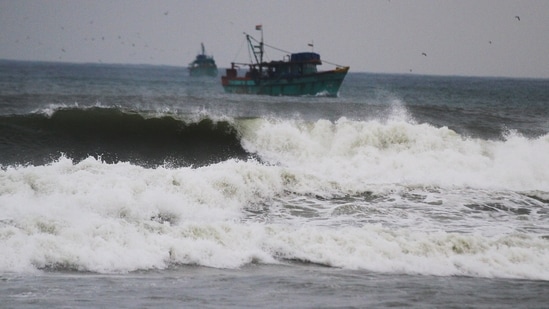
The cyclone made landfall between Nellore and Narsapur, south of Ongole, after moving across the west-central Bay of Bengal. It brought sustained wind speeds of 100-110 kmph, with gusts reaching 120 kmph, according to the IMD's forecast before landfall.
The storm comes less than a week after Cyclone Arnab affected parts of India's eastern coast.
Lakhs evacuated across Andhra and Odisha
Deep Dive
Where did Cyclone Murasu make landfall, and how strong were its winds?
Which areas were expected to receive heavy rain from Cyclone Murasu?
What evacuation and emergency measures were taken ahead of Cyclone Murasu?
Andhra Pradesh had stepped up evacuation and disaster management measures ahead of the cyclone's arrival. Around 2,000 people had been evacuated from vulnerable coastal areas, with the administration planning to move approximately 30,000 people to safer locations, as per PTI.
Earlier, over 1.6 lakh people were evacuated from five vulnerable districts of Odisha by 6 pm on Monday ahead of cyclone Murasu's landfall, with Ganjam accounting for around 1.5 lakh of those evacuated. At least 1.4 lakh more people are expected to be moved to safer locations as the state steps up its preparations to deal with the cyclone, HT has learnt.
Chief minister N Chandrababu Naidu had directed officials to remain on high alert and ensure that rescue, relief and restoration arrangements were in place.
{{/usCountry}}Chief minister N Chandrababu Naidu had directed officials to remain on high alert and ensure that rescue, relief and restoration arrangements were in place.
{{/usCountry}}The state government had also taken precautionary measures to protect irrigation infrastructure, reservoirs and agricultural land. Around 31,000 electricity poles had been dispatched to facilitate restoration work in case the storm damaged power infrastructure.
The administration is now assessing the extent of damage to electricity networks, roads, houses and crops.
Heavy rain forecast across Andhra Pradesh, Telangana
The IMD had forecast heavy to very heavy rainfall at several places across coastal Andhra Pradesh and Rayalaseema, with extremely heavy rainfall possible at isolated locations.
Telangana was also expected to receive heavy rainfall as the weather system moves inland after crossing the coast. Parts of Tamil Nadu, south Odisha and Chhattisgarh were also under a weather alert.
The weather department has warned that rainfall activity could continue even after landfall, as the cyclone weakens and moves inland.
Flights, trains disrupted due to cyclone
Cyclone Murasu disrupted air and rail services ahead of its landfall. At least 30 domestic flights were cancelled on Monday across Vijayawada, Visakhapatnam, Tirupati and Chennai airports because of adverse weather conditions.
Railway authorities also cancelled nine trains as a precautionary measure ahead of the cyclone's arrival. Passengers have been advised to check with airlines and railway authorities for updated schedules and service information.
Odisha, Tamil Nadu step up relief measures
Odisha had moved more than 1.6 lakh people to safer locations as a precaution, with several southern districts placed on alert. Ganjam, Gajapati, Rayagada, Koraput and Malkangiri were among the districts expected to receive heavy rainfall.
Rescue teams from the National Disaster Response Force (NDRF), Odisha Disaster Rapid Action Force (ODRAF) and fire services were kept ready for emergency operations.
Tamil Nadu had also extended assistance to Andhra Pradesh by sending three NDRF teams comprising 90 personnel and electricity department teams with 500 personnel to support rescue and power restoration work.
The back-to-back cyclones have raised concerns over further damage to agriculture and infrastructure, particularly in areas still recovering from Cyclone Arnab.
Storm surge, fishermen warned against venturing into sea
Before landfall, the IMD had warned of a storm surge of around 1 to 1.5 metres above the astronomical tide in low-lying areas of south coastal Andhra Pradesh.
The warning covered vulnerable stretches of the coast, including parts of Bapatla, Krishna and Prakasam districts.
Fishermen had been advised not to venture into the sea, with rough conditions expected over the west-central Bay of Bengal and along the Andhra Pradesh coast.
The IMD is continuing to monitor the system and is expected to issue further updates on its movement, intensity and rainfall forecast as Murasu weakens over land.