E-Paper



Delhi can’t be brought to standstill: SC junks plea for drastic steps to curb pollution
The bench said the court could not paralyse economic activity or deprive hundreds of thousands of migrant workers of their daily wages, even as air quality is expected to worsen in the coming days

 Prefer HTon Google


The Supreme Court on Monday declined to impose sweeping pollution-control measures such as a year-round construction ban or curbs on vehicular movement in Delhi-NCR, observing that the Capital “cannot be brought to a standstill” in the name of fighting toxic air.
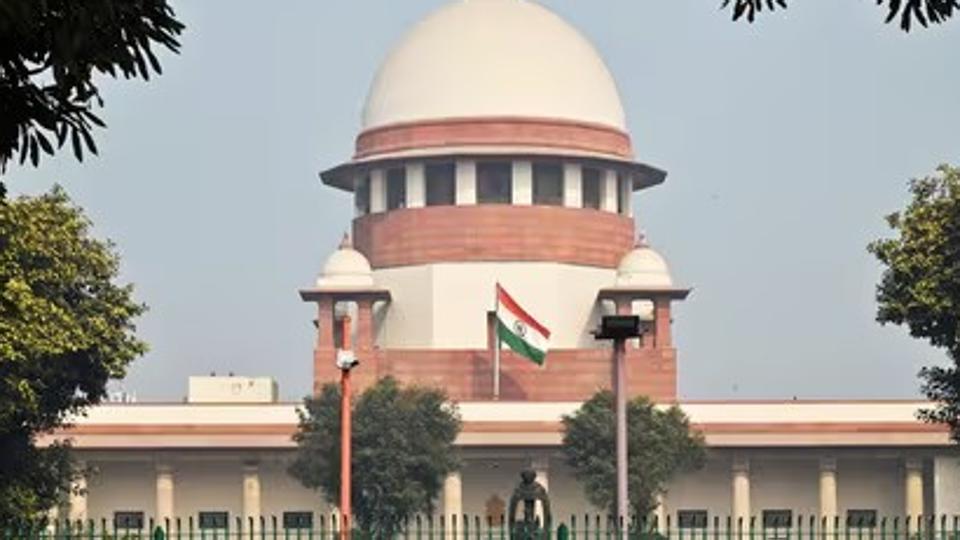
A bench led by Chief Justice of India Bhushan R Gavai said the court could not paralyse economic activity or deprive hundreds of thousands of migrant workers of their daily wages, even as air quality is expected to worsen in the coming days.
“We cannot bring everything to a standstill… There cannot be a complete stoppage of all activities,” said the CJI, responding to submissions by senior advocate Gopal Sankaranarayanan that Delhi had turned into a “gas chamber” and that the situation required “drastic steps”.
“We have to also think of migrants from Bihar and Uttar Pradesh who are here to work and are daily wagers. The solution proposed cannot be worse than the problem,” the bench, also comprising Justices K Vinod Chandran and NV Anjaria, remarked.
The court was considering a series of interventions in the long-running matter on NCR’s air pollution, at a time when the Capital’s air quality has slid back into the “very poor” category and is expected to breach the “severe” mark between November 17 and 19. Restrictions under the Graded Response Action Plan (Grap) have remained at Stage III since November 11, triggering bans on non-essential construction, restrictions on polluting activities, and enhanced enforcement at industrial sites.
The bench underscored that restrictions under Grap are devised by domain experts based on scientific modelling of Air Quality Index (AQI) levels, and that the judiciary lacked the technical expertise to dictate an alternative template. “We do not possess expertise in this field,” said the bench, adding that a balance has to be struck between environmental pollution and other activities. “Restriction on activities in Delhi in a graded manner is based on AQI levels and scientific evidence,” noted the court.
Rejecting Sankaranarayanan’s plea that the court “take a bold decision” and shut all activities permitted even under Grap-I throughout the year, the bench said such extreme steps were neither contemplated under the regulatory framework nor constitutionally manageable.
“Otherwise, the courts will also have to stop,” the CJI remarked, when the senior counsel suggested that even judicial functioning must go fully online.
Sankaranarayanan insisted that India’s AQI thresholds were far too lenient compared to jurisdictions like California, and that measures such as carpooling, punitive cess on private cars and a blanket construction ban were unavoidable. “A PM2.5 particle goes into my child’s lungs; it will never leave… This requires very harsh, tough steps,” he submitted.
Additional solicitor general Aishwarya Bhati, appearing for the Union government, opposed the suggestion of a year-round ban, warning of the impact on daily-wage and migrant labourers. She pointed to steps already taken under Grap-III and said the trend this year showed a reduction in severe pollution days. “This is not an issue that requires knee-jerk reaction,” the ASG said, adding that the government could return in “a day or two” with additional measures.
Senior advocate and amicus curiae Aparajita Singh flagged the persistent disconnect between declining stubble burning numbers reported by Punjab and the stagnant pollution levels in NCR. She told the court that despite states supplying mechanised equipment to farmers, the devices were either not being fully used or the continuing farm fires were neutralising any benefits.
Noting her submissions, the bench stressed the need for a coordinated long-term strategy. “The Union can take on board all the stakeholders and come up with some concrete steps – not temporary, but something long-term to provide lasting relief,” the bench said.
In its order, the court directed the chief secretaries of Punjab and Haryana to ensure compliance with the Commission for Air Quality Management’s (CAQM) November 13 directives “in letter and spirit”. It also recorded Bhati’s submission that the Centre had met environment ministers of concerned states recently and sought time to submit further proposals. The matter will be heard again on November 19.
Another flashpoint in the hearing was the reliability of Delhi’s air quality monitoring systems. The amicus told the court that many of the city’s AQI monitors were outdated and “not suitable” for its complex pollution profile. Bhati disagreed, insisting that the devices used in the Capital were “among the best used worldwide”. The bench directed the Centre to file a note or affidavit detailing the nature and quality of these monitors.
Monday’s proceedings unfolded amid a fresh slide in the city’s air quality. Delhi’s AQI stood at 359 at 8am on Monday – firmly in the “very poor” zone – after a brief respite on Sunday when wind speeds picked up. Forecasts from the Union ministry of earth sciences’ Early Warning System (EWS) predict a slide back into the “severe” zone between November 17 and 19.
Delhi’s average AQI between November 1 and 15 this year stands at 349, marginally lower than 367 in 2024 and 376 in 2023, but experts warn that delayed harvesting and fewer farm fires this season may be partially cushioning the impact. Experts have also repeatedly highlighted anomalies and missing data across several monitoring stations as a factor affecting reported averages.
The city has already logged three “severe” days and 10 “very poor” days in the first half of November. Lower temperatures – the minimum touched 9°C on Sunday, the lowest for November since 2022, are expected to deepen the inversion layer and stall pollutant dispersion.
The CJI-led proceedings came less than a week after justice PS Narasimha, during a separate proceeding, described Delhi’s air crisis as “very, very serious” and urged lawyers to avoid physical appearances. “This pollution will cause permanent damage,” he warned, noting that even masks may not offer reliable protection.