Delhi chief minister Rekha Gupta on Tuesday announced a Winter Action Plan to combat air pollution in the national capital, with the measures set to remain in force from November 1 to February 28.
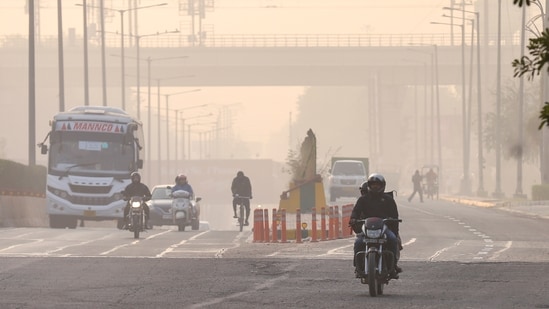
Under the plan, vehicles registered outside Delhi that do not meet BS-VI emission standards will be barred from entering the national capital from November 1 to January 31.
The government has also announced several measures to discourage private vehicle use and reduce pollution, including doubling parking charges at authorised parking sites, staggered office timings and a 50% work-from-home mandate for government and private offices.
Also Read | 'No PUC, no fuel' rule, 150 more e-buses on roads: How Delhi govt plans to curb winter pollution
What are the other curbs under Delhi’s Winter Action Plan?
1. Parking charges doubled
Parking charges at authorised parking facilities will be doubled from November 1 to February 28, 2027, to discourage the use of private vehicles. However, the hike will not apply to parking facilities owned and managed by the Delhi Metro Rail Corporation (DMRC).
2. Staggered office timings
{{/usCountry}}Parking charges at authorised parking facilities will be doubled from November 1 to February 28, 2027, to discourage the use of private vehicles. However, the hike will not apply to parking facilities owned and managed by the Delhi Metro Rail Corporation (DMRC).
2. Staggered office timings
{{/usCountry}}To ease traffic congestion and curb vehicular emissions, offices under the Municipal Corporation of Delhi (MCD) will operate from 8:30 am to 5 pm, while offices under the Government of the National Capital Territory of Delhi (GNCTD) will function from 10 am to 6:30 pm. The revised timings will remain in effect from November 1 to February 28.
Also Read | Higher parking fees, 50% WFH: Delhi govt announces measures to curb pollution from November
3. 50% WFH
The Delhi government has directed government and private offices to ensure that 50% of their workforce works from home during the period, with the remaining half attending office. The measure will be in effect from November 1 to February 28.
4. No fuel without a valid PUC certificate
The ‘No PUC, No Fuel’ rule is already in force in Delhi from October 1. Under the measure, fuel stations across the Delhi-National Capital Region (NCR) will not dispense fuel to vehicles without a valid Pollution Under Control (PUC) certificate.
The Commission for Air Quality Management (CAQM), which coordinates pollution-control measures in Delhi and neighbouring areas, had ordered in May that “no fuel shall be dispensed” to vehicles without a valid PUC certificate. Number-plate recognition cameras and other technologies are being used to enforce the directive.
Also Read | Delhi wakes up to first ‘poor’ air reading of the season, AQI at 227
5. Construction and demolition restrictions
The Winter Action Plan also includes curbs on construction and demolition activities, along with AI-based monitoring of construction sites to strengthen compliance with pollution-control norms.
6. Cleaner public transport
The government will promote cleaner mobility through electric buses, expanded Metro connectivity, improved last-mile transport and carpooling to reduce dependence on private vehicles and help bring down vehicular emissions.